*The following content is generated by AI and is for reference only.
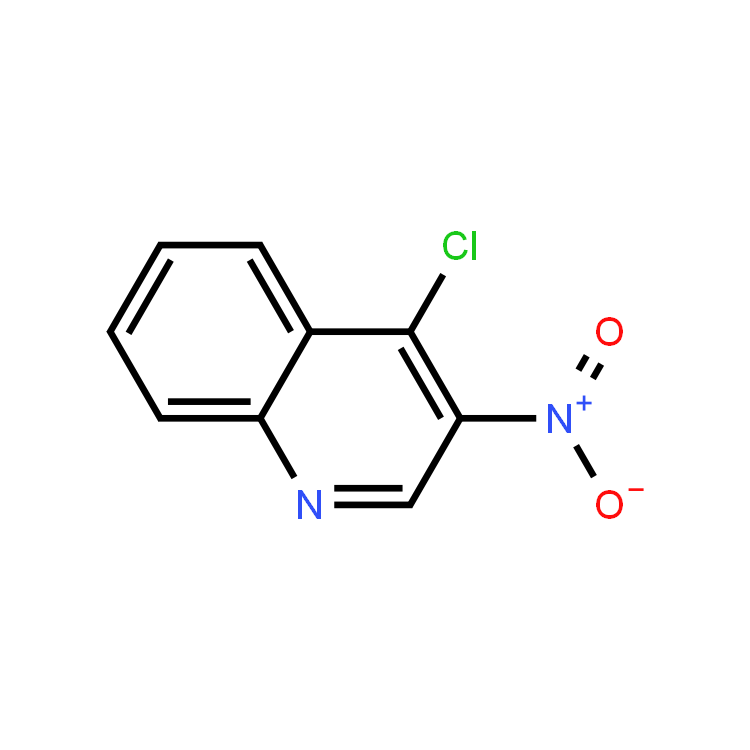
4-Chloro-3-nitroquinoline is a specialized heterocyclic compound widely recognized in medicinal chemistry and agrochemical research for its versatile synthetic utility. With the molecular formula C9H5ClN2O2 and a precise CAS Registry Number of 1673-05-8, this pale yellow to orange crystalline solid serves as a critical intermediate in the construction of complex nitrogen-containing architectures. The molecule features a quinoline core substituted with a chlorine atom at the fourth position and a nitro group at the third position, creating a highly electrophilic system ideal for nucleophilic aromatic substitution reactions.
The primary application of 4-chloro-3-nitroquinoline lies in its role as a precursor for synthesizing novel pharmaceutical agents. Its structural framework allows chemists to introduce various amine groups, leading to derivatives with potential antimalarial, antibacterial, or anticancer activities. Furthermore, it is extensively utilized in the development of new agrochemicals, including herbicides and fungicides, where the quinoline scaffold provides essential biological activity profiles. In material science, this compound acts as a building block for functional dyes and fluorescent probes due to its conjugated pi-system and tunable electronic properties.
From a safety perspective, handling this substance requires standard laboratory precautions, as nitro compounds can be sensitive to heat and shock, while chlorinated aromatics may pose toxicity risks upon ingestion or skin contact. Proper storage in a cool, dry place away from incompatible oxidizers is mandatory to maintain stability. Researchers frequently employ this reagent in multi-step organic synthesis to access bioactive scaffolds that are otherwise difficult to construct. Its availability facilitates rapid prototyping of drug candidates and optimization of catalytic processes in industrial settings. As global demand for advanced therapeutic molecules grows, 4-chloro-3-nitroquinoline remains an indispensable tool for chemists aiming to bridge the gap between fundamental organic synthesis and practical medical or agricultural solutions, driving innovation across multiple scientific disciplines.