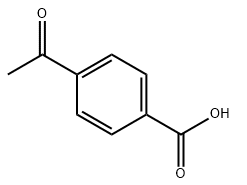
4-Acetylbenzoic Acid is an intermediate used to prepare Curcumin Analogs with anti-oxidant activities. It is also used in the synthesis of quinuclidine benzamides as agonists of α7 nicotinic acetylcholine receptors.
More information please send email to: pharmchem4@ichemie.com
*The following content is generated by AI and is for reference only.
4-Acetylbenzoic acid is a versatile aromatic compound widely utilized in organic synthesis and industrial applications. With the chemical formula C9H8O3 and the CAS number 530-52-7, this white crystalline powder serves as a crucial intermediate in the production of various pharmaceuticals, agrochemicals, and advanced materials. Structurally characterized by an acetyl group attached to the para position of a benzoic acid ring, it exhibits unique reactivity that facilitates diverse chemical transformations.
In the pharmaceutical industry, 4-acetylbenzoic acid acts as a key building block for synthesizing non-steroidal anti-inflammatory drugs (NSAIDs) and other bioactive molecules. Its carboxylic acid functionality allows for easy esterification or amide coupling, while the ketone group offers opportunities for nucleophilic addition reactions. This dual-reactivity makes it indispensable for creating complex drug candidates with improved therapeutic profiles. Additionally, researchers utilize this compound in the development of fluorescent probes and sensors due to its potential for conjugation with luminescent tags.
Beyond medicine, the chemical plays a significant role in material science, particularly in the synthesis of high-performance polymers and liquid crystals. It is employed as a monomer or modifier to enhance thermal stability and mechanical strength in engineering plastics. The compound also finds application in the dye industry, serving as a precursor for azo dyes and pigments used in textiles and coatings. Furthermore, recent studies explore its utility in metal-organic frameworks (MOFs), where it acts as a linker to construct porous structures for gas storage and separation technologies.
Safety protocols dictate handling 4-acetylbenzoic acid with standard laboratory precautions, including the use of gloves and eye protection, as it may cause irritation upon contact with skin or eyes. Proper storage in a cool, dry place away from incompatible oxidizers is recommended to maintain purity. As demand grows for specialized chemicals in green chemistry and sustainable manufacturing, 4-acetylbenzoic acid remains a valuable asset for chemists seeking efficient pathways to functionalized aromatic systems. Its availability from major suppliers ensures accessibility for both academic research and large-scale industrial processes, supporting innovation across multiple scientific disciplines.




 (All Rights Reserved)
![6,8-Dioxo-5,7-diazaspiro[3.4]octane-2-carboxylic acid](https://eimg.pharmasources.com/image/product/20250403/02effeb5a7639bc84ff1f3add3c0c64fjpg)
![8-Oxa-1,3-diazaspiro[4.5]decane-2,4-dione](https://eimg.pharmasources.com/image/product/20250403/60fa7223d5a34f24138486ceea0ffb15jpg)
![8,16-Diazadispiro[6.1.6.2]heptadecan-17-one](https://eimg.pharmasources.com/image/product/20250403/ca91cba8b87e53fc879f8d8764873a40jpg)