Product Description
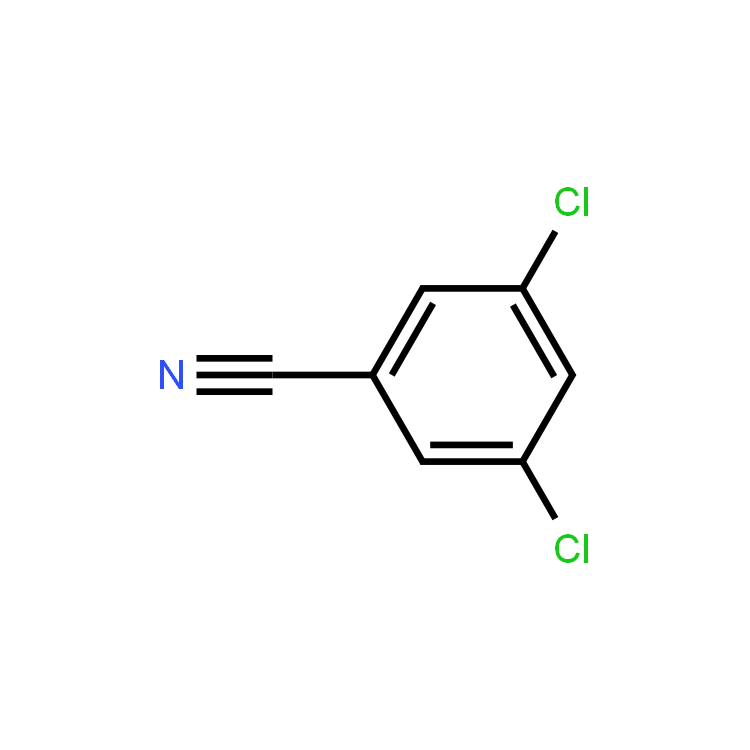
3,5-Dichlorobenzonitrile、6575-00-4
AI Product Description
*The following content is generated by AI and is for reference only.
3,5-Dichlorobenzonitrile is a versatile organic intermediate characterized by a benzene ring substituted with two chlorine atoms at the meta positions and a nitrile group. Its molecular formula is C7H3Cl2N, and it carries the CAS Registry Number 104-88-9. This white to off-white crystalline solid exhibits moderate solubility in common organic solvents while remaining largely insoluble in water, making it suitable for various chemical synthesis pathways.
Primarily utilized as a key building block in the pharmaceutical and agrochemical industries, 3,5-dichlorobenzonitrile serves as a crucial precursor for synthesizing complex heterocyclic compounds. In drug development, it is frequently employed to construct pyrimidine and pyridine derivatives, which are foundational structures for numerous active pharmaceutical ingredients (APIs) targeting cardiovascular diseases, inflammation, and oncology. The presence of the electron-withdrawing nitrile group combined with the halogen substituents allows for diverse nucleophilic substitution reactions, enabling chemists to introduce a wide array of functional groups with high regioselectivity.
In the agricultural sector, this compound plays an essential role in the production of novel herbicides and fungicides. Its structural motif contributes to the biological activity required for effective crop protection agents that manage pests and fungal infections without causing excessive environmental persistence. Furthermore, researchers utilize 3,5-dichlorobenzonitrile in materials science for developing advanced polymers and liquid crystals due to its unique electronic properties and thermal stability.
The compound is typically produced through chlorination of benzonitrile or via Sandmeyer-type reactions starting from specific amines. Safety protocols during handling require standard precautions for aromatic nitriles, including the use of personal protective equipment to avoid skin contact and inhalation, as nitriles can release toxic hydrogen cyanide under acidic conditions or upon combustion. Overall, 3,5-dichlorobenzonitrile remains an indispensable reagent in modern fine chemistry, bridging the gap between basic raw materials and high-value specialized products across multiple industrial sectors. Its continued demand reflects the ongoing need for efficient synthetic routes to innovative therapeutic and protective chemicals.





 (All Rights Reserved)
![8-Oxa-1,3-diazaspiro[4.5]decane-2,4-dione](https://eimg.pharmasources.com/image/product/20250403/60fa7223d5a34f24138486ceea0ffb15jpg)
![6,8-Dioxo-5,7-diazaspiro[3.4]octane-2-carboxylic acid](https://eimg.pharmasources.com/image/product/20250403/02effeb5a7639bc84ff1f3add3c0c64fjpg)

![8,16-Diazadispiro[6.1.6.2]heptadecan-17-one](https://eimg.pharmasources.com/image/product/20250403/ca91cba8b87e53fc879f8d8764873a40jpg)