*The following content is generated by AI and is for reference only.
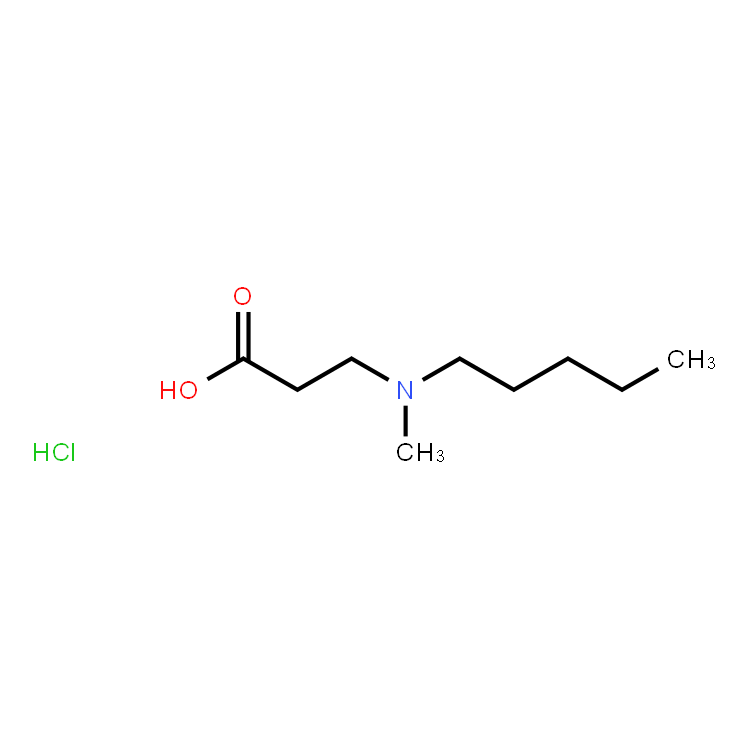
3-(N-Methylpentylamino)propionic acid hydrochloride is a specialized organic compound characterized by its specific amino acid derivative structure combined with a quaternary ammonium moiety. With the molecular formula C9H20ClNO2, this substance represents a significant intermediate in the field of medicinal chemistry and agrochemical synthesis. The presence of the propionic acid backbone linked to an N-methylpentylamino group provides unique physicochemical properties, making it highly valuable for targeted molecular modifications. Its hydrochloride salt form ensures enhanced stability and solubility in aqueous media compared to its free base counterpart, which is crucial for various pharmaceutical processing applications.
The primary utility of this compound lies in its role as a building block for synthesizing complex bioactive molecules. Researchers frequently utilize it as a precursor in the development of novel therapeutic agents, particularly those targeting neurological disorders or metabolic pathways where specific amine functionalities are required. In the realm of agrochemicals, derivatives based on this scaffold may exhibit potential activity as herbicides or insect growth regulators, although extensive toxicological studies are typically necessary before commercial deployment. The structural versatility allows chemists to introduce diverse functional groups at the terminal positions, facilitating the creation of structure-activity relationship (SAR) libraries for drug discovery programs.
While specific industrial applications may vary depending on regional regulations and market demands, the compound remains a key reagent in academic and industrial laboratories focused on heterocyclic chemistry and peptide mimetics. Safety protocols must be strictly observed during handling, as with many amine salts, due to potential irritant properties. Proper storage in cool, dry conditions away from incompatible oxidizers is recommended to maintain integrity. As research into advanced pharmacophores continues to evolve, compounds like 3-(N-Methylpentylamino)propionic acid hydrochloride will likely play an increasingly pivotal role in bridging the gap between fundamental chemical synthesis and practical medical solutions. Its precise structural configuration offers a robust platform for innovation in creating next-generation active pharmaceutical ingredients with improved efficacy and selectivity profiles.