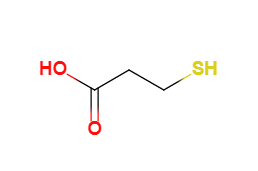
3-Mercaptopropionic acid; 3MPA; BMPA
CAS# 107-96-0
Appearance: Colorless transparent liquid
Purity: NLT 99.5%
Package: 250kg/drum; 1200kg/IBC drum
Application: Polycarboxylate superplasticizer; pharmaceutical intermediate; chemical synthesis etc.
UN: 2922
Hazards class: 8+6.1
Packing: II
3MPA is our strong product, more information please email to specialchem2@ichemie.com
Contact person: Cara
*The following content is generated by AI and is for reference only.
3-Mercaptopropionic acid (3-MPA), also known as 3-mercapto propanoic acid or BMPA, is a vital organic sulfur compound widely utilized in industrial and research applications. Identified by the CAS number 107-96-0, its molecular formula is C₃H₆O₂S. This colorless to pale yellow liquid possesses a distinct, unpleasant odor typical of thiols and features both a carboxylic acid group and a thiol group within its structure. These functional groups grant 3-MPA unique reactivity, making it an essential building block in polymer chemistry and surface science.
The primary application of 3-MPA lies in the synthesis of self-assembled monolayers (SAMs). Due to its strong affinity for gold and silver surfaces via the thiol group, it is extensively used to modify nanoparticle surfaces, thereby stabilizing colloidal suspensions and enabling precise functionalization. In this context, the terminal carboxylic acid allows further conjugation with biomolecules, polymers, or other organic compounds through amide or ester linkages. Consequently, 3-MPA plays a critical role in developing biosensors, drug delivery systems, and advanced diagnostic tools where controlled surface interactions are paramount.
Beyond nanotechnology, 3-MPA serves as a key intermediate in the production of specialized polymers and resins. It is employed in synthesizing chelating agents, corrosion inhibitors, and rubber additives. Its ability to act as a chain transfer agent in radical polymerization helps control molecular weight distribution, improving the quality of acrylic and methacrylic resins. Additionally, it finds use in the pharmaceutical industry as a precursor for various therapeutic agents and in agricultural chemistry for specific pesticide formulations.
Handling 3-MPA requires caution due to its corrosive nature and potential skin irritancy. Proper safety protocols, including the use of personal protective equipment and adequate ventilation, are mandatory during storage and processing. Despite these handling requirements, its versatility and effectiveness in modifying material properties ensure its continued demand across diverse sectors ranging from electronics and materials science to biotechnology. As research into nanomaterials advances, the importance of 3-MPA as a fundamental linker molecule is expected to grow, driving innovation in next-generation technologies.




 (All Rights Reserved)
![8-Oxa-1,3-diazaspiro[4.5]decane-2,4-dione](https://eimg.pharmasources.com/image/product/20250403/60fa7223d5a34f24138486ceea0ffb15jpg)
![6,8-Dioxo-5,7-diazaspiro[3.4]octane-2-carboxylic acid](https://eimg.pharmasources.com/image/product/20250403/02effeb5a7639bc84ff1f3add3c0c64fjpg)
![8,16-Diazadispiro[6.1.6.2]heptadecan-17-one](https://eimg.pharmasources.com/image/product/20250403/ca91cba8b87e53fc879f8d8764873a40jpg)
