36288-21-8
3-Chlorochrysene
>99%
light white powder
Handan City,Hebei Province, China
Hebei Huaqing Optoelectronics focuses on the research and production of OLED materials.
Please feel free to call for more information.
*The following content is generated by AI and is for reference only.
3-Chlorochrysene is a specialized organic compound belonging to the polycyclic aromatic hydrocarbon (PAH) family, characterized by a chlorine atom substituted onto the chrysene core structure. Its molecular formula is C18H11Cl, reflecting the substitution of one hydrogen atom in the parent chrysene molecule with a chlorine atom. The Compound is identified by CAS Registry Number 16705-48-9, which serves as its unique digital fingerprint for chemical databases and regulatory tracking. Structurally, it consists of four fused benzene rings arranged in an angular configuration, providing significant stability and planarity that are typical of PAH derivatives.
This substance is primarily utilized within the realm of advanced scientific research rather than commercial manufacturing or consumer applications. Its main utility lies in the synthesis of more complex heterocyclic compounds and as a precursor in the development of novel organic electronic materials. Researchers often employ 3-chlorochrysene to investigate structure-activity relationships in photophysical properties, such as fluorescence and absorption spectra, which are critical for designing organic light-emitting diodes (OLEDs) and solar cell components. Furthermore, due to its halogenated nature, it serves as a valuable intermediate in cross-coupling reactions, facilitating the introduction of various functional groups to tailor molecular properties for specific technological needs.
Safety considerations are paramount when handling this material. Like many chlorinated PAHs, 3-chlorochrysene requires careful management due to potential toxicity and environmental persistence. It should be stored in cool, dry conditions away from strong oxidizing agents and direct sunlight to prevent degradation. Personnel must utilize appropriate personal protective equipment (PPE), including gloves and safety goggles, and work within a fume hood to avoid inhalation or skin contact. While not currently listed as a highly regulated hazardous air pollutant in all jurisdictions, standard laboratory protocols for handling carcinogenic PAHs are strongly recommended. As the field of organic electronics evolves, derivatives like 3-chlorochrysene remain essential tools for chemists pushing the boundaries of material science, offering a pathway to high-performance devices through precise molecular engineering.

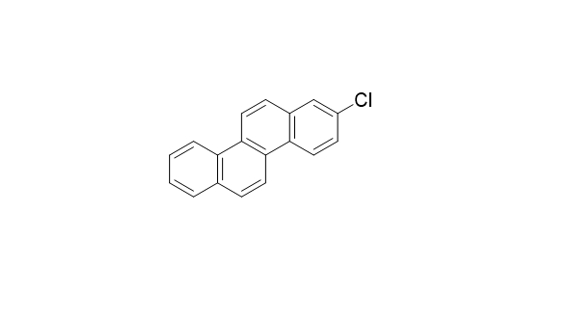




 (All Rights Reserved)
![(6-phenyldibenzo[b,d]thiophen-4-yl)boronic acid](https://eimg.pharmasources.com/image/20250918/VzkRtcz9igDw870AqZ3zYo3SOO3IOeqwh9VdEbLS.png)

![[1,1':4',1''-Terphenyl]-2,6-diol, 2'-fluoro-](https://eimg.pharmasources.com/image/20240314/BTJGUNOZ2gmyX3HLfV4HO89Qpi7WQfGsPD1Qh3Az.jpeg)


![5-Hydroxy-3,9-dimethyl-7H-benzo[c]fluoren-7-one](https://eimg.pharmasources.com/image/product/20250919/d01931f02fb1e7e8231c9933d73e3837jpg)

![3-Bromo-5-tert-butylbenzo[b]thiophene](https://eimg.pharmasources.com/image/product/20250919/742a9f6c2521018bdd155a4ef08a8873jpg)
![Ethyl 5-methylbenzo[b]thiophene-2-carboxylate](https://eimg.pharmasources.com/image/product/20250919/bd4b4317408ace91b597157b395c106bjpg)
![3-Iodo-5-tert-butylbenzo[b]thiophene](https://eimg.pharmasources.com/image/product/20250919/370cd976e4b82e45e310eab5fdf6b1f1jpg)
