Product Description
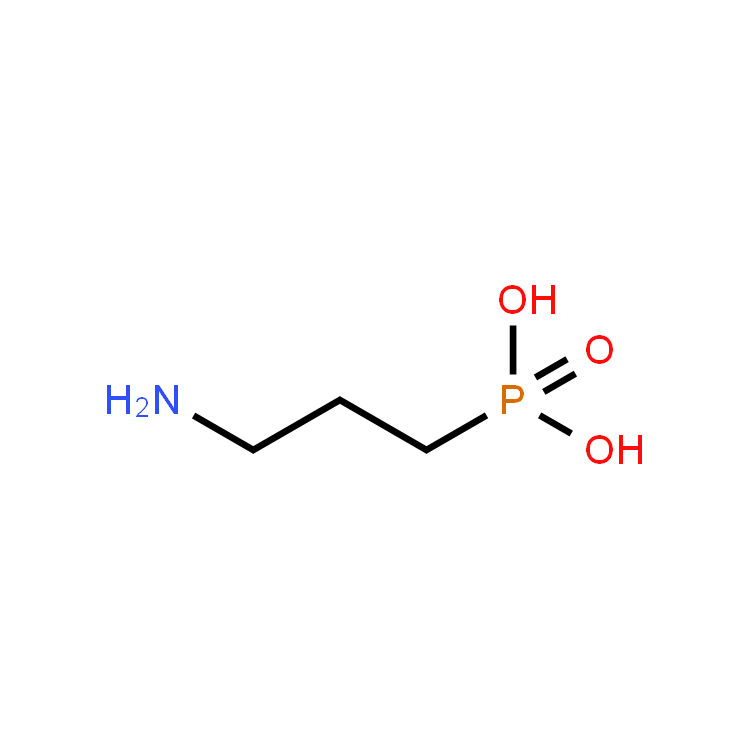
3-Aminopropylphosphonic acid、13138-33-5
AI Product Description
*The following content is generated by AI and is for reference only.
3-Aminopropylphosphonic acid, chemically known as 3-aminopropanephosphonic acid, is a specialized organophosphorus compound widely utilized in industrial and research applications. Its molecular formula is C3H10NO3P, reflecting the presence of a primary amine group attached to a propyl chain linked directly to a phosphonic acid moiety. The substance is identified by the CAS Registry Number 16894-52-7. This unique structural combination endows the molecule with dual reactivity: the amine group acts as a nucleophile or base, while the phosphonic acid group provides strong chelating capabilities similar to those found in amino acids but with enhanced stability against hydrolysis under varying pH conditions.
In terms of application, 3-aminopropylphosphonic acid serves primarily as a corrosion inhibitor and scale preventer in water treatment systems. It effectively binds metal ions such as calcium, magnesium, and iron, preventing the formation of hard mineral deposits in cooling towers, boilers, and reverse osmosis membranes. Unlike traditional phosphates, it offers superior resistance to bacterial degradation and thermal breakdown, making it ideal for high-temperature industrial processes. Furthermore, its biocompatibility and ability to coordinate with transition metals make it valuable in the synthesis of pharmaceutical intermediates and agrochemicals. Researchers also employ this compound as a building block for creating novel functional materials, including self-assembled monolayers on metal surfaces and metal-organic frameworks (MOFs). In the field of nuclear chemistry, it has been explored for its potential in sequestering radioactive isotopes due to its strong affinity for actinides. Despite its utility, handling requires standard safety precautions, as it can be corrosive to skin and eyes. Overall, 3-aminopropylphosphonic acid represents a versatile chemical agent bridging the gap between organic amines and inorganic phosphonates, offering sustainable solutions for water management and advanced material synthesis across diverse sectors ranging from petrochemical refining to biomedical engineering.





 (All Rights Reserved)
![8-Oxa-1,3-diazaspiro[4.5]decane-2,4-dione](https://eimg.pharmasources.com/image/product/20250403/60fa7223d5a34f24138486ceea0ffb15jpg)
![6,8-Dioxo-5,7-diazaspiro[3.4]octane-2-carboxylic acid](https://eimg.pharmasources.com/image/product/20250403/02effeb5a7639bc84ff1f3add3c0c64fjpg)
![8,16-Diazadispiro[6.1.6.2]heptadecan-17-one](https://eimg.pharmasources.com/image/product/20250403/ca91cba8b87e53fc879f8d8764873a40jpg)