*The following content is generated by AI and is for reference only.
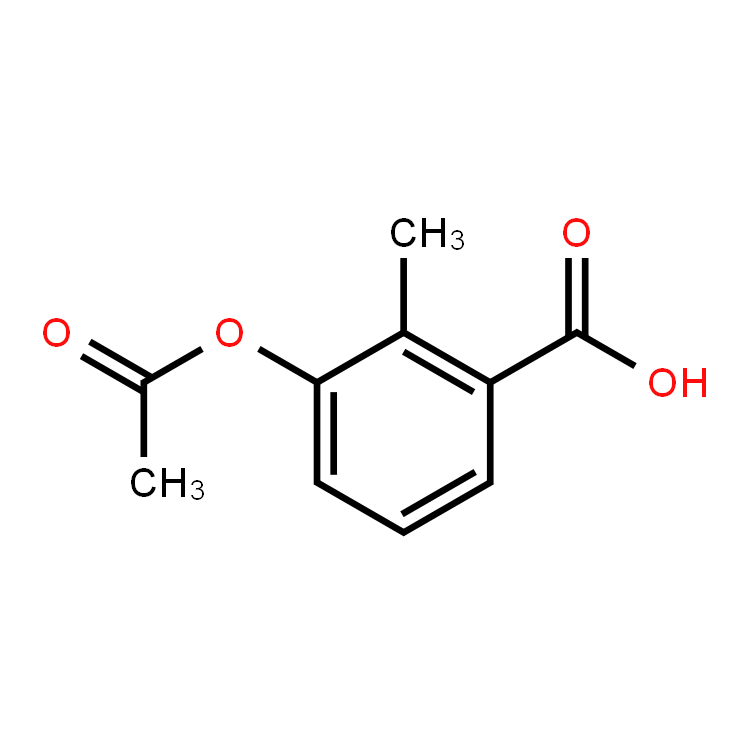
3-Acetoxy-2-methylbenzoic acid is a specialized organic intermediate with the molecular formula C10H10O4 and a molecular weight of approximately 194.18 g/mol. Its primary CAS registry number is 627-57-2, which serves as its unique identifier in chemical databases and regulatory frameworks. Structurally, this compound features a benzene ring substituted with an acetoxy group at the third position and a methyl group adjacent to the carboxylic acid functionality at the second position. This specific substitution pattern significantly influences its reactivity and solubility characteristics compared to simpler benzoic acid derivatives.
In industrial applications, 3-acetoxy-2-methylbenzoic acid is predominantly utilized as a key building block in the synthesis of complex pharmaceutical agents and agrochemicals. The presence of both the ester and carboxylic acid moieties allows for versatile chemical transformations, including hydrolysis to yield the corresponding dihydroxy derivative or decarboxylation under specific thermal conditions. Chemists often employ this molecule as a precursor for developing novel anti-inflammatory drugs, where the methyl and acetoxy groups can be strategically modified to enhance biological activity or metabolic stability. Furthermore, it finds niche usage in the fragrance industry, serving as an intermediate for creating unique aromatic profiles due to its potential to generate distinct olfactory notes upon controlled degradation.
The compound exhibits moderate solubility in polar organic solvents such as ethanol and acetone but remains largely insoluble in water, necessitating careful handling during formulation processes. Safety data indicates that while it is not classified as highly toxic, standard laboratory precautions are required to avoid skin irritation or inhalation of dust particles. Storage should be conducted in a cool, dry environment away from strong oxidizing agents to prevent unintended decomposition or polymerization. As demand grows for high-purity synthetic intermediates in green chemistry initiatives, this substance represents a valuable resource for researchers aiming to optimize reaction pathways with minimal environmental impact. Its role underscores the importance of precise structural modification in modern medicinal chemistry and materials science.