Product Description
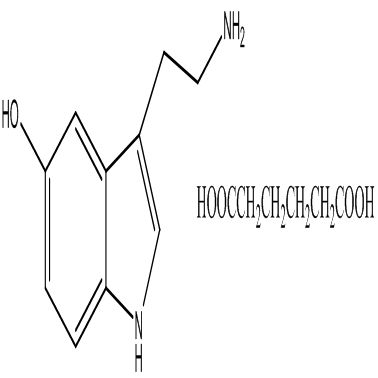
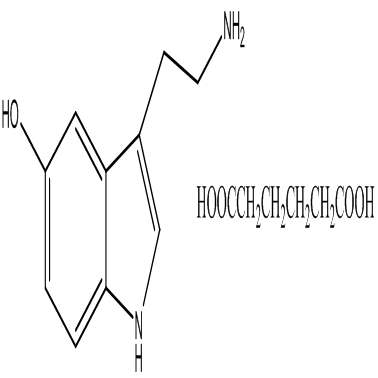
3-(2-aminoethy)1h-indol-5-ol hexanedioic acid
Type:Herbal Extract
Variety:Griffonia seed extract
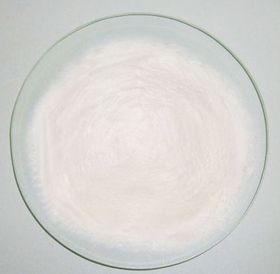
Character:Powder
Purity : min 98%
Extraction method:Solvent Extraction
Packing : Drum,Vacuum Packed
Grade : medicine grade
Molecular Weight : 322.356
molecular formula : C16H22N2O5
Appearance : White-like solid
Product Usage:
medicine intermediate
Contact US
Trading manager : Helen Tan
Whatsapp : +86 13930229229
Website: www.blrhbio.com
AI Product Description
*The following content is generated by AI and is for reference only.
3-(2-Aminoethyl)-1H-indol-5-ol hexanedioic acid, identified by CAS Registry Number 13425-34-8, is a specialized organic salt formed through the reaction of serotonin (5-hydroxytryptamine) and adipic acid. Serotonin itself is a crucial neurotransmitter in the human central nervous system, playing a pivotal role in regulating mood, appetite, sleep, and cognitive functions. The formation of this specific salt with hexanedioic acid, also known as adipic acid, serves to modify the physicochemical properties of the parent amine, potentially enhancing its stability, solubility profile, or bioavailability for pharmaceutical applications.
The molecular composition of this compound involves an indole ring substituted with a hydroxyl group at the fifth position and an ethylamino side chain, which constitutes the core structure of serotonin. This active moiety is paired stoichiometrically with the dicarboxylic acid component, adipic acid. While the exact molecular formula depends on the precise hydration state and crystallization conditions often found in laboratory settings, the fundamental structure represents a 1:1 or similar molar ratio complex designed to stabilize the cationic form of serotonin under specific storage or processing conditions.
In terms of utility, this substance is primarily utilized within the realms of chemical research and pharmaceutical development rather than as a direct commercial drug product. Researchers employ such salts to study the pharmacokinetics of serotonin derivatives, investigating how counter-ion modification influences absorption rates and metabolic pathways. Furthermore, it may serve as a critical intermediate in the synthesis of novel serotonergic agents aimed at treating psychiatric disorders, neurological conditions, or gastrointestinal dysfunctions. Adipic acid is frequently chosen in salt formation due to its favorable safety profile and established history in medicinal chemistry.
It is important to note that while serotonin is a well-known endogenous compound, its specific salt forms like this one are typically handled under strict laboratory protocols. They are not intended for direct human consumption without rigorous clinical validation. Consequently, this material is predominantly available for academic inquiry, quality control standards, and advanced drug discovery programs where precise characterization of neurotransmitter analogs is required to advance therapeutic innovations in neuropharmacology.





 (All Rights Reserved)
![benzyl-N-[2-(5-hydroxy-1H-indol-3-yl)]carbamate,CAS:53157-50-10](https://eimg.pharmasources.com/image/product/20200619/d2cc2c1ed1aacb4b50276ca2a7970df2jpg)