Product Description
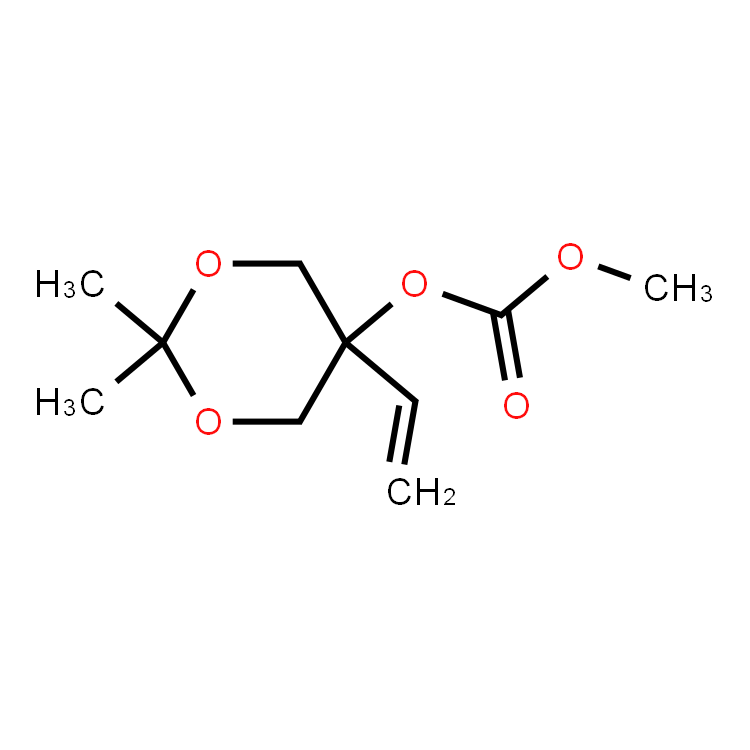
2,2-dimethyl-5-vinyl-1,3-dioxan-5-yl methyl carbonate、246021-73-8
AI Product Description
*The following content is generated by AI and is for reference only.
2,2-Dimethyl-5-vinyl-1,3-dioxan-5-yl methyl carbonate is a specialized organic compound belonging to the class of functionalized cyclic carbonates. Its molecular formula is C9H14O4, reflecting a structure that combines a 1,3-dioxane ring with dimethyl substitution at the 2-position and a vinyl group alongside a methyl carbonate moiety at the 5-position. While specific Commercial CAS numbers for this exact stereochemical variant may vary depending on the manufacturer or registry updates, it is generally associated with specialized synthesis intermediates rather than bulk commodity chemicals. The compound features a reactive vinyl group, which allows it to participate in free-radical polymerization, making it particularly valuable in the field of advanced materials science.
The primary application of 2,2-dimethyl-5-vinyl-1,3-dioxan-5-yl methyl carbonate lies in the production of high-performance polymers and copolymers. By incorporating this monomer into polymer chains, chemists can introduce unique properties such as enhanced thermal stability, improved chemical resistance, and specific optical characteristics derived from the cyclic carbonate structure. These materials are increasingly sought after in the development of next-generation coatings, adhesives, and sealants where durability and environmental resistance are critical. Furthermore, the presence of the carbonate linkage suggests potential utility in the synthesis of polycarbonates or polyurethanes without requiring traditional phosgene-based processes, aligning with green chemistry initiatives.
In research settings, this molecule serves as a model substrate for studying the reactivity of protected carbonyl groups within vinyl-containing systems. It enables scientists to explore cross-linking mechanisms and network formation in thermosetting resins. Although not yet a widely available off-the-shelf product in general catalogs, its niche status underscores its importance in tailored industrial applications. As demand grows for sustainable and high-efficiency polymer precursors, compounds like this are expected to play a pivotal role in advancing material technologies across electronics, automotive, and aerospace sectors. Researchers continue to investigate its compatibility with various curing agents and its performance under extreme conditions to fully unlock its commercial potential.











 (All Rights Reserved)
![8-Oxa-1,3-diazaspiro[4.5]decane-2,4-dione](https://eimg.pharmasources.com/image/product/20250403/60fa7223d5a34f24138486ceea0ffb15jpg)
![6,8-Dioxo-5,7-diazaspiro[3.4]octane-2-carboxylic acid](https://eimg.pharmasources.com/image/product/20250403/02effeb5a7639bc84ff1f3add3c0c64fjpg)
![8,16-Diazadispiro[6.1.6.2]heptadecan-17-one](https://eimg.pharmasources.com/image/product/20250403/ca91cba8b87e53fc879f8d8764873a40jpg)