Product Description
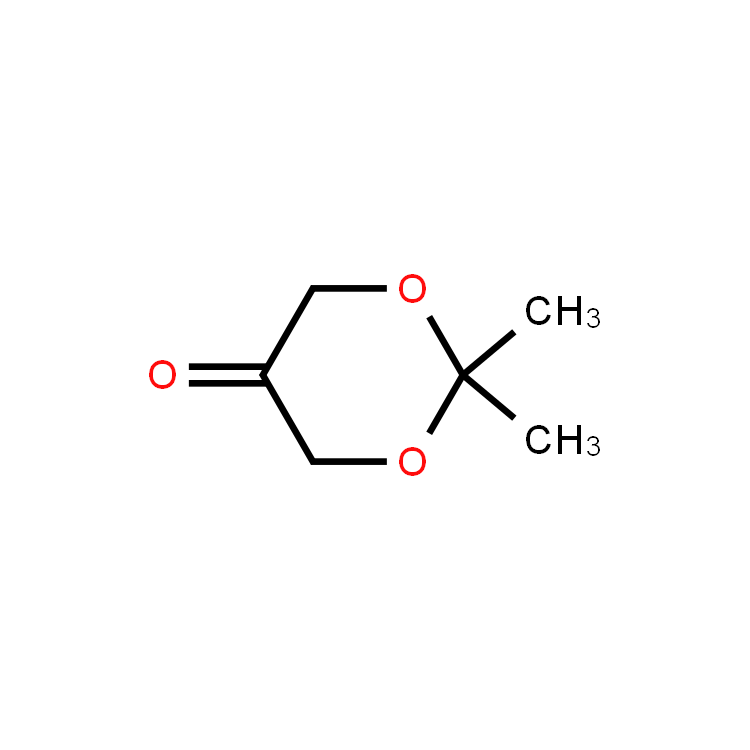
2,2-Dimethyl-1,3-dioxan-5-one、74181-34-3
AI Product Description
*The following content is generated by AI and is for reference only.
2,2-Dimethyl-1,3-dioxan-5-one is a specialized cyclic organic compound belonging to the class of acetals and lactones. Its molecular formula is C6H10O3, and it is widely recognized by its CAS registry number 7648-95-5. This chemical structure features a six-membered ring containing two oxygen atoms at positions 1 and 3, with two methyl groups attached to the second carbon and a ketone functional group at the fifth position. The molecule serves as a valuable intermediate in organic synthesis, particularly in the pharmaceutical and agrochemical industries. Due to its specific acetal nature, it acts as an effective protecting group for carbonyl functionalities, allowing chemists to mask reactive aldehyde or ketone groups during multi-step synthesis sequences. Once the desired transformations are completed on other parts of the molecule, the protecting group can be selectively removed under mild acidic conditions without damaging sensitive moieties elsewhere.
In addition to its role as a protecting agent, this compound finds applications in the development of novel heterocyclic systems. Researchers utilize it as a starting material for constructing complex bicyclic frameworks that exhibit potential biological activity. The presence of the gem-dimethyl group provides steric bulk and conformational stability, which can influence the reactivity and stereochemical outcome of subsequent reactions. Furthermore, variations of this scaffold are investigated for their potential use in polymer chemistry, where they might serve as monomers or cross-linking agents to create materials with specific thermal or mechanical properties. While not a commodity chemical available in vast quantities, 2,2-dimethyl-1,3-dioxan-5-one is a critical tool for fine chemical manufacturers requiring high-purity intermediates for bespoke synthesis routes. Its unique combination of stability and reactivity makes it indispensable for advanced research laboratories focusing on medicinal chemistry and material science innovation. Safety data indicates standard handling precautions for organic solvents, though specific toxicity profiles should always be verified against current safety data sheets before laboratory use.











 (All Rights Reserved)
![8-Oxa-1,3-diazaspiro[4.5]decane-2,4-dione](https://eimg.pharmasources.com/image/product/20250403/60fa7223d5a34f24138486ceea0ffb15jpg)
![6,8-Dioxo-5,7-diazaspiro[3.4]octane-2-carboxylic acid](https://eimg.pharmasources.com/image/product/20250403/02effeb5a7639bc84ff1f3add3c0c64fjpg)
![8,16-Diazadispiro[6.1.6.2]heptadecan-17-one](https://eimg.pharmasources.com/image/product/20250403/ca91cba8b87e53fc879f8d8764873a40jpg)