*The following content is generated by AI and is for reference only.
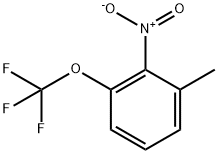
2-Nitro-3-trifluoromethoxytoluene is a specialized organic intermediate characterized by the presence of both a nitro group and a trifluoromethoxy substituent on a toluene backbone. Its molecular formula is C8H6F3NO3, and it is identified by CAS Registry Number 100759-66-4. This compound serves as a critical building block in the synthesis of advanced pharmaceutical agents, agrochemicals, and high-performance electronic materials. The introduction of the trifluoromethoxy (-OCF3) group significantly enhances the lipophilicity, metabolic stability, and membrane permeability of final drug candidates, making it highly valuable in medicinal chemistry for optimizing lead compounds.
In the agrochemical sector, this molecule acts as a precursor for developing novel herbicides and fungicides with improved environmental profiles. The electron-withdrawing nature of the nitro and -OCF3 groups allows for versatile chemical modifications, enabling researchers to fine-tune the biological activity of resulting derivatives. Furthermore, its unique structural features contribute to the development of liquid crystals and OLED materials used in next-generation display technologies. Due to the specific reactivity of the nitro group, it facilitates various reduction and substitution reactions essential for constructing complex heterocyclic systems found in modern therapeutics.
Safety handling requires strict adherence to laboratory protocols, as nitroaromatic compounds can be sensitive to heat and shock. Storage should be conducted in cool, dry environments away from incompatible oxidizers or reducing agents. While not widely available as a bulk commodity, it is frequently sourced from specialty chemical suppliers for research and development purposes. The demand for such fluorinated intermediates continues to grow as industries seek molecules with superior physicochemical properties. Consequently, 2-nitro-3-trifluoromethoxytoluene remains an indispensable tool for chemists aiming to innovate in drug discovery and material science, bridging the gap between fundamental organic synthesis and commercial application. Its role underscores the importance of fluorine-containing motifs in contemporary chemical engineering and product formulation strategies.