Product Description
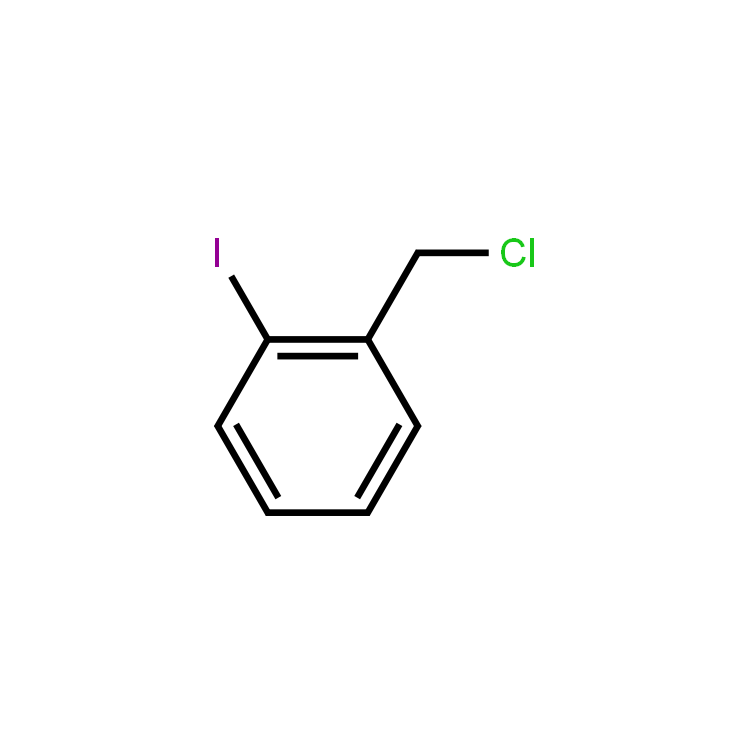
2-Iodobenzyl chloride、59473-45-9
AI Product Description
*The following content is generated by AI and is for reference only.
2-Iodobenzyl chloride is a specialized organic halide widely utilized in synthetic chemistry as a versatile building block for constructing complex molecular architectures. With the chemical formula C7H6ClI and the CAS Registry Number 534-08-9, this compound features a benzene ring substituted with both an iodine atom at the ortho position and a chloromethyl group. The presence of two distinct halogen atoms on the same aromatic scaffold endows it with unique reactivity patterns, making it particularly valuable in cross-coupling reactions and nucleophilic substitution processes.
In pharmaceutical research, 2-Iodobenzyl chloride serves as a crucial intermediate for synthesizing bioactive compounds, including various kinase inhibitors and anti-inflammatory agents. The iodine substituent acts as an excellent leaving group or coupling partner in palladium-catalyzed reactions such as Suzuki-Miyaura, Heck, and Sonogashira couplings, facilitating the attachment of diverse functional groups to the aromatic core. Simultaneously, the benzylic chloride moiety offers high susceptibility to nucleophilic attack, allowing chemists to introduce amines, thiols, or other heterocycles to generate libraries of potential drug candidates efficiently.
Beyond medicinal chemistry, this reagent finds significant application in materials science, specifically in the development of functionalized polymers and liquid crystals. Its ability to form stable carbon-halogen bonds under mild conditions enables precise modification of polymer backbones, enhancing properties like thermal stability or optical characteristics. Furthermore, researchers utilize it in the synthesis of radiopharmaceuticals, where the iodine atom can be exchanged with radioactive isotopes for diagnostic imaging purposes.
Handling 2-Iodobenzyl chloride requires standard safety precautions due to its potential irritant properties and light sensitivity. It should be stored in cool, dark environments to prevent degradation. As a high-value specialty chemical, it is primarily supplied by major fine chemical manufacturers for laboratory-scale research and industrial process development. Its dual functionality makes it an indispensable tool for chemists aiming to accelerate the discovery of novel therapeutic agents and advanced functional materials, bridging the gap between simple aromatic precursors and sophisticated target molecules.











 (All Rights Reserved)
![8-Oxa-1,3-diazaspiro[4.5]decane-2,4-dione](https://eimg.pharmasources.com/image/product/20250403/60fa7223d5a34f24138486ceea0ffb15jpg)
![6,8-Dioxo-5,7-diazaspiro[3.4]octane-2-carboxylic acid](https://eimg.pharmasources.com/image/product/20250403/02effeb5a7639bc84ff1f3add3c0c64fjpg)
![8,16-Diazadispiro[6.1.6.2]heptadecan-17-one](https://eimg.pharmasources.com/image/product/20250403/ca91cba8b87e53fc879f8d8764873a40jpg)