*The following content is generated by AI and is for reference only.
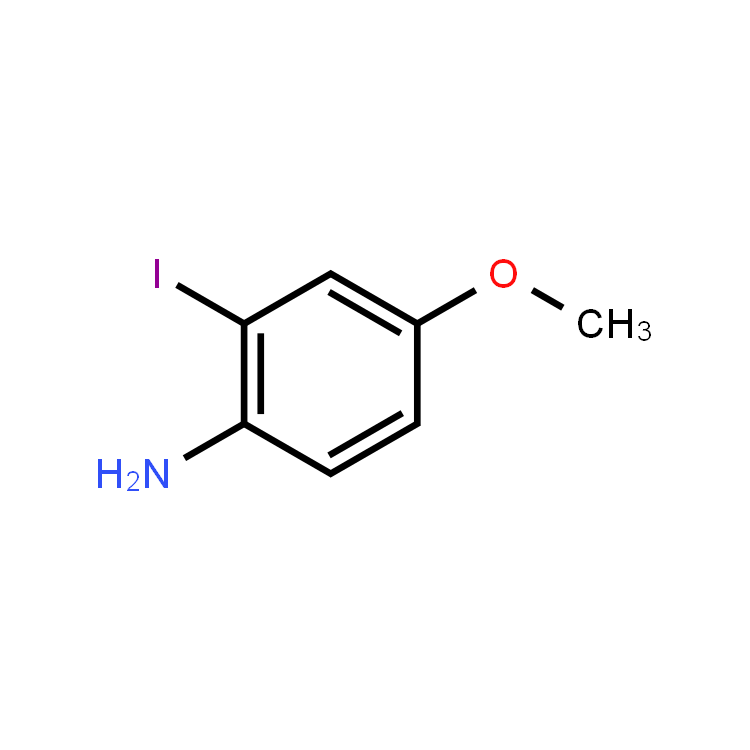
2-Iodo-4-methoxyaniline is a specialized organic intermediate widely utilized in the pharmaceutical and agrochemical industries for the synthesis of complex heterocyclic compounds. With the chemical formula C7H8INO and a CAS Registry Number of 1063-59-6, this compound features an aniline core substituted with a methoxy group at the para position and a heavy iodine atom at the ortho position. The presence of the iodine substituent makes it particularly valuable as a versatile building block in transition metal-catalyzed cross-coupling reactions, such as Suzuki-Miyaura, Heck, and Sonogashira couplings. These reactions are pivotal for constructing biaryl scaffolds and functionalized aromatic systems found in numerous bioactive molecules.
In drug discovery research, 2-iodo-4-methoxyaniline serves as a critical precursor for synthesizing kinase inhibitors, antitumor agents, and anti-inflammatory drugs. The electron-donating methoxy group enhances the nucleophilicity of the amine nitrogen, facilitating further derivatization, while the iodine atom provides a high-yield site for introducing diverse carbon or heteroatom chains. This dual functionality allows medicinal chemists to rapidly generate library compounds for structure-activity relationship (SAR) studies. Additionally, the compound finds applications in the development of advanced materials, including liquid crystals and fluorescent probes, where its specific electronic properties contribute to desired optical characteristics.
From a safety perspective, this substance should be handled with standard laboratory precautions due to potential toxicity and sensitivity to light. It is typically stored in cool, dry conditions away from strong oxidizing agents to prevent decomposition. As a high-purity reagent, it is essential for researchers aiming to produce consistent results in synthetic chemistry workflows. Its availability supports the efficient production of next-generation therapeutics and functional materials, making it an indispensable asset in modern chemical manufacturing and academic research laboratories worldwide.