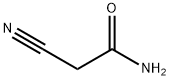
Cyanoacetamide is used in the synthesis of acetonitrile and electroplating solutions, as well as in the synthesis of drugs such as aminopterin and methotrexate.
E-mail: specialchem5@ichemie.com
*The following content is generated by AI and is for reference only.
2-Cyanoacetamide is a versatile organic compound widely utilized in the fields of pharmaceutical chemistry, agrochemical synthesis, and materials science. Its molecular formula is C3H4N2O, reflecting a structure that combines an amide group with a cyano functionality attached to an acetyl backbone. The substance is identified by the CAS Registry Number 107-15-3, a unique identifier essential for chemical inventory management and regulatory compliance globally.
Physically, 2-cyanoacetamide typically appears as a white to off-white crystalline powder. It exhibits moderate solubility in water and polar organic solvents, making it convenient for various synthetic protocols. The compound serves as a crucial building block in heterocyclic chemistry. One of its primary applications lies in the synthesis of pyridines, pyrimidines, and other nitrogen-containing heterocycles, which are fundamental scaffolds in numerous bioactive molecules. In the pharmaceutical industry, derivatives of this compound have been explored for their potential therapeutic properties, including antimicrobial and anticancer activities, although specific drug candidates vary based on structural modifications.
Beyond medicine, 2-cyanoacetamide plays a significant role in agricultural research. It is employed as an intermediate in the production of fungicides and herbicides designed to protect crops from pests and diseases. The nitrile group allows for diverse nucleophilic substitutions, enabling chemists to construct complex molecular architectures efficiently. Furthermore, its reactivity makes it valuable in the development of fluorescent probes and luminescent materials used in analytical chemistry and imaging technologies.
Safety considerations are paramount when handling this chemical. While not classified as highly toxic, standard laboratory precautions apply, including the use of personal protective equipment to avoid skin contact or inhalation of dust. Proper storage in a cool, dry place away from incompatible oxidizers ensures stability. As research continues, new applications for 2-cyanoacetamide are likely to emerge, solidifying its status as a key reagent in modern chemical synthesis and industrial manufacturing processes. Its balance of reactivity and availability ensures its continued relevance in both academic laboratories and large-scale production facilities.




 (All Rights Reserved)
![6,8-Dioxo-5,7-diazaspiro[3.4]octane-2-carboxylic acid](https://eimg.pharmasources.com/image/product/20250403/02effeb5a7639bc84ff1f3add3c0c64fjpg)
![8-Oxa-1,3-diazaspiro[4.5]decane-2,4-dione](https://eimg.pharmasources.com/image/product/20250403/60fa7223d5a34f24138486ceea0ffb15jpg)
![8,16-Diazadispiro[6.1.6.2]heptadecan-17-one](https://eimg.pharmasources.com/image/product/20250403/ca91cba8b87e53fc879f8d8764873a40jpg)
