Product Description
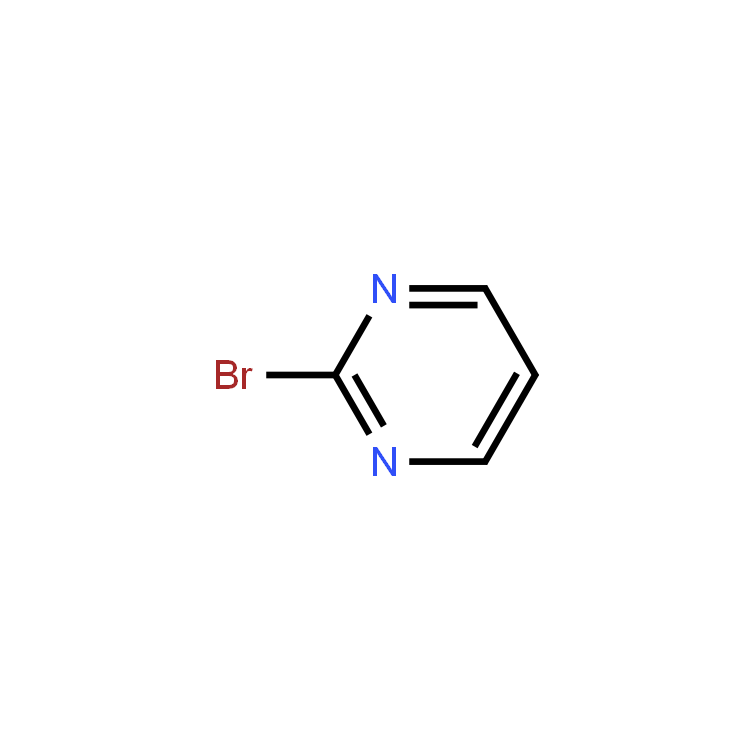
2-Bromopyrimidine、4595-60-2
AI Product Description
*The following content is generated by AI and is for reference only.
2-Bromopyrimidine is a vital heterocyclic building block widely utilized in organic synthesis and medicinal chemistry. With the molecular formula C4H3BrN2 and a CAS registry number of 1709-65-5, this compound features a pyrimidine ring substituted with a bromine atom at the second position. The presence of the halogen substituent renders the molecule highly reactive towards nucleophilic substitution and transition metal-catalyzed cross-coupling reactions, making it an indispensable precursor for constructing complex nitrogen-containing architectures.
In pharmaceutical research, 2-bromopyrimidine serves as a key intermediate for synthesizing bioactive compounds, including antiviral agents, kinase inhibitors, and anticancer drugs. Its structural similarity to natural nucleobases allows chemists to develop novel therapeutics targeting specific biological pathways. Furthermore, the compound finds extensive application in the agrochemical industry for creating herbicides and fungicides that protect crops from various pathogens. In materials science, it is employed in the fabrication of organic light-emitting diodes (OLEDs) and conductive polymers due to its unique electronic properties.
The chemical versatility of 2-bromopyrimidine stems from its ability to participate in Suzuki-Miyaura, Heck, and Sonogashira couplings. These reactions enable the efficient attachment of diverse functional groups, facilitating the rapid generation of structure-activity relationship libraries during drug discovery campaigns. Additionally, it acts as a starting material for synthesizing fused heterocyclic systems, which are often found in high-value fine chemicals. Handling requires standard laboratory precautions, as the substance may be irritating to skin and eyes. Storage should be conducted in a cool, dry place away from incompatible oxidizers to maintain stability. Overall, 2-bromopyrimidine remains a cornerstone reagent in modern synthetic methodology, bridging the gap between simple heterocycles and advanced functional molecules essential for advancements in healthcare, agriculture, and technology.





 (All Rights Reserved)
![8-Oxa-1,3-diazaspiro[4.5]decane-2,4-dione](https://eimg.pharmasources.com/image/product/20250403/60fa7223d5a34f24138486ceea0ffb15jpg)
![6,8-Dioxo-5,7-diazaspiro[3.4]octane-2-carboxylic acid](https://eimg.pharmasources.com/image/product/20250403/02effeb5a7639bc84ff1f3add3c0c64fjpg)


![8,16-Diazadispiro[6.1.6.2]heptadecan-17-one](https://eimg.pharmasources.com/image/product/20250403/ca91cba8b87e53fc879f8d8764873a40jpg)