*The following content is generated by AI and is for reference only.
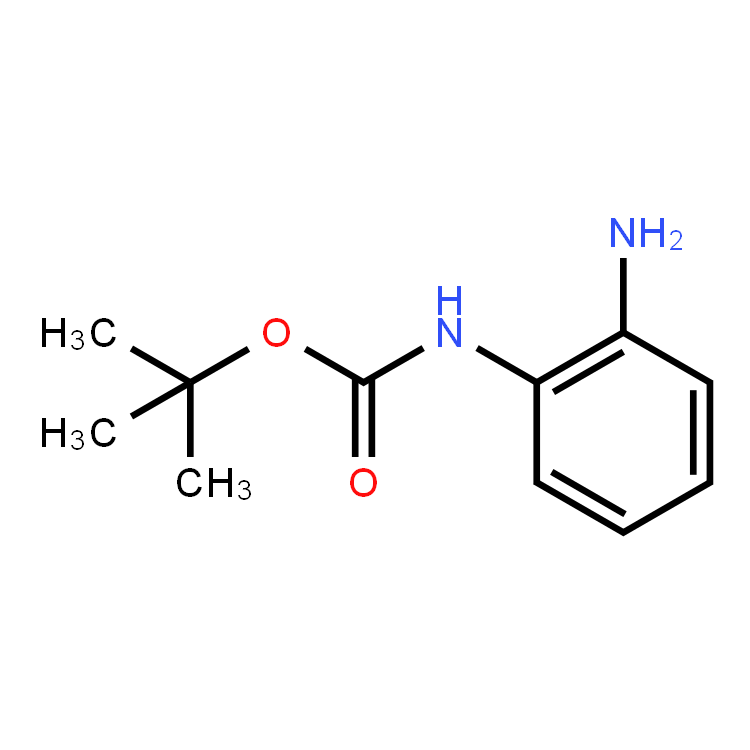
(2-Amino-phenyl)-carbamic Acid Tert-butyl Ester, commonly known as tert-butyl (2-aminophenyl)carbamate, is a specialized organic intermediate widely utilized in pharmaceutical and agrochemical research. With the molecular formula C11H15NO2 and a CAS Registry Number of 104938-87-0, this compound serves as a critical building block for synthesizing complex heterocyclic structures. Its chemical structure features an amino group ortho to a carbamate moiety protected by a bulky tert-butyl group, which provides essential stability during multi-step synthetic sequences while allowing for selective deprotection under acidic conditions.
The primary application of this reagent lies in the development of novel bioactive molecules, particularly those containing benzimidazole or benzoxazole scaffolds, which are prevalent in modern drug discovery programs targeting oncology, cardiovascular diseases, and infectious agents. Researchers frequently employ it as a precursor for cyclization reactions to form fused ring systems. The tert-butyl protecting group is strategically chosen because it can be easily removed using standard strong acids like trifluoroacetic acid without affecting other sensitive functional groups within the molecule, ensuring high yield and purity in final products.
Beyond pharmaceutical synthesis, this compound finds utility in material science for creating advanced polymers with specific thermal or mechanical properties. It acts as a monomer or cross-linking agent in the production of specialty resins used in coatings and adhesives. The versatility of its chemical reactivity makes it indispensable for medicinal chemists designing libraries of compounds for high-throughput screening. Furthermore, its solubility characteristics facilitate its use in various organic solvents, enhancing its compatibility with diverse reaction conditions ranging from palladium-catalyzed couplings to nucleophilic substitutions. As the demand for innovative therapeutics grows, the role of such well-defined intermediates becomes increasingly vital in accelerating the pipeline from initial design to clinical candidate selection. This compound represents a key tool for advancing chemical biology and materials engineering through precise structural manipulation.