Product Description
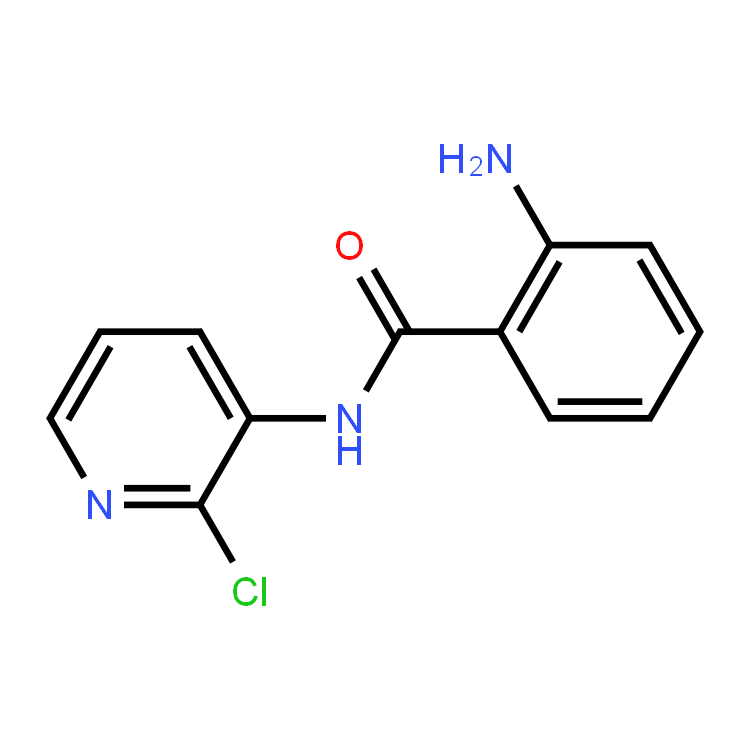
2-AMINO-N-(2-CHLOROPYRIDIN-3-YL)BENZAMIDE、956-30-9
AI Product Description
*The following content is generated by AI and is for reference only.
2-Amino-N-(2-chloropyridin-3-yl)benzamide is a specialized organic intermediate characterized by its unique heterocyclic structure, combining an amino-substituted benzamide moiety with a chlorinated pyridine ring. Its molecular formula is C12H9ClN4O, and it is identified by the CAS number 1003785-69-4. This compound features a planar aromatic system with distinct electron-donating and electron-withdrawing groups, which significantly influences its chemical reactivity and potential for forming complex derivatives.
In the pharmaceutical industry, this molecule serves as a critical building block for the synthesis of novel bioactive compounds. The presence of the primary amine group on the benzene ring and the chlorine atom on the pyridine ring offers versatile sites for further functionalization, such as nucleophilic substitution or coupling reactions. Consequently, it is frequently utilized in the development of kinase inhibitors, anti-inflammatory agents, and other therapeutic candidates targeting specific disease pathways. Researchers leverage its structural properties to optimize binding affinity and selectivity within biological systems.
Beyond medicine, 2-amino-N-(2-chloropyridin-3-yl)benzamide finds applications in materials science, particularly in the design of advanced ligands for coordination chemistry. The nitrogen atoms in both the amide and pyridine rings act as effective chelating sites, facilitating the formation of stable metal complexes used in catalysis or luminescent materials. Additionally, its stability under various conditions makes it suitable for use in agrochemical research, where it may contribute to the creation of new herbicides or fungicides with improved environmental profiles.
The synthesis of this compound typically involves the condensation of 2-aminobenzoyl chloride with 2-chloro-3-aminopyridine under controlled conditions, requiring precise temperature regulation to ensure high purity. As demand grows for targeted therapies and functional materials, the role of such heterocyclic intermediaries becomes increasingly pivotal in modern chemical manufacturing. Continuous research aims to expand its utility while minimizing production costs and environmental impact, solidifying its status as a valuable asset in the global chemical supply chain for scientific innovation.











 (All Rights Reserved)
![8-Oxa-1,3-diazaspiro[4.5]decane-2,4-dione](https://eimg.pharmasources.com/image/product/20250403/60fa7223d5a34f24138486ceea0ffb15jpg)
![6,8-Dioxo-5,7-diazaspiro[3.4]octane-2-carboxylic acid](https://eimg.pharmasources.com/image/product/20250403/02effeb5a7639bc84ff1f3add3c0c64fjpg)
![8,16-Diazadispiro[6.1.6.2]heptadecan-17-one](https://eimg.pharmasources.com/image/product/20250403/ca91cba8b87e53fc879f8d8764873a40jpg)