Product Description
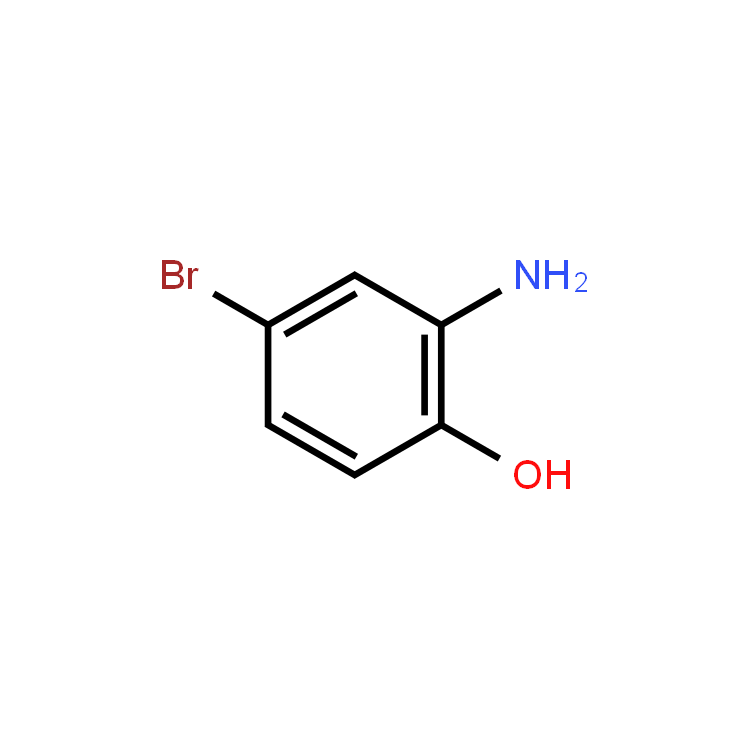
2-Amino-4-bromophenol、40925-68-6
AI Product Description
*The following content is generated by AI and is for reference only.
2-Amino-4-bromophenol is a versatile aromatic compound widely utilized in the pharmaceutical, agrochemical, and materials science industries. With the molecular formula C6H6BrNO and a CAS registry number of 5830-91-7, this substance features a phenolic hydroxyl group ortho to an amino group and para to a bromine atom on the benzene ring. This unique substitution pattern endows the molecule with significant reactivity, making it an essential intermediate for synthesizing complex heterocyclic structures.
In the pharmaceutical sector, 2-amino-4-bromophenol serves as a critical building block for developing bioactive molecules, including antihypertensive agents, anti-inflammatory drugs, and potential anticancer compounds. The presence of both nucleophilic amino and hydroxyl groups allows for diverse chemical modifications, facilitating the construction of quinoline, isoquinoline, and benzoxazole derivatives, which are common scaffolds in modern drug discovery. Furthermore, its bromine substituent offers a strategic handle for cross-coupling reactions, such as Suzuki or Buchwald-Hartwig couplings, enabling the introduction of various functional groups to fine-tune pharmacological properties.
Beyond medicine, this compound finds applications in the synthesis of dyes and pigments, where its ability to form stable colored complexes is highly valued. In agricultural chemistry, it acts as a precursor for novel herbicides and fungicides designed to protect crops against specific pathogens while minimizing environmental impact. Additionally, researchers utilize 2-amino-4-bromophenol in the development of luminescent materials and organic light-emitting diodes (OLEDs) due to its electron-donating characteristics and structural rigidity.
Handling this chemical requires standard safety precautions, as it may be irritating to skin and eyes. Proper storage in cool, dry conditions away from incompatible oxidizers is recommended to maintain stability. As a specialized intermediate, high-purity grades are available to meet stringent requirements for research and industrial manufacturing. Its broad utility across multiple high-tech sectors underscores its importance in advancing chemical innovation and product development globally.





 (All Rights Reserved)
![8-Oxa-1,3-diazaspiro[4.5]decane-2,4-dione](https://eimg.pharmasources.com/image/product/20250403/60fa7223d5a34f24138486ceea0ffb15jpg)
![6,8-Dioxo-5,7-diazaspiro[3.4]octane-2-carboxylic acid](https://eimg.pharmasources.com/image/product/20250403/02effeb5a7639bc84ff1f3add3c0c64fjpg)

![8,16-Diazadispiro[6.1.6.2]heptadecan-17-one](https://eimg.pharmasources.com/image/product/20250403/ca91cba8b87e53fc879f8d8764873a40jpg)