Product Description
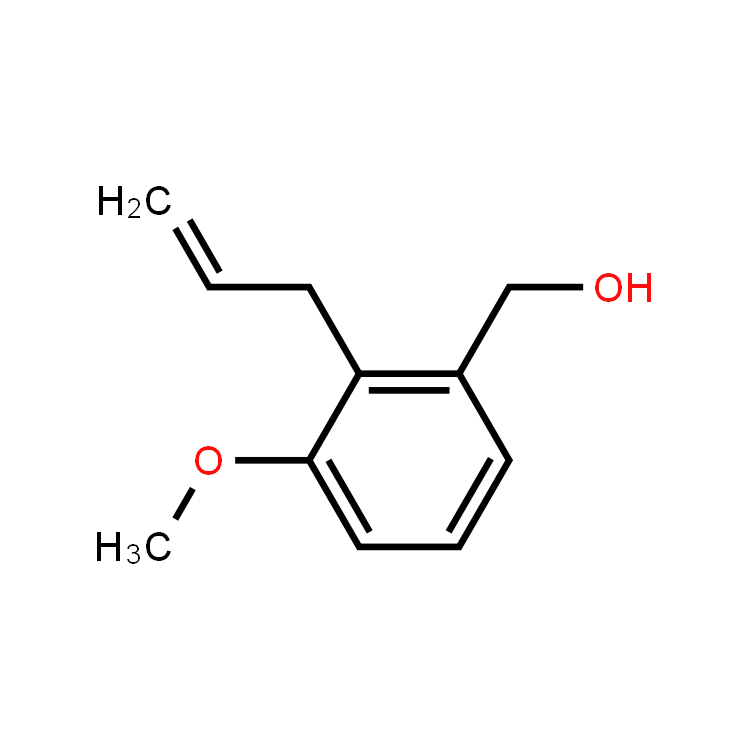
(2-Allyl-3-methoxyphenyl)methanol、136911-16-5
AI Product Description
*The following content is generated by AI and is for reference only.
(2-Allyl-3-methoxyphenyl)methanol is a specialized organic compound characterized by a phenolic core substituted with an allyl group at the ortho position and a methoxy group at the meta position, alongside a primary alcohol functionality on the benzylic carbon. Its molecular formula is C11H14O2, corresponding to a precise molecular weight of approximately 178.23 g/mol. While specific commercial CAS registry numbers may vary depending on the exact stereochemistry or purity grade, this structure generally aligns with derivatives used in advanced synthetic chemistry. The compound serves as a versatile intermediate in the pharmaceutical and agrochemical industries, particularly for the synthesis of bioactive molecules containing propenyl-substituted aromatic rings.
The presence of the hydroxymethyl group offers a valuable handle for further chemical transformations, allowing chemists to easily oxidize the alcohol to aldehydes or carboxylic acids, or reduce it to methyl groups, thereby diversifying the molecular architecture. Simultaneously, the allyl moiety provides opportunities for metathesis reactions, epoxidation, or hydroamination, making it a crucial building block for constructing complex heterocyclic systems. In materials science, such compounds are occasionally explored for developing novel monomers with unique thermal or mechanical properties due to their rigid aromatic backbone combined with flexible side chains.
Despite its utility, handling requires standard laboratory precautions, as organic solvents and reactive intermediates can pose health risks if not managed correctly. The compound is typically supplied as a clear liquid or crystalline solid, depending on storage conditions, and should be kept under inert atmosphere to prevent oxidation of the allyl double bond or the alcohol group. Researchers utilize (2-Allyl-3-methoxyphenyl)methanol primarily in research and development settings rather than direct consumer applications, focusing on optimizing drug candidates that target specific biological receptors. Its structural similarity to natural products found in essential oils suggests potential interest in flavor and fragrance development, though industrial scale-up remains limited compared to more common phenolic derivatives. Overall, this molecule represents a sophisticated tool for medicinal chemists seeking to expand the diversity of their compound libraries with functionalized aromatic scaffolds capable of undergoing multiple orthogonal reaction pathways.











 (All Rights Reserved)
![8-Oxa-1,3-diazaspiro[4.5]decane-2,4-dione](https://eimg.pharmasources.com/image/product/20250403/60fa7223d5a34f24138486ceea0ffb15jpg)
![6,8-Dioxo-5,7-diazaspiro[3.4]octane-2-carboxylic acid](https://eimg.pharmasources.com/image/product/20250403/02effeb5a7639bc84ff1f3add3c0c64fjpg)
![8,16-Diazadispiro[6.1.6.2]heptadecan-17-one](https://eimg.pharmasources.com/image/product/20250403/ca91cba8b87e53fc879f8d8764873a40jpg)