Product Description
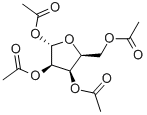
1,2,3,5-tetra-O-acetyl-beta-L-ribo-furanose
CAS NO:144490-03-9
AI Product Description
*The following content is generated by AI and is for reference only.
1,2,3,5-tetra-O-acetyl-beta-L-ribofuranose is a specialized carbohydrate derivative widely utilized in the fields of organic synthesis, medicinal chemistry, and nucleoside analog research. This compound serves as a crucial building block for the preparation of L-nucleosides, which are structurally distinct from their natural D-counterparts and often exhibit unique biological activities, including potent antiviral and anticancer properties. The molecule features a ribofuranose ring where all four hydroxyl groups have been protected by acetyl groups, rendering it highly stable and suitable for multi-step synthetic sequences without premature side reactions.
The chemical identity of this substance is defined by its molecular formula, C₁₃H₁₈O₉, and it carries the CAS Registry Number 40679-87-6. Structurally, it represents the beta-anomer of the L-ribose configuration, fully acetylated at the 1, 2, 3, and 5 positions. This specific stereochemistry is vital for researchers aiming to synthesize L-ribonucleosides, such as those used in the development of therapeutic agents against RNA viruses or as probes in enzymatic studies. The acetyl protecting groups can be selectively removed under controlled conditions to reveal the free hydroxyl functionalities required for further glycosylation or coupling reactions with heterocyclic bases.
In laboratory settings, this reagent is primarily employed as an intermediate in the total synthesis of complex oligonucleotides and modified sugars. Its high purity ensures reproducible results in pharmaceutical manufacturing processes where stereochemical precision is non-negotiable. Furthermore, due to the increasing demand for novel therapeutics targeting resistant viral strains, derivatives based on L-ribose scaffolds have gained significant attention. Researchers utilize 1,2,3,5-tetra-O-acetyl-beta-L-ribofuranose to construct libraries of potential drug candidates, facilitating high-throughput screening for biological activity. It is typically supplied as a white crystalline solid, soluble in common organic solvents like dichloromethane, ethyl acetate, and chloroform, but insoluble in water, reflecting its lipophilic nature derived from the acetyl substituents. Safety data indicates standard precautions for handling organic esters, though it is generally considered stable under ambient storage conditions when kept dry and away from strong acids or bases that could catalyze deacetylation.





 (All Rights Reserved)



![8-Oxa-1,3-diazaspiro[4.5]decane-2,4-dione](https://eimg.pharmasources.com/image/product/20250403/60fa7223d5a34f24138486ceea0ffb15jpg)

![8,16-Diazadispiro[6.1.6.2]heptadecan-17-one](https://eimg.pharmasources.com/image/product/20250403/ca91cba8b87e53fc879f8d8764873a40jpg)

![6,8-Dioxo-5,7-diazaspiro[3.4]octane-2-carboxylic acid](https://eimg.pharmasources.com/image/product/20250403/02effeb5a7639bc84ff1f3add3c0c64fjpg)
