Product Description
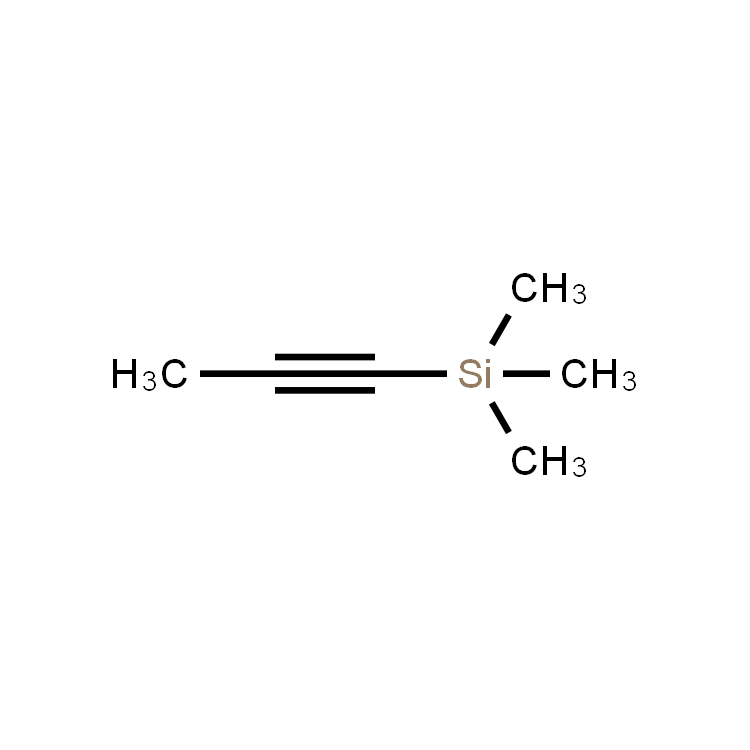
1-(Trimethylsilyl)propyne、6224-91-5
AI Product Description
*The following content is generated by AI and is for reference only.
1-(Trimethylsilyl)propyne, chemically known as TMS-propyne or 3-trimethylsilanyl-1-propyne, is a specialized organosilicon compound widely utilized in organic synthesis and materials science. Its molecular formula is C6H12Si, and it carries the CAS Registry Number 5342-97-0. This clear, colorless liquid features a terminal alkyne group protected by a trimethylsilyl (TMS) moiety, which provides exceptional stability against premature polymerization while maintaining high reactivity under specific catalytic conditions.
The primary utility of 1-(trimethylsilyl)propyne lies in its role as a versatile building block for constructing complex carbon frameworks. Chemists frequently employ it in Sonogashira coupling reactions to introduce silyl-protected alkynyl fragments into aromatic or heterocyclic systems. The TMS group serves as a temporary protecting group that can be easily removed using fluoride sources, such as tetrabutylammonium fluoride (TBAF), to reveal the reactive terminal alkyne for subsequent transformations. This deprotection strategy is crucial in the total synthesis of natural products, pharmaceutical intermediates, and bioactive molecules where precise control over functional group timing is required.
Beyond traditional organic synthesis, this compound finds significant application in the development of advanced materials. It acts as a monomer or co-monomer in the preparation of polysilynes and conductive polymers. When subjected to transition-metal catalyzed polymerization, it yields poly(arylene ethynylene)s with unique electronic properties, making them candidates for use in organic light-emitting diodes (OLEDs), photovoltaic cells, and molecular wires. Furthermore, its volatility and thermal stability make it suitable as a precursor for chemical vapor deposition (CVD) processes aimed at depositing silicon-containing thin films.
Due to its sensitivity to moisture and potential flammability, handling requires standard inert atmosphere techniques. Despite these precautions, 1-(trimethylsilyl)propyne remains an indispensable reagent in modern laboratory settings. Its ability to bridge simple hydrocarbon chemistry with silicon-based functionality allows researchers to access novel structural motifs that are otherwise difficult to synthesize. As research into nanomaterials and fine chemicals continues to expand, the demand for high-purity variants of this compound is expected to grow, solidifying its status as a cornerstone reagent in both academic inquiry and industrial innovation.











 (All Rights Reserved)
![8-Oxa-1,3-diazaspiro[4.5]decane-2,4-dione](https://eimg.pharmasources.com/image/product/20250403/60fa7223d5a34f24138486ceea0ffb15jpg)
![6,8-Dioxo-5,7-diazaspiro[3.4]octane-2-carboxylic acid](https://eimg.pharmasources.com/image/product/20250403/02effeb5a7639bc84ff1f3add3c0c64fjpg)
![8,16-Diazadispiro[6.1.6.2]heptadecan-17-one](https://eimg.pharmasources.com/image/product/20250403/ca91cba8b87e53fc879f8d8764873a40jpg)