Product Description
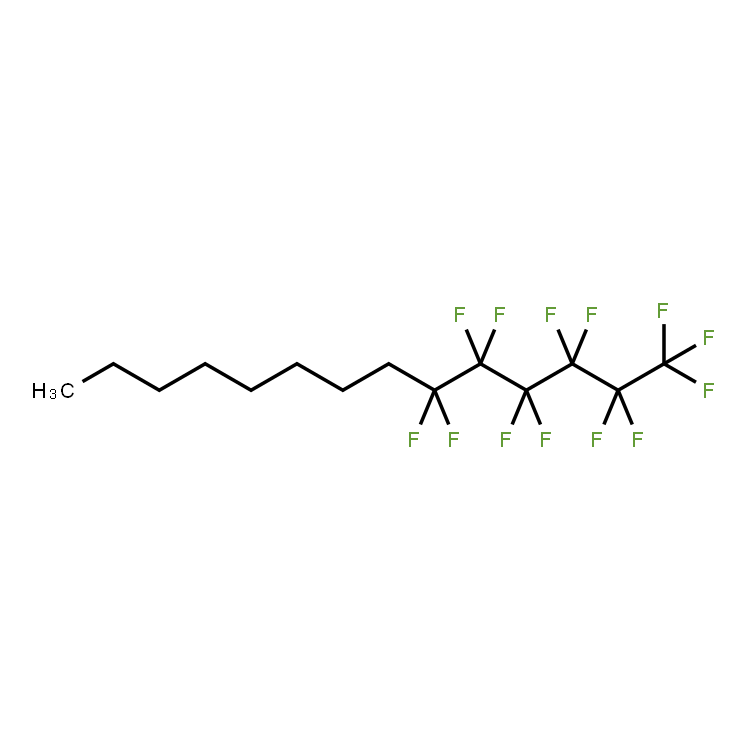
1-(Perfluorohexyl)octane、133331-77-8
AI Product Description
*The following content is generated by AI and is for reference only.
1-(Perfluorohexyl)octane is a specialized fluorinated organic compound characterized by the unique combination of a perfluorohexyl chain and an octyl group. Its chemical structure features a fully fluorinated six-carbon segment attached to an eight-carbon alkyl chain, resulting in a molecule with exceptional thermal stability, chemical inertness, and low surface tension. The CAS Registry Number for this substance is 2943-87-5. While specific molecular formulas may vary slightly depending on precise isomeric definitions, it generally aligns with the formula C14H20F13, reflecting its highly fluorinated nature which imparts distinct physicochemical properties compared to conventional hydrocarbons.
This compound serves primarily as a high-performance intermediate or additive in advanced industrial applications. Due to its amphiphilic character, where the fluorocarbon tail provides extreme hydrophobicity and lipophobicity while the alkyl chain offers compatibility with organic matrices, it is frequently utilized in the formulation of specialized lubricants and hydraulic fluids designed for extreme temperature environments. These fluids maintain viscosity and performance under conditions where standard oils would degrade or evaporate. Furthermore, 1-(Perfluorohexyl)octane finds utility in the development of novel surfactants for oil recovery processes, enhancing the efficiency of extracting crude oil from reservoirs by reducing interfacial tension between water, oil, and rock surfaces.
In the electronics sector, its low dielectric constant and excellent electrical insulation properties make it a candidate for use in electronic cleaning agents and heat transfer fluids for data centers or high-power computing systems. It is also explored in the synthesis of functional materials, including coatings that provide superior resistance to staining, corrosion, and environmental degradation. Researchers leverage its unique solubility profile to create custom solvent systems for complex chemical reactions involving sensitive catalysts. However, handling requires strict safety protocols due to potential persistence in the environment and specific toxicity profiles associated with long-chain perfluoroalkyl substances. As regulatory frameworks regarding PFAS evolve, the application scope of such compounds continues to be scrutinized, driving innovation toward more sustainable alternatives while maintaining the critical performance benefits required in aerospace, defense, and high-tech manufacturing industries.





 (All Rights Reserved)
![8-Oxa-1,3-diazaspiro[4.5]decane-2,4-dione](https://eimg.pharmasources.com/image/product/20250403/60fa7223d5a34f24138486ceea0ffb15jpg)
![6,8-Dioxo-5,7-diazaspiro[3.4]octane-2-carboxylic acid](https://eimg.pharmasources.com/image/product/20250403/02effeb5a7639bc84ff1f3add3c0c64fjpg)
![8,16-Diazadispiro[6.1.6.2]heptadecan-17-one](https://eimg.pharmasources.com/image/product/20250403/ca91cba8b87e53fc879f8d8764873a40jpg)