Product Description
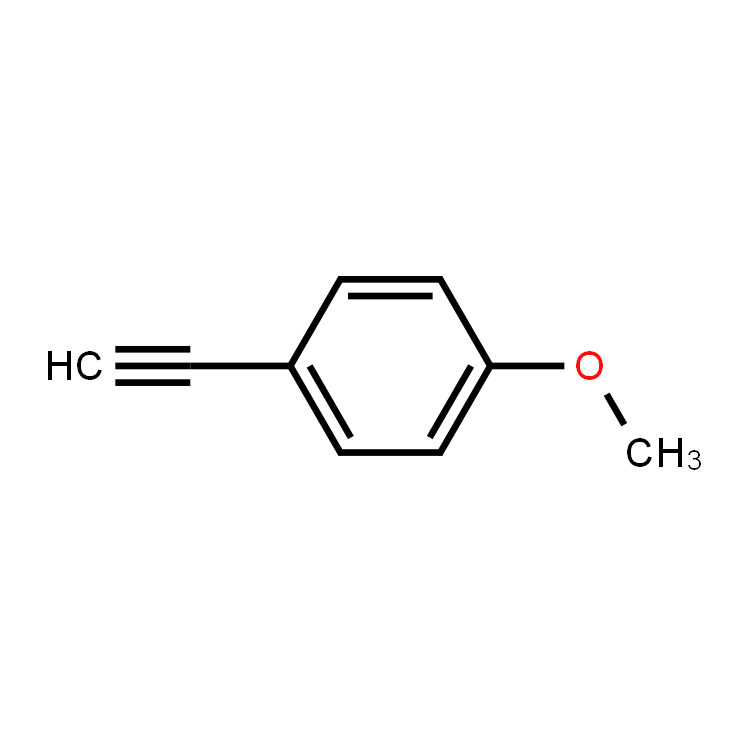
1-Ethynyl-4-methoxybenzene、768-60-5
AI Product Description
*The following content is generated by AI and is for reference only.
1-Ethynyl-4-methoxybenzene, also known as 4-methoxyphenylacetylene, is a specialized organic compound widely utilized in the fields of medicinal chemistry, materials science, and advanced organic synthesis. Its molecular formula is C9H8O, and it carries the unique CAS registry number 20653-67-8. Structurally, this molecule features an aromatic benzene ring substituted with a methoxy group at the para position and a terminal ethynyl group, creating a versatile scaffold for further chemical modifications. The presence of the electron-donating methoxy group significantly influences the reactivity of the alkyne moiety, making it an ideal substrate for various transition-metal-catalyzed coupling reactions.
In the pharmaceutical industry, 1-Ethynyl-4-methoxybenzene serves as a critical building block for synthesizing complex bioactive molecules. Researchers frequently employ it to construct heterocyclic systems or to introduce specific functional groups into drug candidates during lead optimization processes. The terminal alkyne functionality allows for efficient "click chemistry" applications, particularly copper-catalyzed azide-alkyne cycloaddition (CuAAC), which is renowned for its high yield and biocompatibility. This property makes the compound indispensable in the development of novel therapeutics targeting neurological disorders, anticancer agents, and antimicrobial compounds.
Beyond medicine, this chemical plays a pivotal role in the fabrication of functional organic materials. It is extensively used as a monomer or co-monomer in the synthesis of conjugated polymers and metal-organic frameworks (MOFs) designed for optoelectronic applications. These materials often exhibit unique electronic properties, such as enhanced conductivity or specific fluorescence, which are essential for developing next-generation organic light-emitting diodes (OLEDs) and solar cells. Furthermore, the compound finds utility in academic research as a standard reference material for studying reaction mechanisms involving alkynes and aromatic systems. Due to its stability and ease of handling under standard laboratory conditions, it remains a preferred choice for both industrial scale-up and small-scale exploratory studies. Safety protocols recommend handling the substance in well-ventilated areas, as with most organic solvents, though it generally presents low acute toxicity when managed correctly. Overall, 1-Ethynyl-4-methoxybenzene stands as a fundamental tool bridging theoretical chemistry and practical application across diverse scientific disciplines.





 (All Rights Reserved)
![8-Oxa-1,3-diazaspiro[4.5]decane-2,4-dione](https://eimg.pharmasources.com/image/product/20250403/60fa7223d5a34f24138486ceea0ffb15jpg)
![6,8-Dioxo-5,7-diazaspiro[3.4]octane-2-carboxylic acid](https://eimg.pharmasources.com/image/product/20250403/02effeb5a7639bc84ff1f3add3c0c64fjpg)
![8,16-Diazadispiro[6.1.6.2]heptadecan-17-one](https://eimg.pharmasources.com/image/product/20250403/ca91cba8b87e53fc879f8d8764873a40jpg)