
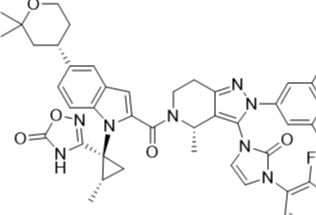
On February 28, BGB-16673, a BTK-targeted PROTAC drug of BeiGene, was launched for clinical trials for the first time in China. It is registered for clinical trials on ClinicalTrials.gov on August 16, 2021, with the indications including B-cell lymphoma, marginal zone lymphoma, follicular lymphoma and others. It is the initial PROTAC project launched by BeiGene.
PROTAC Technical Principles
PROTAC (Proteolysis-targeting chimera) uses a ubiquitin-proteasome system to lead targeted protein into degradation. With one end of the PROTAC molecule connected to the target protein and the other to the E3 ubiquitin ligase, the two are linked together by force. This accelerates the transfer of the E3 ubiquitin ligase protein to the target protein. And the ubiquitinated target protein is able to be identified and degraded by the proteasome. The physiological functions held by the target proteins will disappear as the target proteins are degraded. In this way, a pioneering approach of biomedical research and pharmacy makes its way through degrading target proteins and regulating their physiological functions.
Advantages of PROTAC
There are distinctive advantages of protein degradation agent of PROTAC, the greatest one of which is to target at the undruggable targets or mutant proteins, and conventional untargeted targets, including transcription factors and skeleton proteins. According to rough statistics, 80% of proteins in human cells are devoid of such sites. Surprisingly, PROTAC only needs to bind weakly to the target protein to specifically "mark" it. Therefore, the undruggable proteins are likely to be targeted by PROTAC technology, thus making a breakthrough on the conventional undruggable targets and overcoming the drug resistance. Besides, the drug, able to be reused since PROTAC shares an analogous reaction process with catalytic reaction, makes it possible to decrease the dose of the drug and enhance the safety.
Overcome of Drug Resistance for BTK-PROTAC
Small-molecule BTK inhibitors have been successfully applied in the treatment of B-cell lymphoma. However, the available BTK inhibitors in the market mainly produce enzyme inhibition through forming covalent bonds with cysteine residues of BTK active sites, which have great side effects and the drug-resistant mutations are easy to be produced by covalent binding, remaining a challenge in clinical treatment. However, the drug-resistant mutation of BTK-PROTAC can be resolved. In case that it can be marketed successfully, it can make more clinical benefits and better therapeutic drugs available for patients with B-cell malignant tumors.
Pioneering Enterprises of PROTAC: Arvinas
Arvinas is a new company of PROTAC technology globally, intending to selectively and efficiently degrade and get rid of morbific proteins by taking advantage of the human body's own natural protein processing system. Till now, Phase II clinical trials of two PROTAC drugs of the company have been launched, which are ARV-110 targeted androgen receptor (AR) and ARV-471 targeted estrogen receptor (ER).
Applied in Metastatic Castration-Resistant Prostate Cancer (mCRPC), ARV-110 will directly smash androgen receptor, hopefully augmenting the efficacy of conventional "possession" mechanism. Furthermore, ARV-110 is able to degrade the replication of the target protein. Hence, it is likely to handle the overexpression and mutation of it, which remain crucial factors for drug resistance.
The indication of ARV-471 is locally advanced or metastatic ER+/HER2-breast cancer. Regardless of the achievements of estrogen receptor inhibitors such as letrozole and fulvestrant in treating breast cancer, the drug resistance aggravates lots of patients' condition. Making use of PROTAC technology to degrade ER protein, ARV-471 is likely to handle the treatment of ER+ breast cancer.
On July 22, 2021, Arvinas and Pfizer proclaimed that they would develop and commercialize ARV-471 together. Based on the agreement, Arvinas will get an advance payment of US$ 650 million and a milestone payment of US$ 1.4 billion.
Besides, large pharmaceutical companies and bio pharmaceutical companies with PROTAC in the world include Pfizer, MSD, Genentech, AstraZeneca, Boehringer In...


































 (All Rights Reserved)