

The clean-in-place is a unique system, which allows pharma process equipment cleaning without taking it into cleaning or washing area. It consists of different accessories designed to clean equipment without disassembly from its installed area.
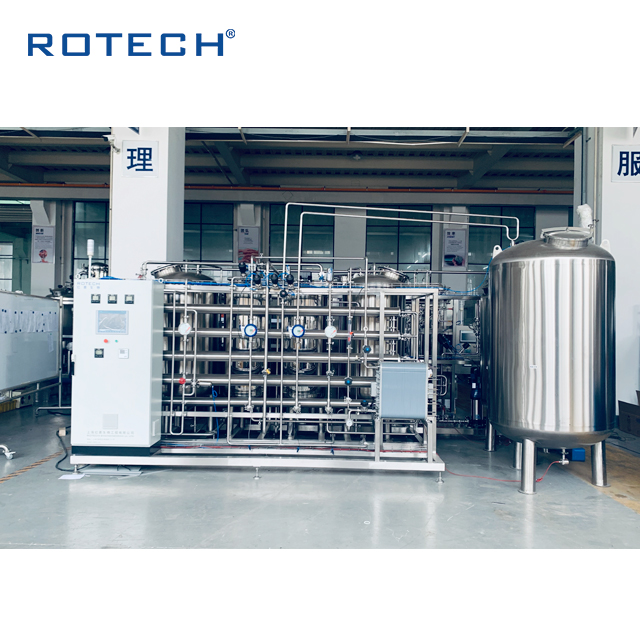
All the necessary components, such as cleaning agents, nozzle, piping, and tank are incorporated into the CIP system.
During the cleaning stages, the CIP automatically completes the process in pre-defined steps. Process equipment’s critical components, such as tanks, piping, and nozzles, are flushed through the cleaning agents.
Clean in Place system does not come with a standard machine. Instead, it is separately purchased from the machine manufacturer.
CIP system comes in two configurations. First, it is attached to the machine as a dedicated part and cannot be used with other machines. Its control is integrated with the machine's control system.
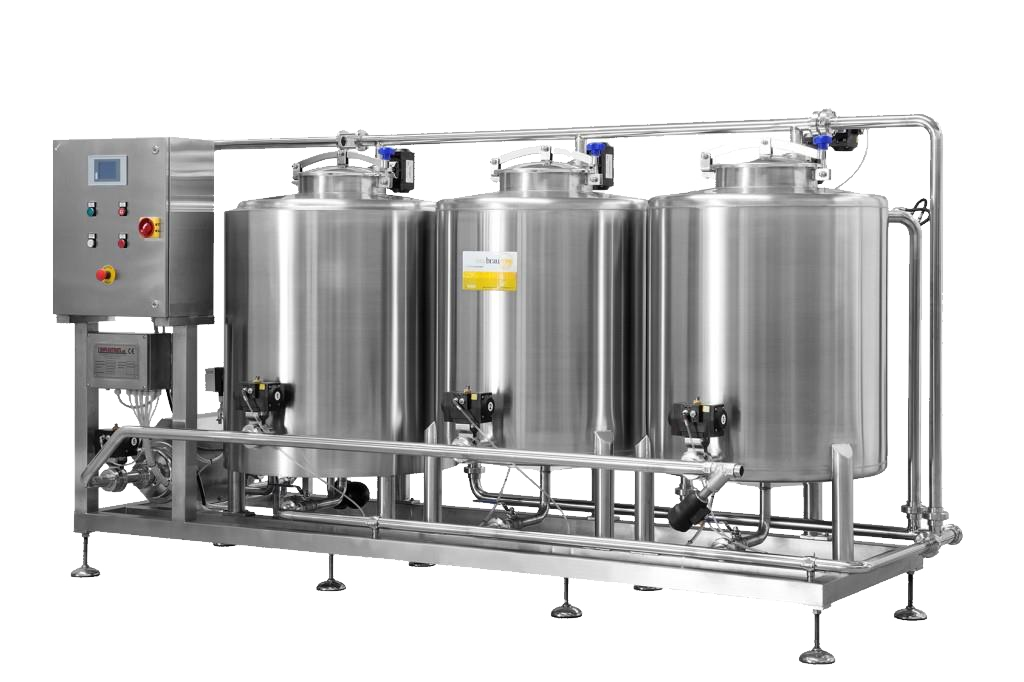
In the second configuration, CIP is a separate system in the form of a skid. In this configuration, the skid is not a dedicated part of the process equipment and is attached when required. It is individually controlled without a machine's control system.
Components of Clean In Place Systems?
Some standard components of CIP systems include the following.
Vessels
Vessels are used to prepare and store cleaning chemicals used during the cleaning process, and pumps take their supply from these vessels. The vessel is connected to the nozzle through appropriate piping to spray the cleaning agent in the equipment ( to be cleaned).
The capacity of the vessel depends on the CIP system specifications.
The vessel design characteristics are the same as that of pharmaceutical products, i.e., material that offers resistance to corrosion, no dead points, and surface finish requirements.
Pumps
Pumps transfer cleaning agents and other fluid types from vessels and other CIP components. A centrifugal pump is commonly used due to its ability to pump large volumes of liquid.
Two pumps are used in the CIP system: supply and return pumps. The supply pump is used to supply the cleaning agent and water to the nozzles, while the return pump is used to pump the used cleaning agent or water to the waste or recovery unit.
Piping and valves
Piping is used to interconnect different components, such as vessels with nozzles. The piping for CIP must follow specifications related to the pharma industry, such as Stainless Steel and surface finish.
Valves control the fluid flow between different components of the CIP system. If the CIP system is automatic, valves are controlled through the main controller, such as the Programmable Logic controller. Otherwise, valves are manually controlled to perform the function.
Heat Exchangers
The primary function of heat exchangers in CIP systems ( as in other applications) is to heat water and other cleaning agents when required.
Heat exchanges increase temperature by using steam through thermally conducting plates or tubes. Steam does not mix with the cleaning agents but through indirect heat transmission.
Clean in Place Cycle
In a typical CIP system, cleaning is performed through the following steps.
Pre - Rinse
The first phase of the CIP cycle is pre-rinse, where the equipment is flushed to prepare for the CIP process. It includes removing solid particles, such as sugar or fats.
In this phase, nonchemical fluid is used, i.e., purified or deionized water. Recovery water from the last rinse phase can also be used.
Caustic Wash Cycle
The equipment is washed with caustic after pre-rinsing it with nonchemical fluids.
Its purpose is to remove stuck and adhering debris in the form of fat and other residuals. It can be re-used by returning it to its storage tank.
Intermediate Wash Cycle
The intermediate wash cycle removes residual caustic trances in the ...






























 (All Rights Reserved)