

Water is the basic raw material used in the pharmaceutical industry for a variety of processes, departments and products. It is also used in various associated processes, such as cleaning and as a solvent.
For using water in pharmaceutical processes, it is critical and essential that it be of high quality, free from contaminants, and possess the desired chemical characteristics. Because water quality can make or break pharma process and product.
Considering water’s importance in the pharmaceutical industry, regulatory and standardization bodies have developed water-related regulations. These regulations help pharmaceutical manufacturers to ensure water quality, regulatory compliance, & an efficient production process, if followed effectively
Types of Water used in the Pharmaceutical Industry
Pharma industry comprises of various critical processes for manufacturing, and each has different water quality requirements. Because of this, water with different quality levels is manufactured, with the highest being used for critical processes.
Let’s briefly discuss some types of water used in the pharma manufacturing.
Potable Water
Potable water is usually supplied from municipal authorities, wells, or rivers. This type of water can be used to clean non-critical parts. It cannot be used to manufacture USP dosage forms and laboratory reagents.
Purified Water
Purified water is produced from potable water using filtration methods, such as distillation, softening, and RO. These methods remove impurities such as organic matter, microorganisms, and metallic elements, and make it suitable for critical pharma processes.
It can be used to manufacture non-injectable products and to clean critical equipment. Since it is directly used in pharmaceutical drug manufacturing, it is subject to strict regulatory regulations.
Water for injection – WFI
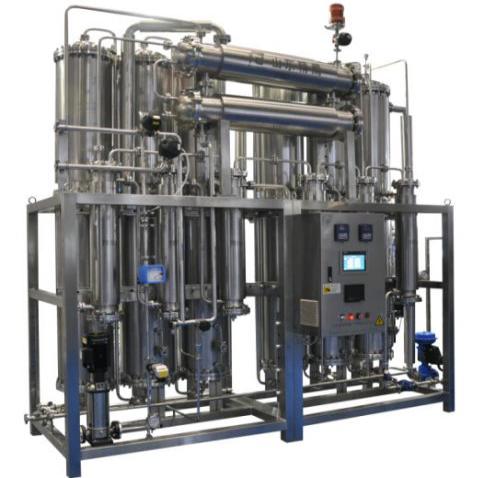
Water for Injection—WFI is the highest grade of purified water used in the pharmaceutical industry. It is manufactured from Purified Water through the distillation process and is free from pathogens, pyrogens, and microorganisms. It is used in the manufacturing of injectable products.
The WFI is stored in a circulation manner, i.e., it continuously circulates and is maintained at elevated temperatures. The temperature is usually 80 °C and is maintained to prevent microbial growth.
Sterile Water for injection – WFI
When Water for Injection—WFI is sterilized, it becomes sterile WFI. It is used as a diluent for injectable and vaccines and packaged in unit dosage containers.
Operation
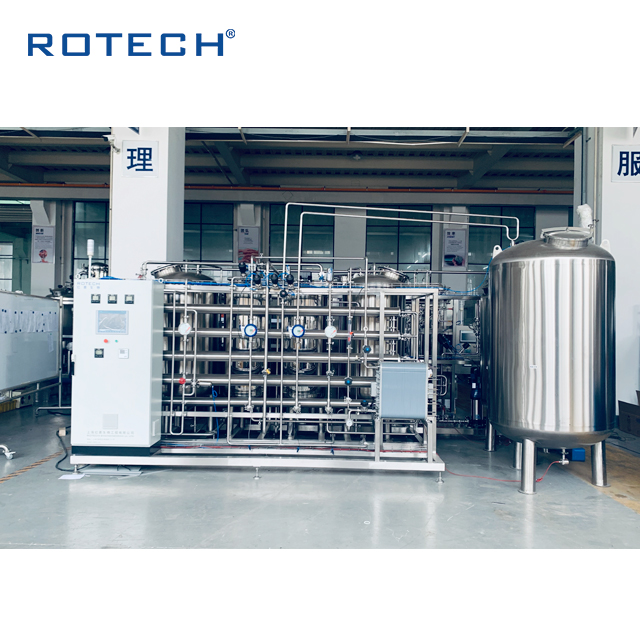
The water treatment plant has multiple stages, each with a different function and technology. Raw water is taken from one end and passes through various phases. As water is processed at each stage, other changes occur in the water’s characteristics.
At the discharge from the final stage, the water is free from all the impurities, foreign bodies, and contaminants, making it suitable for relevant pharma applications.
When water becomes purified, it is not directly transferred to the point of application. Instead, it is stored in storage vessels for later distribution. The storage vessels and distribution systems must comply with pharmaceutical regulations to prevent water contamination.
Monitoring
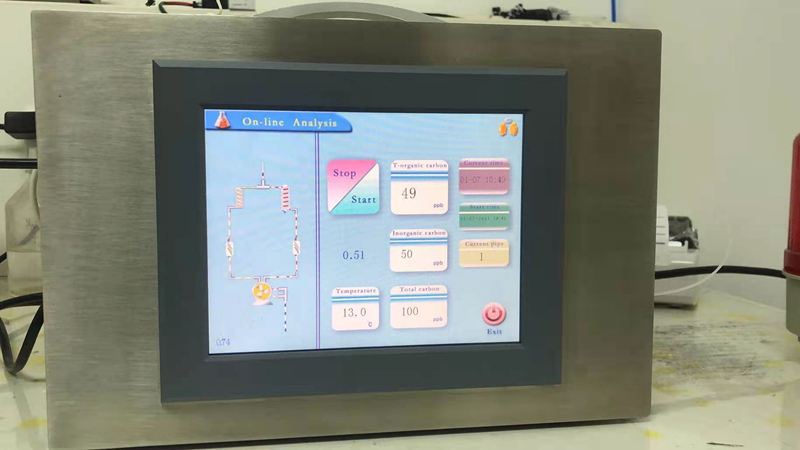
Monitoring is an essential element of water treatment. Different sensors and instruments are installed at different stages to continuously check for quality variables, such as pH, hardness, conductivity, and TOCs. This allows personnel to adjust process parameters if they deviate from acceptable levels.
Some standard instruments used in water treatment include the following.
pH meters measure water’s pH value, which is important because the pH value of purified water impacts the stability of APIs and chemical reactions.
Conductivity - it is used to measure the conductivity of water during production. The conductivity indicates the ability of water to conduct electricity, which is a function of dissolved substances and water purity.
Total Organic Carbon - used to indicate carbon content in...

























 (All Rights Reserved)