

By Tim Freeman, Managing Director, Freeman Technology
This editorial considers some of the many variables that influence powder behavior. The main focus will be the impact of different parameters on how powders flow, given that this is such a critical performance attribute. Poor flowability lies at the heart of many powder processing problems, including sub-optimal throughput, unplanned shutdowns, erratic operation and inconsistent product. So, in many instances, achieving the desired flowability is an extremely productive way to enhance process efficiency.
The complexity of powders
Powders are more than just the particles alone, they are bulk assemblies containing particles. It is often the case that the terms ‘particle’ and ‘powder’ are used interchangeably, but this can be misleading. Powders also consist of gases, normally in the form of air, and liquid, usually water, on the surface of the particle or within its structure.
It is the properties of each phase of a powder, and the interactions between them, that define bulk powder behavior. This means that behavior is influenced by several variables and an array of potential interactions, as well as process or ‘external’ influences, which is why they are complex and why powder performance cannot be accurately predicted from measurements of physical properties alone.
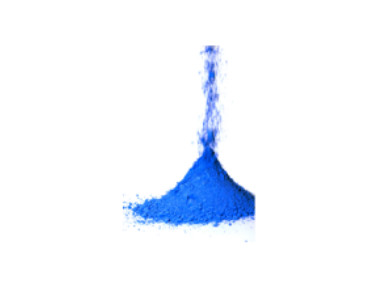
Powders perform in different ways, depending on how they are formulated and manufactured, as well as the environment to which they are subjected. While this can make them difficult to predict it is ultimately what underpins their industrial value.
Knowledge-driven approach
A knowledge-driven approach to powder processing would suggest a strategy of manipulating variables that are known to influence powder behaviour. This relies on understanding two things. Firstly, which powder properties are important in defining and optimising process performance, and secondly, which variables can be manipulated and how.
Better understanding
For many years, there has been some understanding of which properties influence powder behaviour. A classic example is the widely-recognised link between particle size and powder flowability, with finer powders generally flowing less freely. However, the degree of aeration/consolidation, and amount of moisture, can also have a marked impact but this understanding is often still qualitative rather than quantitative. There are relatively few published correlations that relate either primary particle characteristics such as size, shape, surface roughness and charge, or system variables such as air or moisture content, to powder flow properties. This is true even for commonly used powders, such as lactose.
This lack of information can largely be attributed to historical difficulties in securing reproducible, reliable powder property data. Without such data, detailed investigation of the impact of different variables is, of course, impossible, so qualitative relationships have had to suffice. However, this problem has been solved by the advent of modern, more sophisticated testing instruments, with the development of dynamic powder testing a particularly important milestone.
Powder flowability
Dynamic powder testing involves precisely measuring the axial and rotational forces acting on a specially shaped blade as it rotates along a helical path through a powder sample, to generate values of flow energy which directly quantify powder flowability. Well-defined methodologies and a high degree of automation make dynamic testing, carried out using instruments such as the FT4 Powder Rheometer®, highly reproducible. Furthermore, tests can be carried out on consolidated, conditioned, aerated or even fluidised powders.
Modern instrumentation has also brought greater precision to shear and bulk property measurement. In other editorials I’ll be looking at studies of some of the most influential variables: particle size; particle shape; aeration; moisture content (humidity) and surface charge, where I will illustrate that effective powder testing delivers a substantial opportunity to develop a thorough understanding of how to co...



























 (All Rights Reserved)