

Biological drugs are therapeutics that are made by living organisms or are created from cells and tissues, and include therapeutic proteins and monoclonal antibodies. They have changed the face of healthcare, particularly for cancers, autoimmune diseases, chronic inflammatory disorders and genetic disorders. They are complex drugs and the costs to develop and manufacture them are high, which is reflected in the drug prices. [1]
Biosimilars (previously known as biogenerics) are lower cost but highly similar versions of originator or reference biologics. They can be produced by other manufacturers once the patent expires, allowing more patients to access highly effective drugs. [2, 3]
The first biosimilar, Omnitrope, was approved in Europe in April 2006. This is a human growth hormone and was created by Sandoz. Omnitrope is a biosimilar form of Pfizer’s originator biologic Genotropin (somatropin). As of 16 July 2024, there were 106 biosimilars approved in the EU (see Table 1).
Table 1: Biosimilars approved in the EU
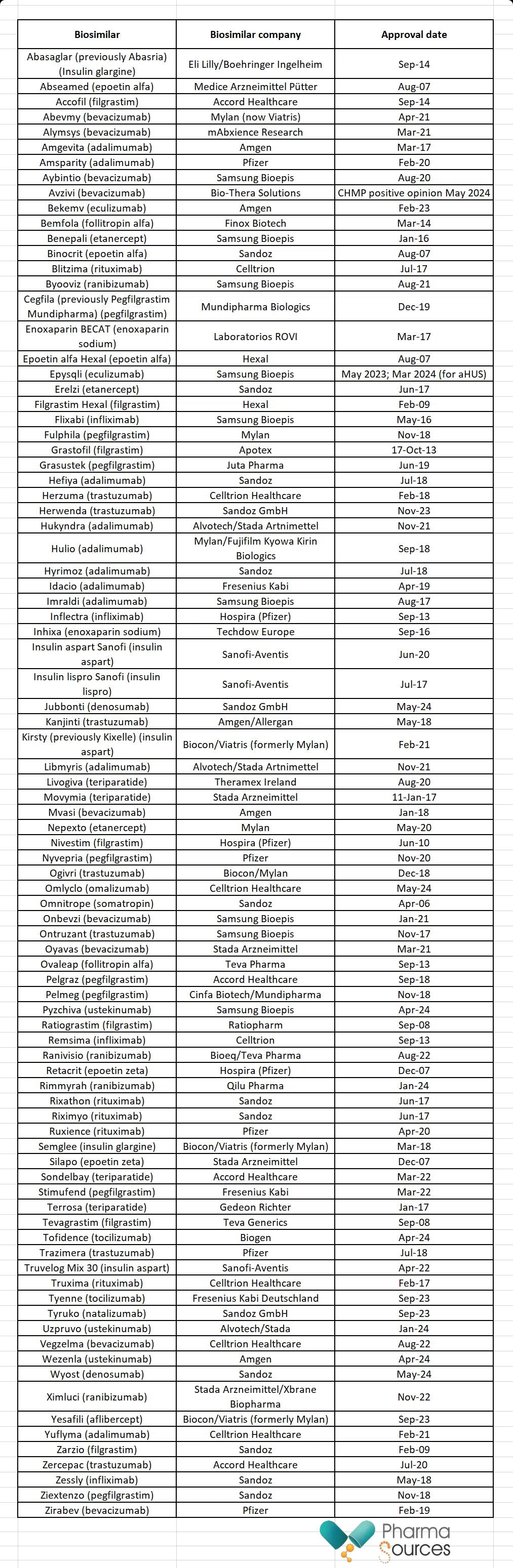
Source: GaBI [4]
The US approved its first biosimilar in 2015, Sandoz’s Zarxio (filgrastim-sndz). This is a biosimilar form of Amgen’s reference biologic Neupogen. As of 4 December 2024, the US Food and Drug Administration (FDA) had approved 63 biosimilars (see Table 2). [2, 4]
Table 2: Biosimilars approved in the US
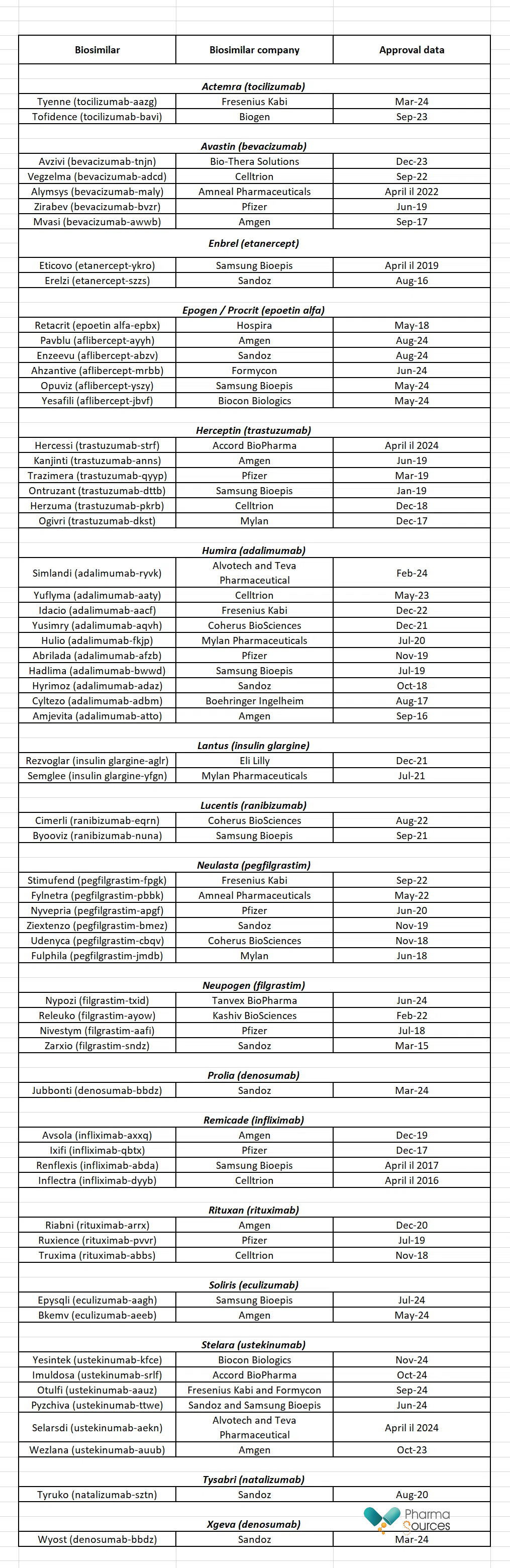
Source: Drugs.com [2]
The biosimilars market
The global biosimilars market was worth around $20.44 billion and is expected to rise to around $73.03 billion in 2030, growing at a compound annual growth rate (CAGR) of 17.3%. Europe makes up more than half of the global market. The US, Chinese and Indian markets are growing. [5]
The expansion of the biosimilars market has a number of drivers, the primary one being cost. Biologic drugs can cost up to $80,000 in the US. In 2018, 0.4% of drugs prescribed in the US were biologics, but they accounted for 46% of net drug spending. In Canada in 2021, biologics made up 2% of prescription drug claims, but 29% of public drug spending. The percentages of drug spend for biologics are similar in Australia, the EU and the UK. [1-3, 6]
Biosimilar list prices are generally 15-35% lower than their reference biologics. In addition, biosimilar competition can drive down the prices of both competitor biosimilar drugs and the original reference biologics. As a result of this, biosimilars have the potential to cut US patient healthcare costs by $38-124 billion between 2021 and 2025. [1-3, 6]
Biosimilar approval pathways
Originator biologics have a period of exclusivity before biosimilar developers can access data, seek approval or market their drugs. [3]
Once the exclusivity period is over, companies developing biosimilars have to show that their product is highly similar to the reference product, including purity, chemical identity and bioactivity. It also must have no clinically meaningful differences in safety and effectiveness. [2]
Biosimilars have different approval pathways around the world (see Table 3).
Table 3: Comparing the biosimilar approval policies of five national medicines regulators






























 (All Rights Reserved)