

To gain a better knowledge of the micro-biome's role in health and disease, the human microbiome project was started in 2007. With a deluge of published research during the next 20 years, our knowledge of the microbiome's composition and its relationship to human health and disease has rapidly increased. A break in this symbiotic interaction has been linked to a number of disorders related to the microbiome. Growing research indicates that the microbiome affects cancer, neurological illnesses, and autoimmune diseases. [1]
Microbiome-based therapies are currently gaining popularity for treating a wide range of illnesses, such as infections, inflammatory conditions (IBDs, atopic dermatitis), neurological conditions (Parkinson's disease, autism), cancer, and so on. A major victory that inspires excitement in the sector is the FDA's approval of Ferring's REBOTYA & SER-109 as the first microbiome therapy for patients with recurrent C. diff infections. The methods for modifying the microbiome to enhance human health and treat illnesses have changed over time, and they differ substantially depending on the mechanism of action and kind of asset, such as ecological, donor-derived, and donor-independent methods. The formal classification of microbiome therapies is still up for debate because the area is constantly developing. [2]
Products based on fecal matter transplantation (FMT) allow the patient to get the entire gut microbial ecology from a donor. Such complete microbiomes or donor derived microbiome asset involve the isolation and subsequent transfer of a donor's uncharacterized microbiome. The microbial population is isolated from cell banks in a broad consortium which is donor independent approaches that may have a donor origin and were later purified to be used as a pharmaceutical. More specifically designed methods, such as narrow and defined consortia, include combining various strains to affect a patient's microbiome. While defined consortia are donor independent and rely on cell banks, narrow consortia depend on sample donors. In some situations, a single strain of bacteria may be adequate and productive. These naturally occurring single strain products are referred to as engineered single strains when they undergo additional genetic modification for a better mode of action. Bacteriophages are viruses that infect bacteria and are capable of eliminating particular strains of bacteria, such as those that cause disease in the microbiome. Phage therapy may also prove to be highly effective in combating "superbugs" that are resistant to antibiotics. Such lytic phages are incapable of dispersing resistance or virulence since they kill bacteria. [3]
Bioactives directly modify the microbiome in order to promote health. These bioactives are pre-biotics help the good bacteria in the stomach to develop, and post-biotics that are byproducts of the metabolism of probiotics and prebiotics. Post-biotics can include basic short-chain fatty acids like butyric acid, which can support a healthy microbiome, or specific vitamins, amino acids, and peptides with antibacterial qualities. The most well-defined technique is using small compounds to directly alter the microbiome, but doing so also necessitates a thorough comprehension of their mode of action.[4]
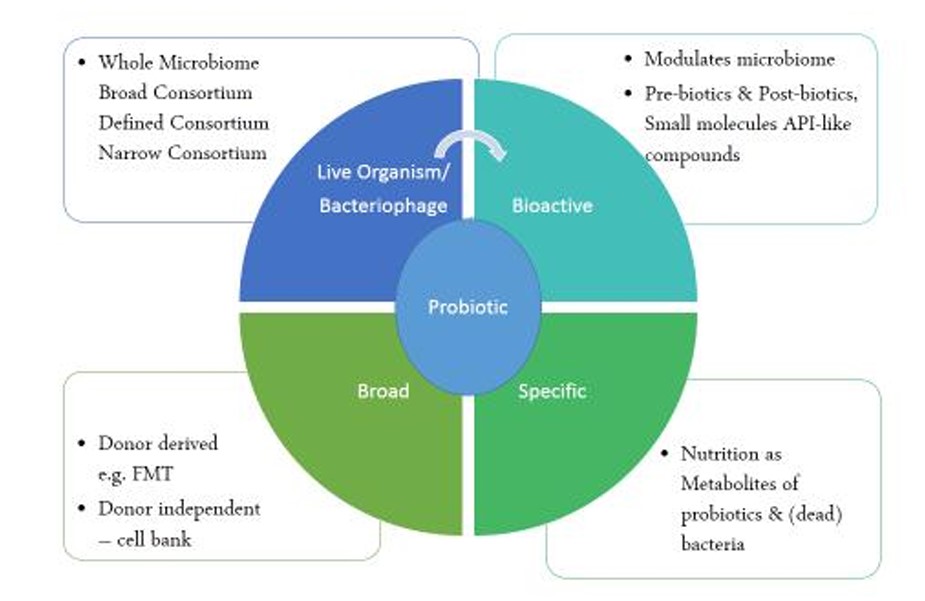
Figure above shows spectrum of microbiome therapeutics where microbiome assets is classified in donor-derived, donor-independent and from ecological towards more defined approaches
The global market for microbiome therapeutics is estimated to increase from $164.8 million in 2022 to reach $1.5 billion by 2027, at a compound annual growth rate (CAGR) of 54.8% from 2022 through 2027.

































 (All Rights Reserved)