

My local supermarket sells generic paracetamol for 50p (about $0.70) but I always buy the caplets, which cost almost twice as much – I don’t like throwing money away, but the caplets are coated to mask the bitter taste, and they’re easier to swallow. Perhaps not all tablet coatings justify a near 100% price increase, but my willingness to double my expenditure on something I’m just going to quickly swallow goes a long way in helping my own understanding of the importance of tablet coating technology, when it comes to patient acceptance and compliance.
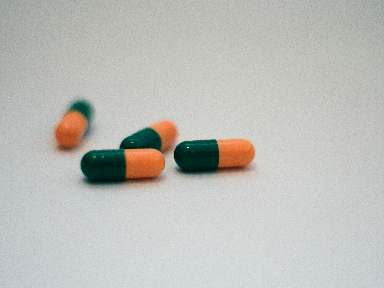
Why coat?
Tablet coating is a process by which an outer layer is applied to the surface of a dosage form in order to confer specific properties. Most obviously, the coating makes the tablet more palatable and easier to swallow. However, it can also protect the dosage form from stomach acids, or conversely it can protect the stomach lining from aggressive drugs (e.g. enteric coated aspirin). Coatings can also control the delayed release of a medication. In these ways and others, the coating of a tablet can have a profound effect on drug pharmacokinetics and pharmacodynamics.
What coat?
Of course, tablet coating is not new. Some medical historians date the process back to ancient Egyptian times. Certainly, in medieval times, people are said to have coated pills with slippery plant substances in order to make them easier to swallow. I have also heard that emperors would coat their pills in gold and silver (although they would have passed through the digestive tract unchanged, so can’t have been an effective solution!) Suffice to say that tablet coating is probably one of the oldest pharmaceutical processes in existence.
Today, four main types of coating are used:
Sugar coating: compressed, dry tablets are sealed and coated with a water-soluble layer of sugar that dissolves easily to release the drug substance. Interestingly, the first sugar coatings for medicinal tablets were invented as early as the 19thcentury.
Film coating: involves the application of a thin film of a protective polymer, with added plasticizers and pigments. Film coating is lighter, faster, more flexible and more chip-resistant than sugar coating, and represented a significant advance when it was invented in the 1950s.
Compression coating: also referred to as press coating or dry coating, a fine dry granulation is compressed onto a tablet core. This is usually achieved using a specially designed tablet press, and the process has been used to separate two incompatible active pharmaceutical ingredients (one contained in the tablet core and the other in the coating). Although less popular than film coating, compression has gained interest in recent years as a means of creating specialized modified-release products.
Microencapsulation: involves the application of a relatively thin coating to tiny particles (below 800 µm diameter), but is similar – in principle – to film coating.
The base formula for any coating is optimised for aesthetics, flavour, texture, hardness, solubility, shelf-life and numerous other properties, depending on the coating’s purpose and requirements. Such formulation techniques are a fascinating science of their own. However, some of the greatest innovations are seen not just in the coating formulations themselves, but also in the equipment used to apply them.
How to coat
Traditionally, tablets were coated using a rotating coating pan, which uses a circular motion to tumble the tablets within the pan and cover them with the coating solution. Modern tablets tend to be spray coated rather than rolled in solutions (with ever increasing refinements to nozzles and aeroso...

























 (All Rights Reserved)