
An interdisciplinary team of researchers from McMaster and SickKids are developing a cutting-edge lung model that can better respond to viruses and drug treatments, giving scientists a tool to advance research in lung conditions like COVID-19, cystic fibrosis and allergens for asthma and air pollution.
The new bioengineered lung model - coined a "clinical trial on a plate" by the research team - will replicate key features of the human lung, including specialized cells, surrounding blood vessels and life-like immune functions.
This project recently received $1M in funding as the winner of the National Sanitarium Association research grant, which supports important new areas of research in pulmonary science and medicine. A preprint version of the research paper was published this week in bioRxiv.
"To better prepare for future pandemics, more sophisticated human lung models are needed to study disease and treatments with more precision. Our lung model platform will improve clinical trial designs for COVID-19 and beyond, with broad applications to drug development, immunology and developmental biology of the lung," says Boyang Zhang, an assistant professor in Chemical Engineering who is leading this work at McMaster in collaboration with leading experts Jeremy Hirota and Karen Mossman from McMaster, and Amy Wong from SickKids and the University of Toronto.
Even before COVID-19, the researchers had started combining their expertise to advance lung models - stem cell-derived organoid technology from Wong's lab, virology expertise from Mossman's lab, lung biology and immunology expertise from Hirota's lab, and organ-on-a-chip engineering from Zhang's lab.
"With COVID, we certainly felt the urgency to integrate these different technologies that are already out there to create something on the next level," says Zhang, adding the team is working towards bringing their work to a Biosafety Level 3 lab, which is needed for COVID-19 research.
How does it work?
The "clinical trial on a plate" lung model will combine the best features from two innovative bioengineered organ systems: stem cell-derived organoids and organ-on-a-chip models.
At SickKids, Wong's lab developed a way to have artificial stem cells "turn into" the different cells of the lungs, mimicking key developmental steps of the complex organ. The high variety of cell types is critical to accurately model an organ in 3D, according to Wong.
"With the incredible team at McMaster, we will integrate our stem cell-derived lung organoid model with immune cells and a vasculature to create a more advanced preclinical lung model for disease modeling, and to better predict treatment outcomes for each individual," says Wong, an assistant professor in laboratory medicine and pathobiology at the University of Toronto. She conducts stem cell biology and cystic fibrosis research at SickKids.
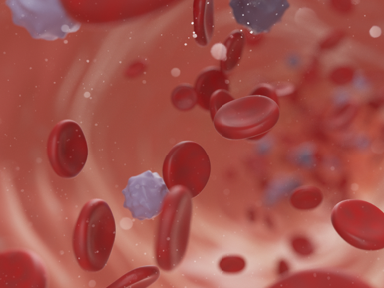
The organ-on-a-chip system developed in Zhang's lab gives scientists more control over the micro-environment where the cells are cultured. For example, the cells can be stretched and immersed in fluid to test responses to drug treatment. The downside is these models have over-simplified cell populations which don't translate as well in 3D.
"To overcome the trade-offs between the two techniques, we're combining them to develop a more advanced system," says Zhang.
The cluster of cells in the "clinical trial on a plate" model is created on a plastic plate with 384 wells, or pockets. Each model is no bigger than a grain of rice.
"It takes the same amount of effort to make 100 tissues as it does to make one tissue," says Zhang. "For drug testing purposes, we don't need the tissue to be very big and we purposely keep them small so we can use less cells to create the model. You're saving on material cost,...



























 (All Rights Reserved)