
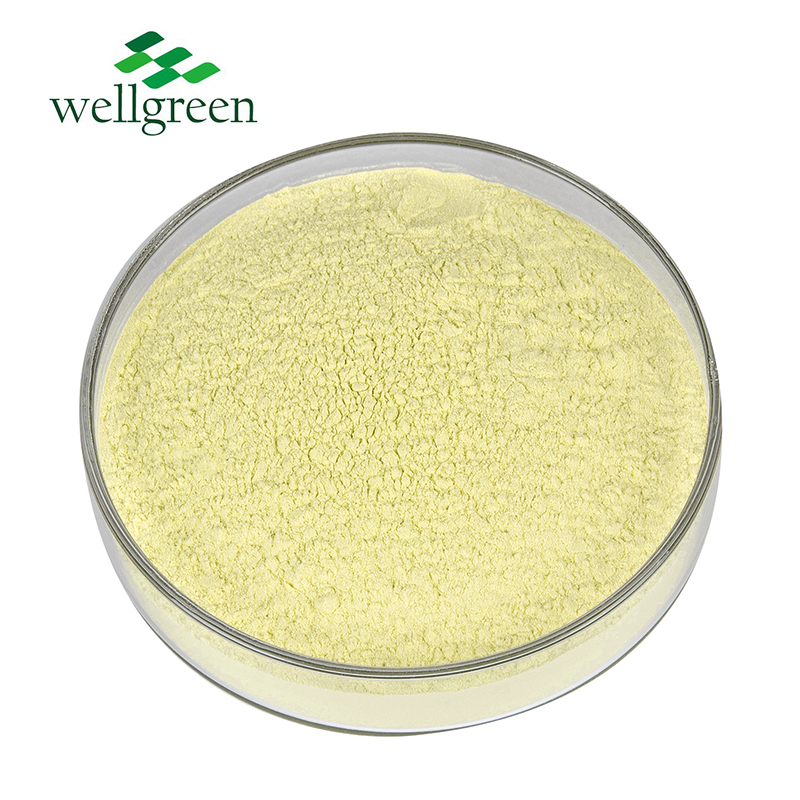
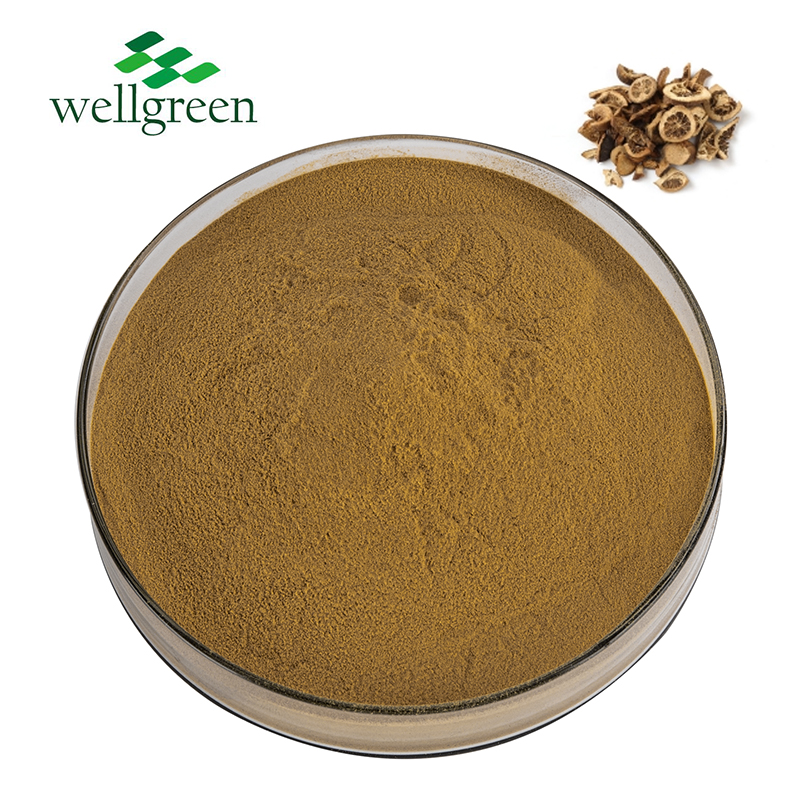
Naringin, also known as hesperidin or naringine, is a natural flavonoid compound. It is a colorless needle-shaped crystalline powder that is insoluble in cold water and extremely bitter in taste. Naringin is the main active ingredient in traditional Chinese medicines such as Gu Sui Bu, Zhi Shi, Zhi Qiao, and Hua JuHong. Modern pharmacological studies have found that naringin has various therapeutic effects, including anti-osteoporosis, antioxidant, anti-inflammatory, antibacterial, anti-tumor, improvement of myocardial and liver injuries, and prevention and treatment of diabetes and its complications.
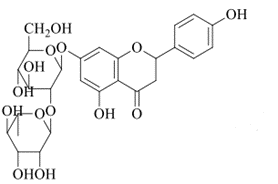
1. Anti-Osteoporosis:
Naringin has significant advantages in the treatment of osteoporosis. It can inhibit the differentiation, proliferation, and bone resorption function of osteoclasts, and promote the expression of osteoblast marker proteins. It also inhibits the NF-κB and ERK signaling pathways induced by RANKL, which leads to abnormal osteoclast formation. Naringin can delay osteoporosis and promote the proliferation and differentiation of osteoblasts.
2. Anti-Tumor Effects:
Naringin has shown certain effects against osteosarcoma, glioma, cervical cancer, colon cancer, lung cancer, thyroid cancer, and other tumor cells. Its mechanisms may include direct inhibition of tumor cell growth, proliferation, and migration, enhancement of the body’s immune response against tumors, synergistic enhancement of the activity of anti-tumor drugs, and reduction of tumor cell drug resistance.
3. Antioxidant Effects:
Naringin has significant antioxidant effects and can protect against oxidative damage. It can scavenge free radicals such as DPPH, AAPH, and ABTS, inhibit the generation of reactive oxygen species (ROS), and regulate the levels of various oxidative enzymes in the body.
Overall, naringin has diverse pharmacological properties and holds promise in various therapeutic applications.
4. Antibacterial and anti-inflammatory effects
Research has shown that naringin has good anti-inflammatory effects and can improve inflammation damage induced by lipopolysaccharide (LPS), inhibit the protein and gene expression levels of interleukin-6 (IL-6), IL-8, and IL-1β in inflammation models, and reduce leukotriene B4 (LTB4) and tumor necrosis factor-α (TNF-α) concentrations. It has also been found that the combined use of naringin and silk fibroin has a stronger inhibitory effect on related inflammatory factors than naringin or silk fibroin alone, indicating that the combination therapy of naringin and silk fibroin is of great significance in improving clinical efficacy, enhancing drug tolerance, and exerting optimal anti-inflammatory effects. In addition, other studies have shown that naringin can inhibit rheumatoid arthritis in rats by inhibiting IL-17, IL-10, and other related inflammatory factors in a dose-dependent manner. When the dosage of naringin is 200 mg/kg, it has significant inhibitory effects on osteoarthritis both in vitro and in vivo, and the mechanism is related to the antagonism of IL-1β, inhibition of nuclear factor-κB (NF-κB), and nucleotide-binding oligomerization domain-like receptor protein 3 (NLRP3) inflammasome signaling pathway.
Naringin has significant effects in the prevention and treatment of related pathogens. Research has found that the minimum inhibitory concentrations (MIC) of naringin against Streptococcus mutans, Streptococcus sanguis, Streptococcus sobrinus, Actinomyces viscosus, Actinomyces naeslundii, and Lactobacillus acidophilus are 1, 0.5, 0.5, 0.5, 1, and 1 g/L, respectively. The minimum bactericidal concentrations (MBC) are 2, 1, 1, 1, 2, and 2 g/L, respectively. It has also been found that naringin can disrupt the normal growth, acid production, sugar production, and adhesion functions of the above pathogens. At the same time, research has shown that naringin has a time- and concentration-dependent inhibitory effect on Actinomyces viscosus and Porphyromonas gingivalis. In addition, comparing the combined therapeutic effects of naringin wit...

























 (All Rights Reserved)