

I. Introduction
The global pharmaceutical market is approaching a phase in which several high-revenue medicines will lose patent protection, paving the way for generic and biosimilar competition (Scheckel, 2021). According to industry estimates, around 55 biologic blockbusters, each worth over $1 billion in peak sales (potentially $270 billion in total), will go off-patent by 2030 (Grover, 2022). This "patent cliff" implies that some of the top-selling pharmaceuticals in 2025 will most likely be copies of the best-sellers from the previous decade. Generic and biosimilar entrants often undercut original price (sometimes by 80-90%), making them appealing to payers and governments (Grover, 2022). In this article we anticipate the top five selling generic pharmaceuticals in 2025, including biosimilars, to be trastuzumab, Atorvastatin generics rituximab, Levothyroxine generics, and bevacizumab. These therapies address the primary areas of medical need in oncology, including breast, gastric, colorectal, lung, and renal cancers; B-cell malignancies and autoimmune diseases; hypothyroidism and thyroid cancer; and hyperlipidemia management and cardiovascular disease prevention.
These predictions are based on sales data and market size predictions. The forecasts are based on prescription patterns in the United States and global market estimations, with the understanding that specific global sales statistics can be difficult to obtain owing to varied market dynamics, and that all projections are forward-looking based on recent trends.
II. Top 5 Generic Drugs Forecast for 2025
1. Trastuzumab (Herceptin®)
Trastuzumab, is a monoclonal antibody originally invented by Roche (Genentech, Inc.) under the brand Herceptin®, which was worth $6 - 7.5 billion before patent expiry (GaBI, 2018), which changed the landscape of oncotherapy for HER2-positive breast and gastric cancer. With the originator's patents expiring in major markets between 2014 and 2019 (Queen, 1996) (Hudziak, 2002), a variety of US FDA approved biosimilars have emerged, including Pfizer's Trazimera®, Celltrion's Herzuma®, Mylan's Ogivri, Organon’s Ontruzant, Amgen’s Kanjinti, and Accord’s Hercessi (FDA, 2025b). In Q3 2024, 86% of the US trastuzumab market share was captured by biosimilars, the rest being Herceptin® (Samsung, 2025). In Europe biosimilar market coverage is even greater (Grover, 2022).
Trastuzumab biosimilars are expected to produce more than $5.5 billion in worldwide sales by 2025 (TBRCb, 2025), with rapid biosimilar market expansion in the Asia-Pacific (APAC), Europe, and to a lesser extent, the Middle East and Africa (MEA), in addition to the United States. South America lags behind with 5% of the worldwide trastuzumab biosimilars (Tables 1-5) (VMR, n.d.). Within the three largest markets of the APAC region (China, India, and Japan) eight trastuzumab biosimilars have been approved. Competitive advantages of biosimilars include substantially reduced cost (typically 20-50% savings) and easy interchangeability, which should put trastuzumab biosimilars firmly at the top of the 2025 sales rankings.
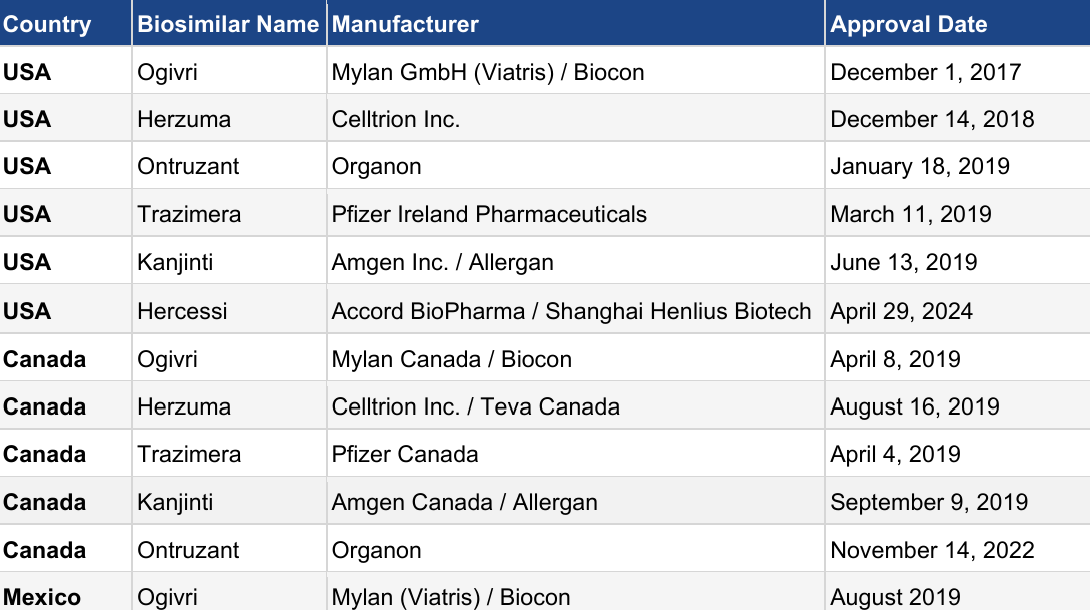
Table 1: Trastuzumab biosimilars approved in North American markets
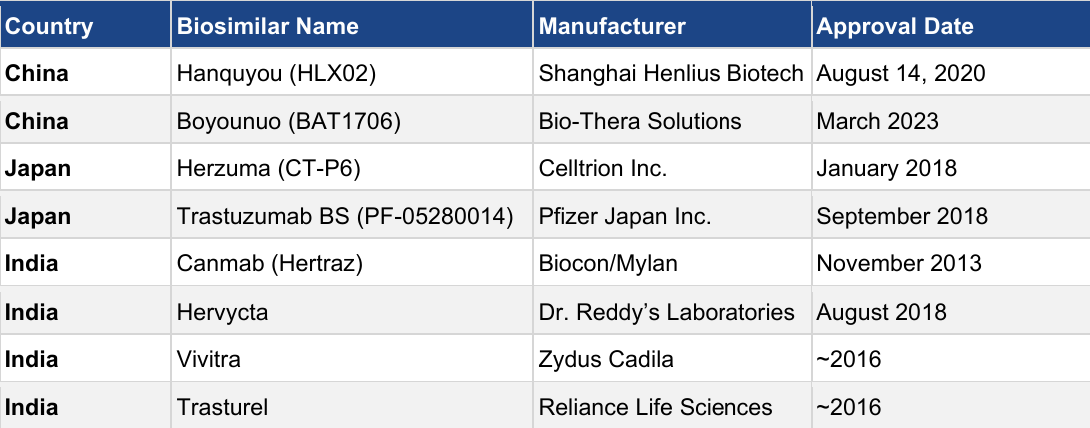
Table 2: Trastuzumab biosimilars approved in the top three APAC markets



























 (All Rights Reserved)