

The potential benefits of Quality by Design, the approach enshrined in ICH Q8 - Pharmaceutical Development, include greater flexibility with respect to regulation, enhanced process efficiency and better product understanding. While pharmaceutical manufacturers are keen to access these benefits, there remain some reservations. Of primary concern is the amount of additional development work needed to adequately scope process and product performance. Consequently, there is a need to find cost- and time-effective ways of generating the required data.
Understanding and controlling powder behavior, for example, is vital for effective pharmaceutical manufacturing. Extending knowledge in this area is therefore important. Powders can be challenging to process and/or measure but are used extensively within the pharmaceutical sector.
Measuring powder flowability has always been a serious challenge and many empirical characterization methods have evolved. Most describe this complex parameter using just a single number. The more traditional tests - angle of repose, Hausner ratio, and even shear testing, which is particularly valuable for hopper design, give only limited information about specific aspects of powder behavior. In contrast, more sophisticated tools, with greater sensitivity, provide a more holistic insight.
State-of-the-art powder testers now deliver multi-faceted powder characterization in a single instrument. More than twenty shear, bulk and dynamic variables can be measured in a short period of time, using relatively small amounts of material, something that is particularly advantageous at the development stage when limited amounts of material are available. Furthermore, a powder can be characterized in a consolidated, conditioned, aerated or even fluidized state making it possible to
predict behavior in different unit operations. Flowability, aeration, compressibility, permeability and shear properties can be measured reliably using these latest methodologies.
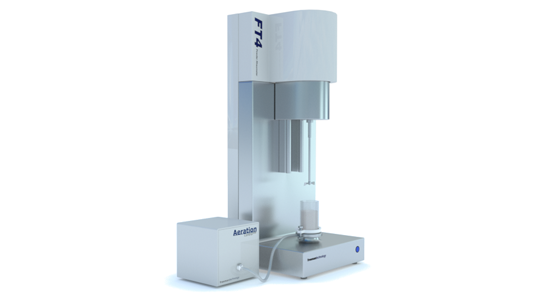
Figure 1 – FT4 Powder Rheometer®, Universal Powder Tester
Of fundamental importance is the progress made in improving reproducibility. With powder rheometers the use of a conditioning step specifically addresses this issue. Conditioning involves gently disturbing the powder bed, in a prescribed way, to leave it homogeneously packed. Air is released from a highly aerated sample or incorporated into a compacted one, producing the same baseline state in each case. Loose agglomerates are broken up, improving size and shape consistency. Conditioning is one of the main reasons why the best powder testers now deliver
such good reproducibility, far greater than that achieved using traditional methods.
High reproducibility translates directly into greater sensitivity – any variation in parameters reflects real changes to the rheological properties rather than measurement variability. Modern testing instruments enable investigators to follow the classical experimental path of establishing a reliable baseline and then determining the impact of variables of interest. The effects of attrition, segregation, moisture, air content, compaction, particle size and shape, and many other parameters, on process relevant properties such as flowability, can all be studied systematically. The collected results form a database of accurate, powder characterization information that encourages the long-term development of fundamental understanding. This methodology is therefore entirely consistent with the knowledge-based approach to development and processing advocated by QbD.
Author Biography

Tim Freeman, Managing Director, Freeman Technology
Tim Freeman is Managing Director of powder characterisation company Freeman Technology for whom he has worked since the late 1990s. He was instrumental in the design and continuing development of the FT4 Powder Rheometer® and th...




























 (All Rights Reserved)