

Powder rheology is used in a wide range of industries to support new product development and manufacturing. By investing in powder rheology, manufacturing sites can establish an understanding of their processes and unit operations based on a correlation between measurable powder properties and process performance. Changes in suppliers and/or equipment (for example, lower cost raw materials or process scale-up) can lead to variations in certain properties of the powder, even if other properties, such as particle size distribution remain unchanged. These changes can lead to process challenges, such as blockages, poor product uniformity and greater mass or volume variation in portioned batches.
By measuring and understanding powder behaviour, these challenges can be overcome, and effective decisions on changing raw materials or production methods can be made.
FT4 Powder Rheometer®
The FT4 Powder Rheometer® is a universal powder tester that provides reliable, comprehensive and process relevant measurements of bulk material properties. This information can be correlated with process experience to improve processing efficiency and aid quality control. Specialising in the measurement of dynamic flow properties, the FT4 also incorporates automated shear cell tests, and the ability to measure bulk properties such as density, compressibility and permeability, enabling a comprehensive characterisation of powders in process relevant conditions.
CASE STUDY 1 – The Impact of Manufacturing Location
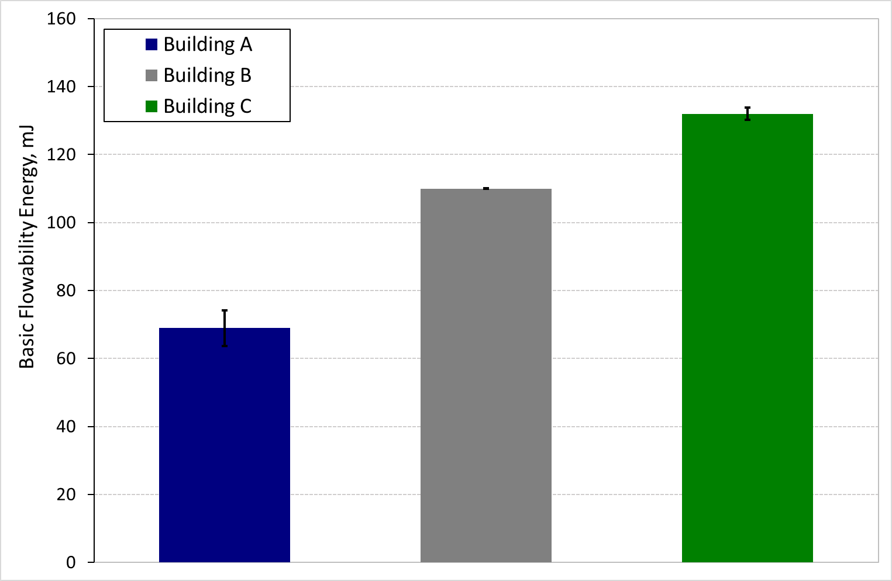
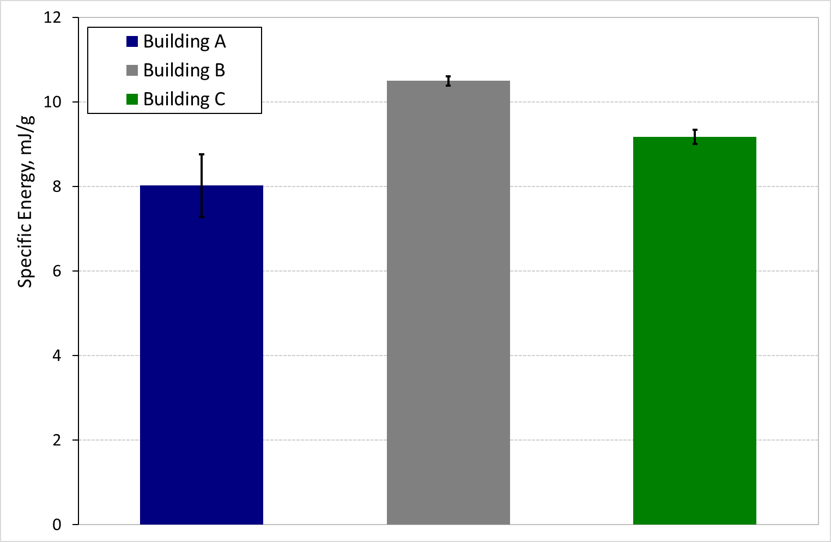
Samples of an Active Pharmaceutical Ingredient (API 1) were manufactured in three different locations, Building A, B and C. The API from Building B and C exhibited issues relating to inconsistent flow and blend uniformity, whereas the API from Building A consistently performed well. Samples from the three different locations were evaluated using the FT4 Dynamic Flow methodologies. Data from the tests show clear differentiation between the three samples. API 1 from Building A generated the lowest Basic Flowability Energy (BFE) and Specific Energy (SE) values, suggesting that this powder exhibited less resistance to dynamic flow. API 1 from Building B and C gave higher BFE and SE values suggesting a higher degree of resistance to forced flow and greater mechanical interlocking and inter-particular friction, both likely to contribute to the inconsistent flow and blend uniformity issues observed.
With this knowledge, processes employed in Building B and C can be modified and batches from those locations can be evaluated, prior to processing, to ensure that the properties are comparable with those from Building A and thereby compatible with the process.
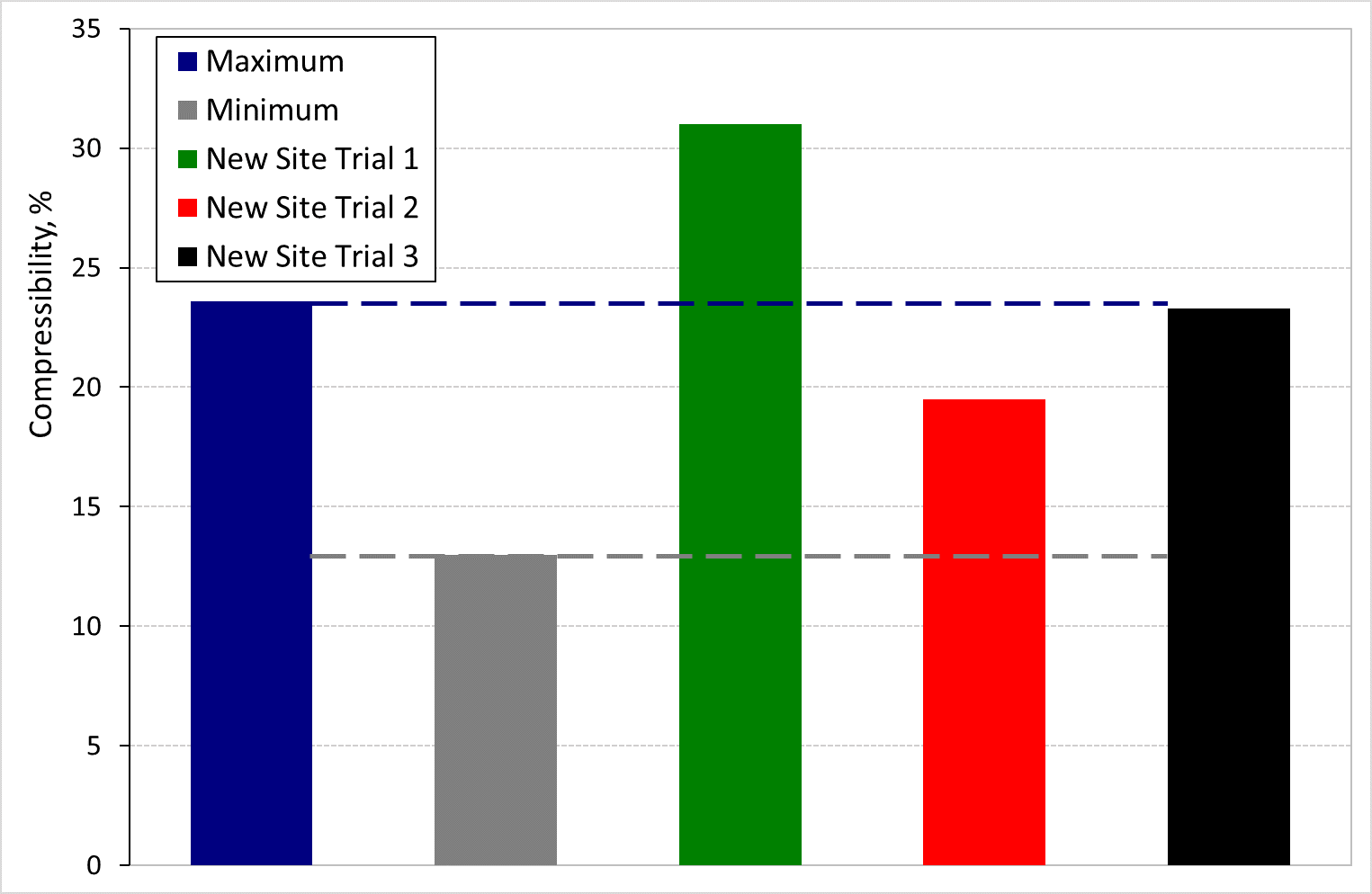
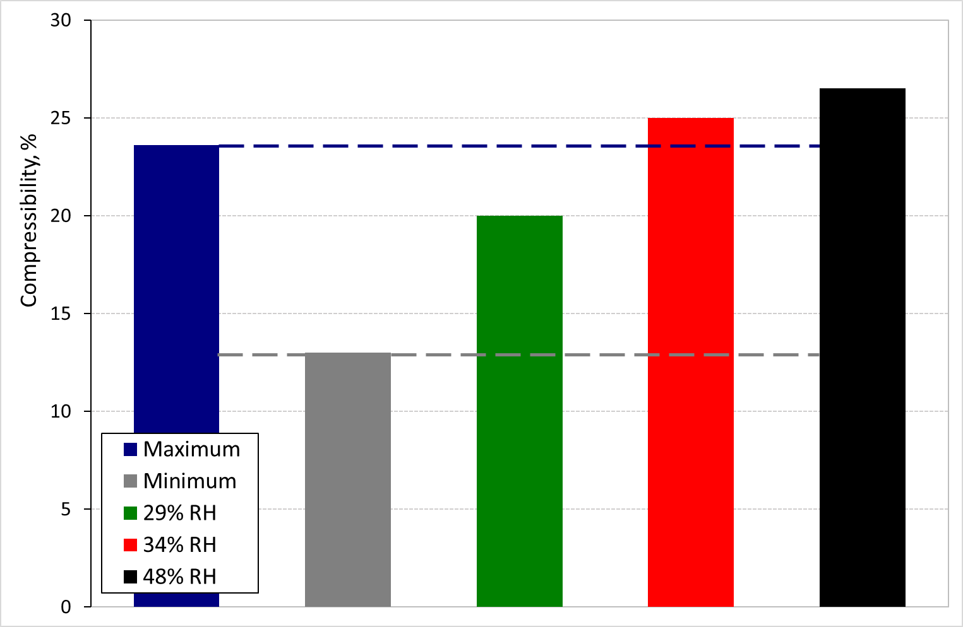
A second API (API 2) was used in a filling operation. Historical batches of the API had been characterised using a range of FT4 test methodologies, and Compressibility was found to be a key indicator of acceptable performance in the process. By assessing a range of samples, it was possible to determine acceptable limits for Compressibility. A new site began producing API 2 and handling issues were experienced during initial filling runs. A sample of the API was found to...



























 (All Rights Reserved)