

I. Introduction
Panax notoginseng, also known as Sanqi or Tianqi, is a perennial herb native to China and other parts of Asia. Belonging to the Panax genus, which also includes well-known herbs like Panax ginseng and Panax quinquefolius (American ginseng), Panax Notoginseng has been used for centuries in traditional Chinese medicine (TCM) for its various health benefits. This article aims to take a look into the therapeutic potential and traditional uses of Panax notoginseng, shedding light on its significance in modern medicine.
II. Historical and Cultural Significance
Panax Notoginseng holds a significant place in traditional Chinese medicine, where it has been utilized for over a thousand years. Its use can be traced back to ancient Chinese medical texts, such as the "Shennong Ben Cao Jing" (Divine Farmer's Materia Medica Classic), one of the oldest known pharmacological texts dating back to the Han Dynasty (206 BCE-220 CE). In TCM, Panax Notoginseng is revered for its ability to invigorate the blood, stop bleeding, and alleviate pain, among other properties.
III. Chemical Composition
Panax Notoginseng contains a complex mixture of bioactive compounds, including saponins (ginsenosides), flavonoids, polysaccharides, and alkaloids, which contribute to its therapeutic effects. Ginsenosides are the primary active constituents and are classified into different types based on their chemical structure, such as Rb1, Rg1, Rd, and Notoginsenoside R1. These compounds exert various pharmacological actions within the body, ranging from anti-inflammatory and antioxidant to cardioprotective and neuroprotective effects.
In addition to saponins, Panax Notoginseng extracts also contain flavonoids, polysaccharides, and alkaloids, among other compounds. Flavonoids are known for their antioxidant properties, which help combat oxidative stress and reduce inflammation. Polysaccharides contribute to immune modulation and have been studied for their potential antitumor effects. Alkaloids, although present in smaller quantities compared to saponins and flavonoids, may also possess pharmacological activities beneficial to health.
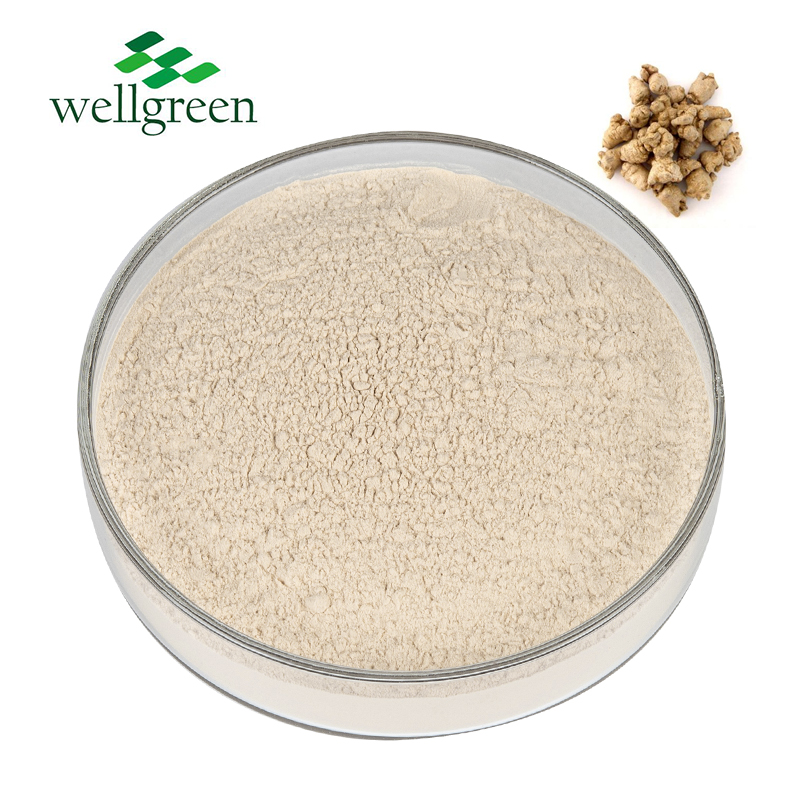
Furthermore, Panax notoginseng extracts are available in various formulations, including capsules, tablets, powders, and tinctures, allowing for convenient administration and dosage control.
IV. Cardiovascular Health
One of the most well-studied therapeutic effects of Panax notoginseng is its cardiovascular benefits. Panax notoginseng exhibits cardioprotective properties by improving blood circulation, reducing blood pressure, and lowering cholesterol levels. Notoginsenoside R1, a unique compound found in Panax notoginseng, has been shown to have anti-atherosclerotic effects by inhibiting the formation of plaque in arteries. These findings indicate the potential of Panax notoginseng as a natural remedy for conditions such as hypertension, coronary artery disease, and stroke.
V. Anti-Inflammatory and Antioxidant Effects
In addition to its cardiovascular benefits, Panax notoginseng possesses potent anti-inflammatory and antioxidant properties. Evidence suggests its ability to modulate inflammatory pathways and scavenging free radicals, thereby reducing oxidative stress and inflammation in the body. These effects make Panax notoginseng a promising candidate for the prevention and treatment of chronic inflammatory diseases, such as rheumatoid arthritis, inflammatory bowel disease, and neurodegenerative disorders.
VI. Clinical Evidence and Modern Applications
Numerous clinical trials have been conducted to evaluate the therapeutic potential of Panax notoginseng in various medical conditions. For instance, clinical studies have shown that Panax notoginseng extract can improve microcirculation, alleviate angina symptoms, and enhance exercise tolerance in patients with coronary artery disease. (Duan, 2017) Furthermore, topical formulations containing Panax notoginseng extract have been developed for wound healing and skincare, owing to its ability t...































 (All Rights Reserved)