
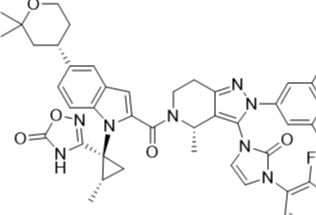
Ascentage Pharma (6855.HK), a global biopharmaceutical company engaged in discovering, developing, and commercializing therapies to address global unmet medical needs primarily for malignancies, today announced that it has released the latest clinical data of its novel Bcl-2 selective inhibitor, lisaftoclax (APG-2575), in patients with relapsed/refractory (R/R) multiple myeloma (MM) or immunoglobulin light-chain (AL) amyloidosis, in an Oral Report at the 66th American Society of Hematology (ASH) Annual Meeting, taking place in San Diego, CA, the United States. Prof. Sikander Ailawadhi, MD; and Prof. Asher A. Chanan-Khan, MD, from Mayo Clinic, Jacksonville, FL, are the principal investigators of this study.
The ASH Annual Meeting is one of the largest gatherings of the international hematology community, bringing together the most cutting-edge scientific research and latest data of investigational therapies that represent leading scientific and clinical advances in the global hematology field. Garnering growing interest from the global research community, results from multiple clinical and preclinical studies on four of Ascentage Pharma's drug candidates (olverembatinib, lisaftoclax, APG-2449, and APG-5918) have been selected for presentations, including two Oral Reports, at this year's ASH Annual Meeting.
The data featured in this Oral Report on lisaftoclax in R/R MM further demonstrated compelling clinical benefit and favorable safety profile of the combination regimen. According to the results, in the 36 evaluable patients who were heavily pretreated, the overall response rate (ORR) was 63.9%; the very good partial remission (VGPR) rate was 30.6%; and more importantly, the median progression-free survival (PFS) reached up to 9.7 months. In terms of safety, lisaftoclax, at doses ranged from 800-1200 mg, in combination with other therapeutic agents showed favorable tolerability and no drug-drug interactions (DDIs). This is the first ever report on the long-term treatment with a Bcl-2 inhibitor at high doses.
Prof. Sikander Ailawadhi commented, "For previously heavily treated R/R MM, in combination with Pd, Lisaftoclax has shown improved response rates and extended duration of response, even in patients refractory to anti-CD38 antibodies. Lisaftoclax based treatments have demonstrated an impressive safety profile, even at a relatively high dose. Thus, lisaftoclax could be an effective target therapy for R/R MM patients."
Dr. Yifan Zhai, Chief Medical Officer of Ascentage Pharma, said, "We are pleased that these data of lisaftoclax in R/R MM have been selected for Oral Report at the ASH Annual Meeting, which once again showcased the drug's favorable safety and impressive clinical benefit. Despite the considerable progress achieved in the therapeutic area of MM in recent years, there still remains urgent unmet clinical needs from patients with R/R MM, especially those who had failed on prior treatment with proteasome inhibitors and immune-modulating CD38 monoclonal antibodies. Lisaftoclax has broad therapeutic potential in hematologic malignancies and solid tumors. Very recently, a New Drug Application for lisaftoclax in R/R chronic lymphocytic leukemia/small lymphocytic lymphoma has been accepted and granted the Priority Review designation in China. Fulfilling our mission of addressing unmet clinical needs in China and around the world, we will expedite the global clinical development of our key drug candidates to bring more safe and effective therapies to patients as soon as possible."
Highlights of the data this study reported at ASH 2024 are as below:
Lisaftoclax (APG-2575) Combined with Novel Therapeutic Regimens in Patients (pts) with Relapsed or Refractory Multiple Myeloma (R/R MM) or Immunoglobulin Light-Chain (AL) Amyloidosis
Format: Oral Presentation
Abstract#: 1022
Session: 654. Multiple Myeloma: Pharmacologic Therapies: Into the Future: New Drugs and Combinations in Multiple Myeloma
Highlights:
Background:
MM is characterized by the proliferation of abnormal clonal plasma cells, causing destructive bone lesions, kidney injury, anemia, and hypercalcemia. The treatment of MM i...
Read More
































 (All Rights Reserved)