
Recently, the FDA officially approved Novartis's ribociclib, in combination with aromatase inhibitors (AI), for the adjuvant treatment of hormone receptor-positive (HR+)/ human epidermal growth factor receptor 2-negative (HER2-) early breast cancer (EBC) patients with high recurrence risk in Phases II and III. This approval extends not only to patients with lymph node metastasis (N+) but also to those with no lymph node metastasis (N0) who are at high risk of recurrence.
As a CDK4/6 inhibitor (CDK4/6i), ribociclib's new indication nearly doubles the population eligible for CDK4/6i adjuvant therapy. This marks a significant milestone in the treatment of early-stage breast cancer. What impact will this development have on the competitive landscape for CDK4/6i?
CDK4/6i R&D Status
CDK4/6i (cyclin-dependent kinases 4 and 6) are important regulators of the cell cycle, a group of serine/threonine protein kinases that catalyze serine/threonine protein phosphorylation and cooperate with cyclins to drive the cell cycle. CDK forms heterodimers when combined with cyclins, and these cyclin-CDK complexes push the progression and transition of the cell cycle phases through CDK activity and substrate phosphorylation.
Given the high expression levels of CDK4/6 in tumors, overexpression can promote the G1/S transition through the phosphorylation of Rb, thereby fostering tumorigenesis. Research has shown that knocking out CDK4/6 genes can inhibit tumor cell growth without affecting normal cells, making CDK4/6 an attractive clinical target, especially in the field of breast cancer.
Currently, five CDK4/6i have been approved globally: Pfizer's Palbociclib, Novartis's Ribociclib, Eli Lilly's Verzenio, Hengrui Pharmaceuticals's Dalpiciclib, and Simcere Pharmaceutical/G1 Therapeutics' Trilaciclib. Among these, Trilaciclib's indication is for preventing myelosuppression caused by chemotherapy in small cell lung carcinoma (SCLC), whereas the others are primarily indicated for breast cancer.
The CDK4/6i market is dominated by Pfizer, Novartis, and Eli Lilly. With this recent approval, Ribociclib has significantly impacted the market dynamics, particularly affecting Verzenio.
Ribociclib vs. Verzenio: Which Comes Out on Top?
Novartis's ribociclib (marketed as Kisqali) first received FDA approval in March 2017 for use in combination with an aromatase inhibitor (AI) as a first-line treatment for HR+/HER2- locally advanced or metastatic breast cancer in postmenopausal women.
Later, Ribociclib obtained FDA approval for the treatment of HR+/HER2- advanced or metastatic breast cancer in both premenopausal and postmenopausal women, becoming the first CDK4/6 inhibitor to be approved for use in combination with AI in these populations.
Recently, Novartis published data from the Phase III NATALEE trial, evaluating Ribociclib plus endocrine therapy for adjuvant treatment of HR+/HER2- early breast cancer. This study enrolled 5,101 patients with Phases II-III HR+/HER2- early breast cancer, who were randomized 1:1 to receive either Ribociclib plus endocrine therapy or endocrine therapy alone.
After the latest four-year follow-up, the study confirmed the sustained iDFS (invasive disease-free survival) benefit for Phase II-III patients in the ribociclib arm compared to the control. Specifically, after a median follow-up of 44.2 months, the absolute iDFS benefit in the intent-to-treat (ITT) population was 4.9% (88.5% vs. 83.6%, HR = 0.715, P<0.0001). Furthermore, the four-year iDFS benefit increased by 4.3% in the Phase II subgroup and by 5.1% in the high-risk N0 subgroup when treated with ribociclib plus endocrine therapy.
Based on these results, the FDA granted approval for Ribociclib plus AI for adjuvant treatment in Phase II-III HR+/HER2- EBC patients with high recurrence risk, covering both N+ and high-risk N0 patients.
This approval has extended Ribociclib's indication in early-stage breast cancer beyond that of Eli Lilly's Verzenio. Approved in 2017 for HR+/HER2- advanced or metastatic breast cancer, Verzenio was later app...


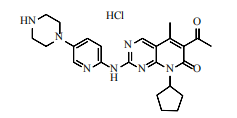

![Palbociclib intermediate-6-Bromo-2-chloro-8-cyclopentyl-5-methylpyrido-[2,3-d]pyrimidin-7(8H)-one](https://eimg.pharmasources.com/img_Cphi_en/Product/2014_11/Mimg_1411141141954701.png)























 (All Rights Reserved)