
Injectable Suspensions for Improving Patient Compliance
The majority of FDA-approved injectable suspensions offer sustained drug release characteristics, which enhance drug product convenience (i.e., reduced dosing frequency) and therapeutic effectiveness (i.e., controlled drug release and reduced side effects). For example, a single injection of triamcinolone acetonide suspension can extend the therapeutic benefit for patients from hours to days or weeks. In addition, injectable suspensions are also very helpful for effective long-term management of chronic diseases, such as the 1- and 3-month paliperidone palmitate injections for maintenance treatment of schizophrenia. However, the prolonged duration of drug release, coupled with the relatively high amount of drug contained in one dose of an injectable suspension, may under some conditions entail higher risk, relative to an immediate release injectable. It is thus important to fully understand the formulation design and quality of injectable suspensions.
Formulation Design and Challenges With In Vitro or In Vivo Methods
Suspensions of crystalline drug particles, in the nanometer to micron size range, are often used for sustained-release injectable formulation, especially in the case of poorly water-soluble drug substances. The release and subsequent in vivo absorption of the drug is thereby dictated predominantly by particle size and size distribution as well as particle dissolution rate. Therefore, understanding the size and related dissolution behavior of the relevant particles is paramount to assess the product’s therapeutic performance. Both in vitro and in vivo methods have been used to understand dissolution characteristics of injectable suspension products. In general, in vitro methods are readily performed in the laboratory, can provide high reproducibility and sensitivity, and are relatively cost- and time-effective; however, clinical investigations are crucial for assessment of physiologically relevant characteristics and meaningful predictability of treatment outcomes.
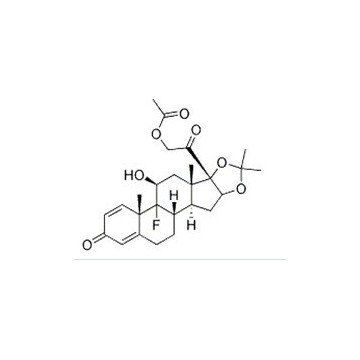
To address information gaps between in vitro and clinical data, CDER researchers have investigated triamcinolone acetonide injectable suspensions as a model to develop improved methodologies to assess injectable suspension performance.1 Triamcinolone acetonide injectable suspensions exhibit significant clinical variability; for example, measurements of time to maximum concentration in vivo (Tmax) can vary from 1 to 216 hours.2-4 It is important to note that such high variability is not observed for other triamcinolone acetonide dosage forms (intravenous, intranasal, oral, topical);5 rather, the high clinical variability appears to be related to the flocculation state of the suspension particles.
Suspensions are often designed to flocculate, or form weakly bound agglomerates, to increase product stability. Flocculation is a complex phenomenon, governed by particle-particle interactions, and is reversible, so that the shaking of a vial (e.g., per labeling instructions to “shake before use”) can readily cause loose aggregates (i.e., “secondary” particles) to transition into smaller “primary” particles. In the case of triamcinolone acetonide injectable suspensions, flocculation can be rapidly reversed, with the breakup of flocculates (tens of microns) into primary particles (1 to 2 microns) occurring through the application of shear stress.1 CDER researchers have further determined that commonly encountered shear stress, which occurs upon stirring, pumping, sonication, or even needle injection, can affect the state of flocculation and likely also the rate of drug dissolution.
Development of New Methods to Measure Drug Dissolution
CDER researchers developed new methods to understand the impact of flocculation state on drug dissolution. Commonly used in vitro dissolution testing methods for suspension products are generally performed at high dilution (i.e., sink conditions) in high-shear environments (e.g., fast stirring); however, high dilution and high shear may not reflect dissolution conditions associated with intramuscular injection. In fact, intramusc...
































 (All Rights Reserved)