

This document is based on research originally published in Proceedings of Particular Systems Analysis, Stratford 2005
https://doi.org/10.1016/j.powtec.2006.10.016
Introduction
Predicting flow performance of powders through a given process is of great importance in industry where, intentionally or otherwise, the flow properties of powders change, often resulting in stoppages or poor quality product. The need is for reliable prediction of flow performance and this in turn requires reliable information on the bulk, flowability and processability characteristics of the powders concerned.
No definition or units exist to describe the dynamic flow of powders and no ideal way of measuring these complex materials exists. Development of Shear Cells continues and some are now automated and suitable for providing material characterisation data, in addition to the traditional focus of silo design. Powder Rheometers can provide fast, repeatable, sensitive measurements with a high degree of automation. To make a comparison of these methods, a range of six different materials were selected (Table 1) and the primary variable was chosen to be packing condition, since the presence or absence of air is arguably the most important of the many factors affecting powder flow properties. Pharmasources provides API Equipment for you to do experiments.
Instrumentation and Methodologies Used
The instrument used was an FT4 Powder Rheometer® (Freeman Technology Ltd) that is described elsewhere in the literature(1). Briefly, accessories such as blades, pistons and shear heads can be rotated and simultaneously moved axially into a powder sample whilst axial force and rotational force are measured. A number of control modes are available on both axes including velocity, force and torque. The standard Dynamic tests, Aeration testing and Shear Cell testing are automated, with no operator involvement apart from sample preparation.
Dynamic testing used a 48mm diameter blade and a 160ml powder sample contained in a 50mm bore, borosilicate test vessel. An automated, 18 segment, 48mm diameter rotational Shear Cell accessory was used for all Shear Cell testing using a 30ml sample. All samples for Dynamic and Shear Cell tests were pre-conditioned using the instrument’s ‘Conditioning’ methodology. The ‘Conditioning’ blade action gently disturbs the powder bed and creates a uniform, lightly packed test sample that can be readily reproduced.
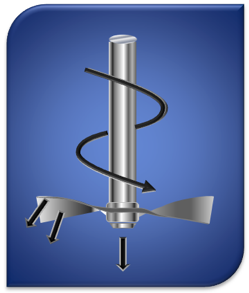
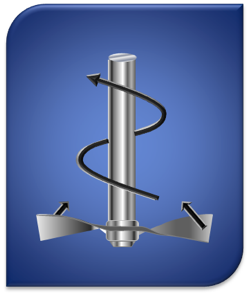
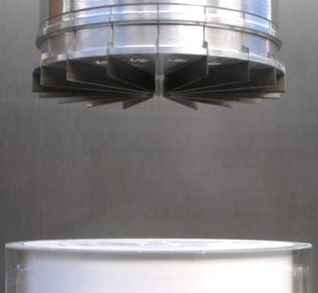
Fig.1: Downwards Testing Mode Fig.2: Upwards Testing – Shearing Fig.3: Shear Cell Above Sample Vessel
Showing Bulldozing Action Along With Minimal Consolidation the Entire Blade Length
Bulk Properties – Results and Review
Bulk density, compressibility, adhesion and permeability assessments were made for all materials, (Table 1).




























 (All Rights Reserved)