
The choice between small molecule drugs and biologics for the drug model developed for a certain indication has indeed become a significant strategic dilemma for drug manufacturers. This decision is further complicated by evolving regulatory landscapes, such as the Inflation Reduction Act (IRA) in the United States, which treats small molecule drugs and biologics differently. The IRA stipulates that small molecule drugs will become eligible for Medicare's price negotiation process in 7 years of launch, and the "fair price" implemented after negotiation will take effect in 9 years. The periods for biologics are 11 years and 13 years respectively.
In addition to IRA, biologics have also gained greater benefits compared to small molecule drugs thanks to a longer exclusivity period. Biologics can be granted 12 years of competitive protection for biosimilars, compared to the competitive protection for generics of 5 years granted to new small molecule drugs. The policy preference for biologics of the United States Congress is dependent on the fact that more time and resources are required to develop biologics and the patent protection is weaker, for which manufacturers need additional protection to recoup their development costs and receive an adequate return on investment. However, this hypothesis has always been one of the focus topics of debate between drug manufacturers and legislatures. A recent paper published in the Journal of the American Medical Association specifically looked into this hypothesis. This study compares biologics and small molecule drugs with their respective up-to-date data on development time, clinical trial success rate, R&D cost, patent protection, exclusivity period, revenue and treatment cost.
1. Data Comparison of Small Molecule Drugs and Biologics
The study finds that from 2009 to 2023, FDA approved 599 new therapeutic drugs,
· including 159 (27%) biologics and 440 (73%) small molecule drugs (Figure 1).
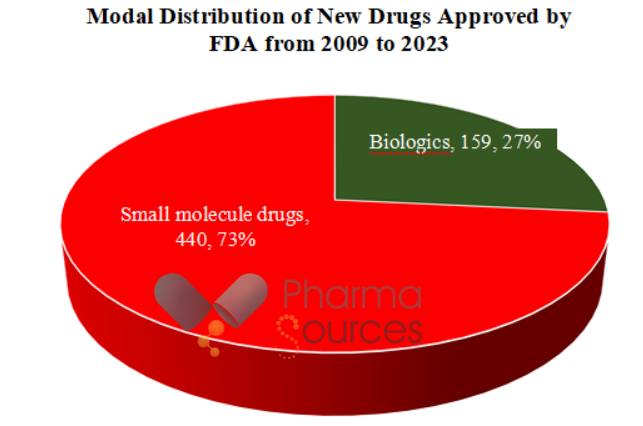
Figure 1. Modal Comparison of New Drugs Approved by FDA from 2009 to 2023.
· The median development time for biologics was 12.6 years (IQR=10.6-15.3 years), while that for small molecule drugs was 12.7 years (IQR=10.2-15.5 years). Notably, the P-value of the two groups is 0.76, which shows that there is no significant difference in development costs between the two groups.
· Biologics boast a higher clinical trial success rate at every stage of development.
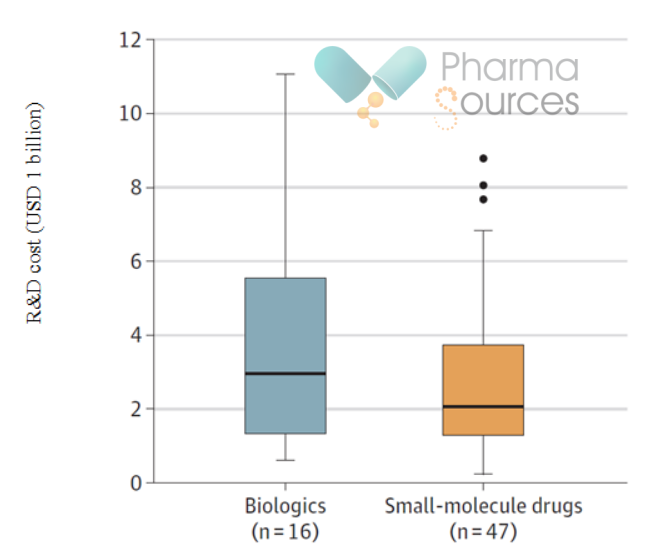
Figure 2. Box Plot of Development Costs for Biologics and Small Molecule Drugs. (Source: JAMA)
· The median development cost is estimated to be USD 3 billion (IQR=USD 1.3 billion - USD 5.5 billion) for biologics, while that for small molecule drugs is USD 2.1 billion (IQR=USD 1.3 billion - USD 3.7 billion) (Figure 2). In this comparison, the P-value of the two groups is 0.39, which also shows that there is no significant difference in development costs between the two groups.
· The median of patent protections for biologics is 14 (IQR=5-24 patents), while that for small molecule drugs is 3 (IQR=2-5 patents). In terms of the number of patents, there is a significant difference between small molecule drugs and biologics (P-value < 0.001).
· The median of patent protections for biologics is 14 (IQR=5-24 patents), while that for small molecule drugs is 3 (IQR=2-5 patents). In terms of the number of patents, there is a significant difference between small molecule drugs and biologics (P-value < 0.001).



























 (All Rights Reserved)