

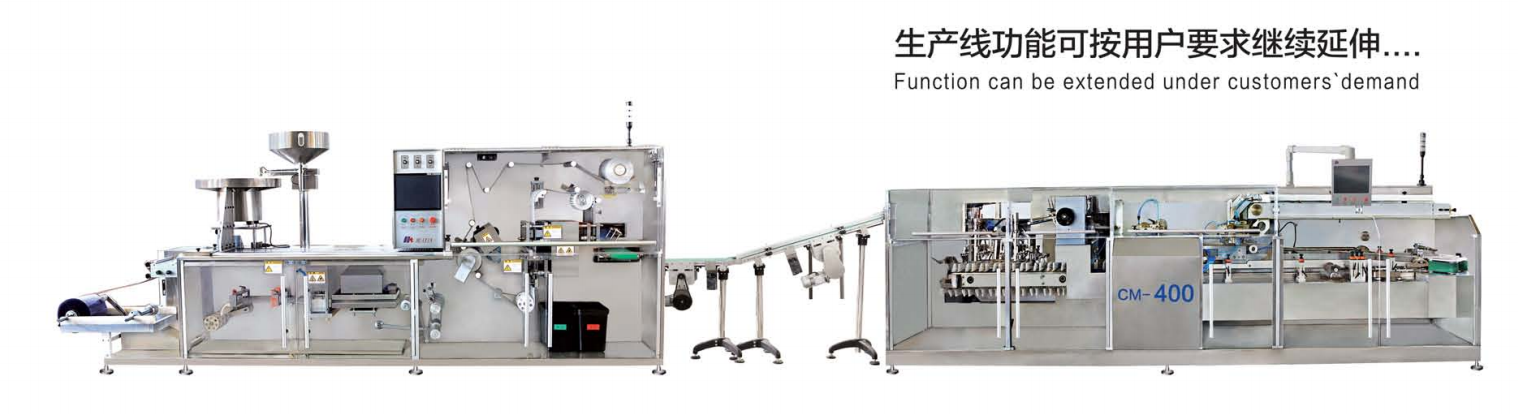
Blister packaging machine is an integral equipment in the pharmaceutical industry, and it is used to pack the oral form of pharma drug products such as tablets into suitable packaging material. They are specifically designed to suit the individual product requirements. The efficiency and success of blister packaging are dependent on the quality and feasibility of the blister packaging machine, which the organization has acquired for its packaging operation.
Although it seems obvious that a blister packaging machine will produce blister packs, the output of each machine varies from one machine to another, which in turn depends on many factors. One of these factors is the suitability of the machine, i.e. how well the blister packaging machine is suited to produce quality products.
The machine's organization requirements can determine the machine's suitability, and whether the blister packaging machine is suitable to fulfil these requirements.
What is a Blister Packaging Machine?
A Blister packaging machine is used to pack oral forms of drug products in blister-style packaging shape, formed due to mechanical force and heat energy.
Blister comprises different packaging material combinations of Aluminium and PVC, depending on the packed product. Common combinations are
· ALU – ALU, i.e. upper & lower packaging materials are both Aluminum
· ALU – PVC, i.e., the Upper packaging material is Aluminum, while the lower packaging (containing product) material is PVC.
· PVC – PVC, i.e. upper & lower packaging material both are PVC
The upper packaging material is forming material, while the lower packaging contains the product.
There are different sections, called stations, of the blister packaging machine. These stations are designed to perform specific functions – a combination of these functions forms the entire blister packaging machine.
Are you selecting a blister machine for your application?
Let's diet's some points that are critical to consider when selecting a blister packaging machine for your applications, and include, but not limited to
· What products do you want to pack?
· What is the output required by the pharma product manufacturer?
· Lab scale or commercial model
· Inspection system for blisters
· Packaging material
· Area available
What products do you want to pack?
The main thing you must know and be clear when selecting blister packaging is what products you want to pack. Because major machine characteristics such as build, output, and functions depend on the product. Critical machine parts such as feeder channels, forming plates or rollers, and sealing stations create the product's specific physical appearance.
Output Capacity
As the products size increases, the machine's output decreases due to the decrease in the machine's speed. Typically sized pharma products require large product parts to build, which reduces their agility and mobility during machine operation.
During different stages of blister formation and packaging, large parts mobility is reduced as the product size increases. Otherwise, the machine cannot handle the motion of these large-sized parts at high speed and become damaged or broken apart.
Even if parts do not break, different stages of blister formation, such as product feeding, sealing, and cutting, will not perform accurately and appropriately, if large sized product is run at high speed
Individual Parts
The construction of individual parts depends on the type and product characteristics. If the product being paced is a tablet, the parts are designed according to the tablet's characteristics, such as oval shapes, oblong or round size. Similarly, tablets have different depths and sizes, affecting product parts such as filling-related parts. The same is the case with the capsules.
If the packed product is a bottle, vial or ampoule, the blister packaging machine completely differs from the tablet or capsule packing machine.
The speed of the bottle, vial or ampoule packing machine is less than that of the tablet or capsule packing machine.
What is the ...
Read More






























 (All Rights Reserved)