
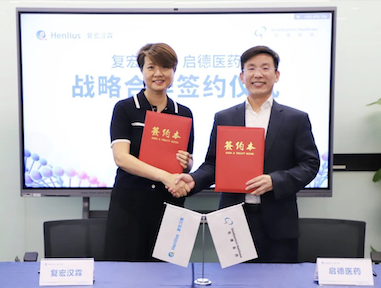
Recently, Shanghai Henlius Biotech, Inc. (2696.HK) has entered into a strategic collaboration with GeneQuantum Healthcare (Suzhou) Co., Ltd. ("GeneQuantum"). As agreed, Henlius will obtain the development and exclusive commercialization rights for the innovative HER2-targeted antibody-drug conjugate (ADC) GQ1005 in China and certain overseas markets. The drug candidate, currently in phase 3 clinical development, is being evaluated for HER2-positive breast cancer.
Ping Cao, Chief Business Development Officer and Senior Vice President of Henlius, stated: "As a leader in breast cancer treatment, Henlius is dedicated to advancing treatment innovation and delivering clinical breakthroughs. Our core breast cancer therapies have now been approved in over 50 countries and regions worldwide. This collaboration will expand our end-to-end treatment paradigm across all breast cancer subtypes, further solidifying our leadership position. We look forward to bringing this innovative medicine to patients as soon as possible, igniting hope for more lives."


GQ1005 is an investigational HER2-targeted ADC developed by GeneQuantum using its proprietary enzymatic site-specific conjugation technology. The drug conjugates a topoisomerase I inhibitor payload to an anti-HER2 monoclonal antibody via a stable, cleavable open-chain linker. Featuring a highly membrane-permeable topoisomerase inhibitor payload, GQ1005 delivers potent bystander killing effects while minimizing systemic toxicity through its unique and stable linker design, achieving an optimal balance between efficacy and safety. Preclinical studies demonstrated comparable antitumor efficacy to trastuzumab deruxtecan (T-DXd) in multiple xenograft models, with a superior safety profile. At the 2024 American Association for Cancer Research (AACR) Annual Meeting, Phase 1 clinical data of GQ1005 in HER2-expressing or HER2-mutated advanced solid tumors were presented, showing favorable tolerability and safety across doses ranging from 2.0 mg/kg to 8.4 mg/kg, along with promising efficacy in patients with breast, gastric, and lung cancers. The drug has now entered phase 3 clinical trials to further evaluate its efficacy and safety, aiming to improve survival outcomes in HER2-positive breast cancer patients.



























 (All Rights Reserved)