

The pharmaceutical business has been experiencing globalization for a number of years due to factors such as the growing need for cutting-edge treatments in developing nations, the need for drug companies to cut costs, and the rising difficulties in recruiting clinical trial participants in developed countries. Worldwide, pharmaceutical corporations have set up production and research centers. Ina similar vein, the constant increase in noncore activity outsourcing has fueled the expansion of global contract R&D and manufacturing firms.Trend predicting by Statista.com shows that the global pharmaceutical industry's revenue increased from $390.2 billion in2001 to $1.2 trillion in 2018. The data science firm IQVIA projects that this revenue would grow ata 4-5% CAGR (as opposed to the6.3% CAGR seen for 2014–2018) and reach $1.5 trillion in 2023. The projection from NAVADHI Market Research is $1.7trillion by 2023,which is somewhat higher.Rather than netrevenue, which is theamount ofmoney actually received after deducting rebates and other expenses, the values are based on invoice price. IQVIA projects net sales to increase at a 0-3% compound annual growth rate (CAGR) through 2023.[1]
Leading international healthcare organizations, whether public, private, or nonprofit, aim to increase access to cutting-edge medications at reasonable prices and to countries and areas that have historically lacked the resources—facilities, money, and skilled labor—necessary for the profitable production and distribution of these drugs. Drug globalization is driven by a number of factors, each with pros and cons. The globalization of the medical supply chain presents both benefits and drawbacks. The current scenario of drug shortage is an outcome of the growing misalignment in health sector.
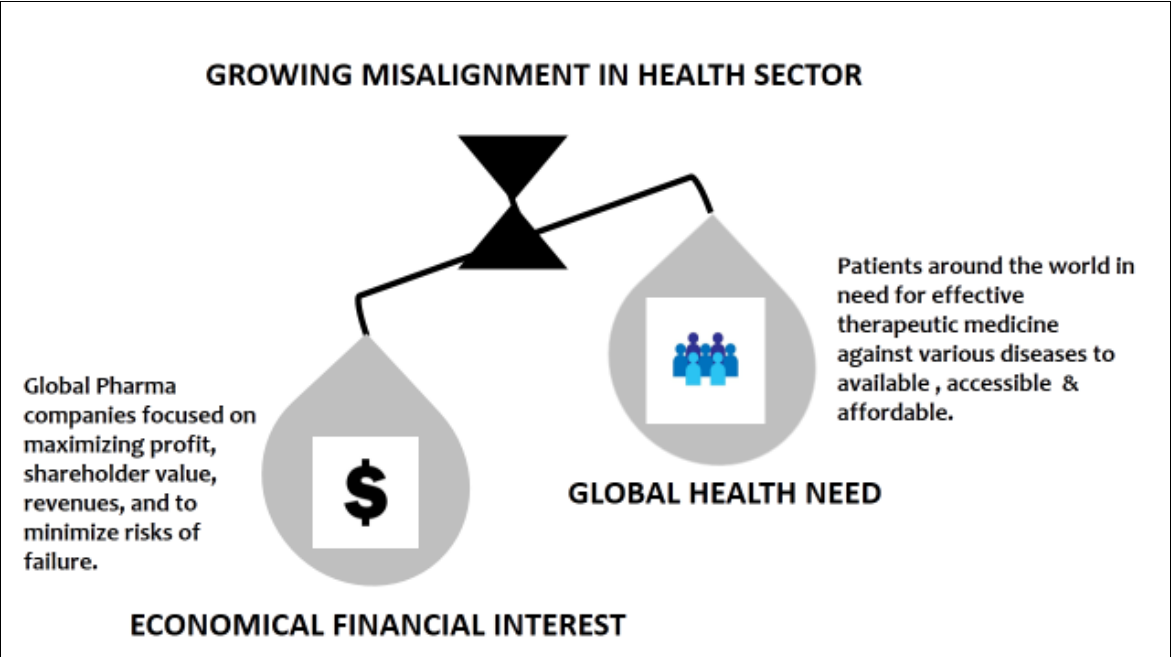
Figure 1. Showing the dominance of economical financial interest over global health leading to the growing misalignment in health sector.
There exists problems like inequitable access as in certain nations, inadequate healthcare systems or substantial out-of-pocket expenses may prevent people from affording pharmaceuticals, even in the face of growing availability. In developing nations, access to reasonably priced generic medications may be impeded by stringent intellectual property rights. The growth of drug counterfeiting is made possible by globalization, which puts patient safety at risk. Research into profitable diseases may be given priority by pharmaceutical companies, who may disregard neglected diseases that impact developing countries in favor of wealthier nations with larger profit margins.Pipeline medications should ideally improve on currently available therapies or target areas with few therapy choices. Due to safety concerns or ineffectiveness, only a small portion of medications in development make it to market.Medications that are still undergoing clinical trials and do not yet have regulatory approval for marketing are referred to as drugs in development. Before entering the market, pipeline pharmaceuticals go through a number of stages, including pre-clinical, Phase I, II, and III.[2]
Between 2022 and 2050, the burden of non-communicable illnesses will rise while early mortality and ill health from communicable, maternal, nutritional, and newborn disorders will decline. The top causes of disease burden worldwide in 2022 were ischemic heart disease (ISD), stroke, diabetes, chronic obstructive pulmonary disease (COPD), low back pain (which is more common in women), chronic kidney disease (CKD), Alzheimer's di...



























 (All Rights Reserved)