
Recently, the drug clinical trial registration and information publicity platform of CDE indicated that the JAK inhibitor Ruxolitinib Phosphate Cream (brand name: Opzelura) introduced by China Medical System from Incyte has initiated Phase III clinical trials of vitiligo in China. It is known to us all that Ruxolitinib is the world's first approved JAK inhibitors, whose tablets (brand name: Jakafi) applying to polycythemia vera, myelofibrosis and graft versus-host disease, were approved for marketing in the United States in December 2011, so did the cream in September 2021, which was approved for atopic dermatitis and non-segmental vitiligo (NSV). In December 2022, China Medical System introduced the rights and interests of Ruxolitinib Cream in China and Southeast Asia.
This is not the only collaboration between CMS and Incyte. Just at the beginning of this month, CMS also announced again that they will enter into collaboration and licensing agreements in Greater China and most of Southeast Asia for the Povorcitinib, a selective oral small molecule JAK1 inhibitor, used to treat non-segmental vitiligo, hidradenitis suppurativa (HS), prurigo nodularis (PN), asthma and chronic spontaneous urticaria. Povorcitinib is also a selective oral small molecule JAK1 inhibitor, which is currently conducting Phase III clinical trials for non-segmental vitiligo and HS in several overseas countries. Moreover, it is also in progress that Phase II clinical trials for the treatment of PN, asthma and chronic spontaneous urticaria. Since then, another star drug under development by Incyte has also been acquired by CMS.
It is not difficult to understand CMS's thinking. It was when the key patent of Ruxolitinib was about to expire that Incyte took a different approach and launched Ruxolitinib Cream, which successfully became the first and only FDA-approved JAK inhibitors for repigmenting skin lesions caused by vitiligo. Given the enormous clinical needs of vitiligo patients, the sales growth of Ruxolitinib Cream is really impressive, with the sales volume reaching USD 340 million in 2023. This time, the small molecule oral Povorcitinib introduced, CMS also wants to add a double insurance in the indication field of vitiligo.
01 JAK-STAT Pathway Initiates New Opportunities
Speaking of JAK inhibitors, what must be mentioned is the Janus kinase (JAK) signal transduction and transcription activation factor (STAT) pathway (JAK-STAT Pathway) that was discovered 30 years ago, and has since gained continued attention in transformation and application. Under the stimulation of cytokines, the pathway regulates various biological activities in vivo and mediates numerous immune responses, which is not only immune defense, but also the process of promoting tumor cell survival, immune evasion and persistent inflammation.
Cytokine receptors binding to JAK, contribute to activation and phosphorylation of tyrosine residue in the receptor tail of JAK. Receptor phosphorylation creates docking sites for cytoplasmic STAT which is recruited into the receptor complex via tyrosine phosphate binding to the SH2 structural domain and autophosphorylation. Activated phosphorylated STAT (pSTAT) forms homodimerization or heterodimerization via intermolecular SH2-phosphotyrosine interactions, and then nucleus translocation binding DNA regulatory elements, thereby changing chromatin accessibility and inducing gene transcription.
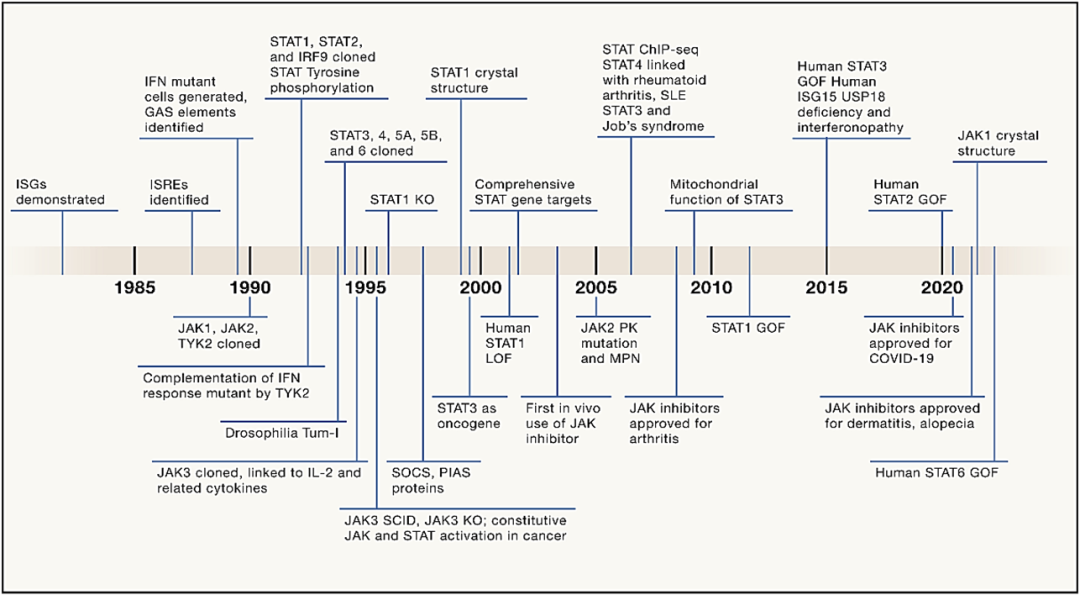
Figure 2: The Development History of the JAK-STAT Pathway (Reference 3)
Mechanistically, the JAK-STAT pathway plays a significant part in cellular processes with its rapid membrane-to-nuclear signaling mode. Its dysregulation is related to inflammation and autoimmune diseases. Many cytokines, including interleukins (ILs) and interferons (IFNs), growth factors and colony-stimulating factors, serve as ligands for intracellular JAKs-associated cytokine receptors. This process involves the activation of STAT proteins transported to the nucleus, thereby inducing the expression of key mediators of infla...


























 (All Rights Reserved)