
AstraZeneca announced that the European Medicines Agency’s Committee for Medicinal Products for Human Use (CHMP) has issued a positive opinion to add a self-administration option for Fasenra (benralizumab) and a new delivery method as a pre-filled, single-use auto-injector (the Fasenra pen) to the medicine’s product information in the European Union.
The CHMP opinion can be implemented without the need for a European Commission decision due to the nature of the Type-II label variation.
The positive opinion for self-administration and the Fasenra pen is supported by the Phase III GREGALE and GRECO trials, and the Phase I AMES trial, respectively. The safety and tolerability of Fasenra in these trials were consistent with the known profile of the medicine.
Mene Pangalos, Executive Vice President, BioPharmaceuticals R&D, said: "Fasenra is the only respiratory biologic medicine that can be administered every eight weeks after the initial loading-dose period, and this positive opinion means we are closer to offering Fasenra in a way that is even more convenient for many patients. We hope self-administration and the Fasenra pen will play important roles in helping physicians make treatment with biologic medicines accessible to more people with severe eosinophilic asthma."
AstraZeneca anticipates a regulatory decision by the US Food and Drug Administration (FDA) on self-administration and the new pre-filled, single-use auto-injector device in the second half of 2019. Fasenra is currently approved as an add-on maintenance treatment for severe eosinophilic asthma in the US, EU, Japan and other countries.
About self-administration and the Fasenra pen
Fasenra will be available as both a fixed 30mg subcutaneous injection via a pre-filled, single-use syringe or the Fasenra pen, both with a thin 29-gauge needle, administered once every four weeks for the first three doses, and once every eight weeks thereafter.
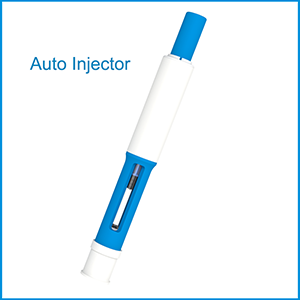
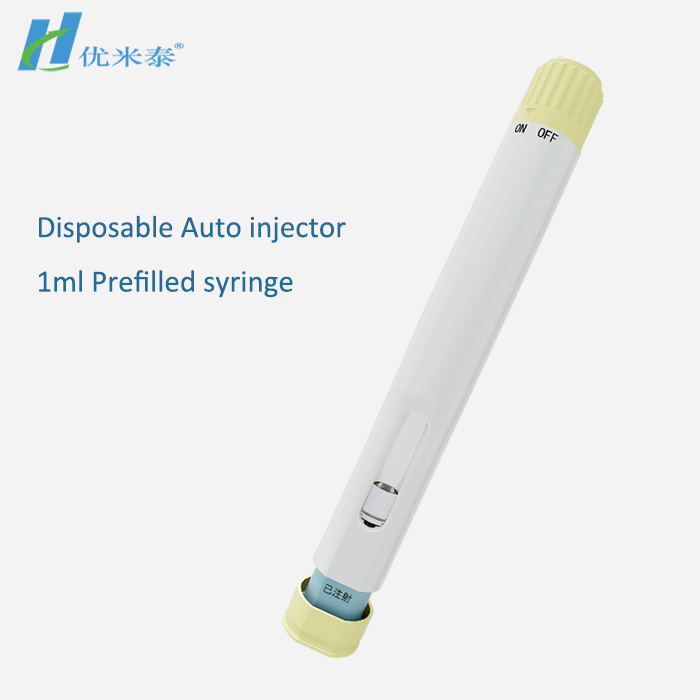
The new Fasenra pen enables patients and caregivers to administer the medicine via a simple two-step process. The device includes a viewing window and audible clicks at the start and end of the injection to guide patients with successful administration.
About the GREGALE, GRECO and AMES trials
GREGALE is a Phase III, multicentre, open-label, 28-week, functionality, reliability and performance trial of 30mg Fasenra administered subcutaneously (SC) every four weeks in clinic and at home through week 16 with a pre-filled syringe in 120 adult patients with severe, uncontrolled asthma.1 The majority of patients and caregivers successfully administered Fasenra at home using a pre-filled syringe at week 12 (98%) and week 16 (99%). The majority of returned pre-filled syringes (99%) used to administer at home were considered functional at week 12 and week 16.
GRECO is a Phase III multicentre, open‑label, 28-week trial designed to assess patient‑ or caregiver‑reported functionality, performance and reliability of a pre-filled auto-injector device with a fixed 30mg dose of Fasenra administered SC every four weeks in clinic and in an at‑home setting in 120 adults with severe, uncontrolled asthma.2 The majority (97%) of at-home administrations by patients or caregivers were successful at week 12 and week 16 and nearly all (96%) returned pre-filled auto-injector devices used to administer Fasenra at home were evaluated as functional at week 12 and week 16. The majority (97%) of at-home administrations by patients or caregivers were successful at week 12 and week 16. Nearly all (96%) returned auto-injector devices used to administer Fasenra at home were evaluated as functional at week 12 and week 16.
AMES is a multicentre, randomised, open-label, parallel group Phase I trial in healthy subjects to compare the pharmacokinetic (PK) exposure following single 30mg SC administration of Fasenra by using pre-filled syringe or pre-filled auto-injector devices.3 Fasenra PK exposure was comparable following SC administration via a pre-filled syringe or a pre-filled auto-injector. Eosinophils were rapidly depleted in patients from both device groups.
The safety profile in all three trials was similar to previous trials, with no new or unexpected safety findings. The most common adverse events observed in each trial were: GRECO – viral upper respiratory tract infection, asth...
































 (All Rights Reserved)