

Pressure on pharma to discover and develop new drugs as quickly as possible was already high as companies battled to recoup the costs of long, complex and uncertain drug life cycles. However, the COVID-19 pandemic has created an even more pressing need to develop effective drugs rapidly. This global threat to humanity has reasserted the need for us to discover and develop drugs quickly enough to tackle and floor such threats as they arise.
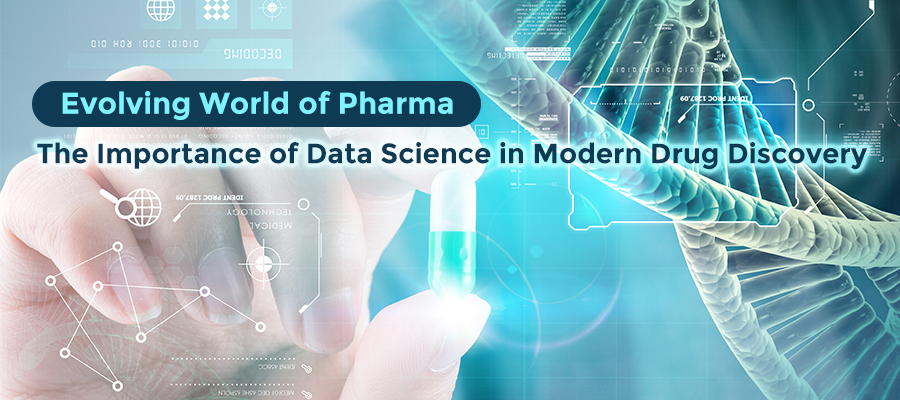
While historic drug discovery typically arose from herbal knowledge (e.g. aspirin) or chance (e.g. penicillin), since the 1990s ‘target-based drug discovery’ has been the most common approach. Based on the fact that most drugs act by engaging a molecular target in the body, scientists realised that defining a specific target (e.g. proteins or other molecules that play a specific role in a disease), and then screening new compounds for activity against those targets, is an efficient way to discover new drugs with a reasonable chance of success. Another common approach is ‘phenotypic screening’, which is a strategy for identifying molecules with particular biological effects in cell-based assays or animal models. Whichever strategy is used, drug discovery today requires the screening of a huge number of compounds in order to find potential candidates. On average, only one in every 5,000 compounds that enters drug discovery to the stage of preclinical development becomes an approved drug. Clearly then, screening and analysing potential candidates is a massive job with a narrow margin of success. Doing this manually would take forever! Fortunately, the broad availability of chemical compound libraries and automatic screening technologies are available to make it relatively easy to identify candidates for new drug targets.
As stated by Schneider in Nature Reviews (2017), automated systems already have a long and successful history in drug discovery. Medium- to high-throughput robotic screening (a fast scan of biological processes that removes candidates with inadequate or no effect from the pipeline) has become standard in the active pharma industry. Automation is achieved by using robotics for specialized assays, plate readers as detectors, and dedicated software for equipment control and data processing. More recently, advances in areas such as microfluidics-assisted chemical synthesis and biological testing (microfluidics help to miniaturize assays and increase experimental throughput), as well as AI systems for screening and analysis, are automating even more of the drug discovery process. By using AI, a virtual compound library of several billion molecules can be screened, and preclinical candidates can be identified in a fraction of the time required for conventional methods. As just one example, a press release last year by AI drug prospector Atomwise announced that it had identified 200 prospective candidates for drug-resistant oncology targets after screening 12 billion compounds in just 2 weeks.
Realising the efficiencies and advantages that these systems bring, it should then be no surprise that lab automation systems are seeing a surge in growth. According to a report released by Markets&Markets last month (November 2020), thanks to increasing expenditure on pharma R&D, the global lab automation market size is projected to grow from an estimated $4.3 billion in 2020 to $5.5 billion by 2025, at a CAGR of 5.2%. However, all of these systems rely on Big Data. Robotic systems and lab automation equipment are data factories, generating terabytes of data on a daily basis. Managing the scale and scope of these data, and building infrastructures that allow them into provide meaningful and useful information that can form the basis of data-driven decisions (by humans or AI), can pose significant challenges to the companies involved.
We have ...



























 (All Rights Reserved)