

As I sit down to write this blog, against the backdrop of a headline “Coronavirus claims 97 lives in one day”, it is difficult to know where to start. The total number of deaths in China currently stands at 908, and across the country 40,171 people are said to be infected while 187,518 are under medical observation. Meanwhile, 60 more people have tested positive on a cruise ship quarantined in Japan, and cases of 2019-nCoV infection have been reported across the Asia Pacific, the United Arab Emirates, Europe and the US. The World Health Organization (WHO) has described the outbreak as a “public health emergency of international concern.”

The Chinese government has made impressive attempts to control the spread of the virus, from restricting travel and insisting that people keep away from their workplaces, to building contemporary designated hospital for the increasing demand of patients. However, given the scale and rapid spread of 2019-nCoV, it is generally agreed that there is an immediate need for medicines that can help treat the acute respiratory disease, as well as the development of an effective vaccine.
Researchers in China published the first genomic sequence of the virus by mid-January – a task that would have taken decades before the digital age, this was a remarkably rapid feat, and also an extremely important one. It enabled the further discovery that the virus was most likely to enter human cells by binding to a cell-surface molecule called angiotensin-converting enzyme 2 (ACE2).
Using this type of information, combined with numerous connections extracted from the scientific literature by machine learning and customizations bespoke to 2019-nCoV, artificial intelligence (AI) has already playing a significant role in the quest for possible treatments. For example, BenevolentAI and Imperial College London reported in The Lancet earlier this month that they have used AI software to find an existing HIV medication that could block the viral infection process and reduce the ability of the virus to infect lung cells. This AI analysis of existing medications – which could provide a quick treatment solution – is in line with the Chinese authorities’ own approach – on China’s request in January, AbbVie and Johnson & Johnson both donated supplies of their HIV medications, in the hope of helping researchers and health agencies studying potential treatments.
Furthermore, in the same week of The Lancet publication, Insilico Medicine reported separately that its own AI software had come up with several new molecules that might stop the virus from replicating in people’s bodies. The next step is to evaluate these molecules to ensure that they have the suggested efficacy, but it seems likely that a treatment for the acute respiratory disease caused by 2019-nVoC may well be on the horizon.
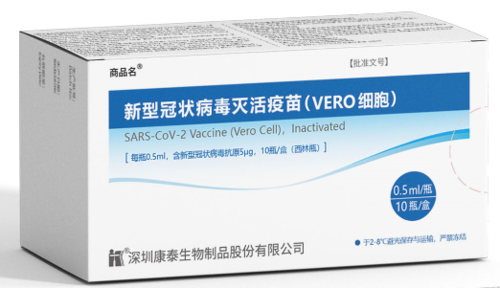
Meanwhile, there is an even bigger focus on the development of a vaccine. On 5th February, the Bill & Melinda Gates Foundation announced that it was immediately committing up to $100 million for the global response to 2019-nCoV. Part of the funding will help strengthen detection, isolation and treatment efforts; protect at-risk populations; and develop vaccines, treatments and diagnostics. However, the majority of the funding is expected to help accelerate R&D in the discovery, development and testing of vaccines.
Several initiatives for a new vaccine are already underway, as the scientific community races to blunt the impact of 2019-nCoV. Perhaps most notable, Johnson & Johnson is using similar technologies to those used for the rapid development of an Ebola vaccine, while bio pharmaceutical companies such as Regeneron, Moderna, Inovio and Vir Biotechnology have also responded rapidly, and all are hoping to win the race at beating this particular virus.
I think it’s fair to say that scientists and industry are working at record speed to create the new vaccine. Nevertheless, it cannot be ignored that vaccines played a limited role in slowing epidemics like Zika and Ebola in recent years. It simply took too long to develop and produce the vaccine. The same may prove true...

































 (All Rights Reserved)