
At present, the use of artificial intelligence to participate in the discovery and design of new drugs has become a hot track for new drug research and development. Once, the Massachusetts Institute of Technology used artificial intelligence technology to successfully discover a new antibiotic - Halicin (Halicin). The antibiotic exhibited the strongest antimicrobial effect in history, and through the autonomous learning and analysis of the artificial intelligence model, it successfully screened for molecules with excellent inhibition of bacterial growth. Through deep learning of 2,000 known spirit molecules, the AI model not only discovered new antibiotic characteristics, but also accurately screened out a highly effective antibiotic in an ultra-large product library. This article takes Halisin as an example to analyze this.

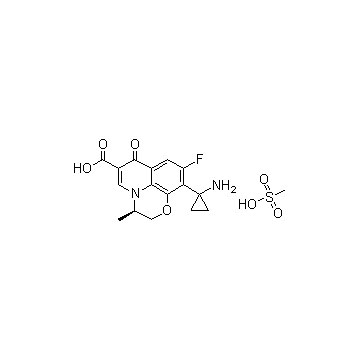
Fig.1 Molecular structure of Halicin
▲Compared with other antimicrobial drugs, what are the characteristics of the new drugs discovered by AI?
The antibiotic halisin has a powerful bactericidal effect on bacteria that have developed resistance on the market and does not induce new resistance. Compared with traditional verification methods, the screening speed using AI models is extremely fast, which greatly reduces the cost. Interestingly, Halisin exhibited features previously ununderstood by human scientists, a discovery that sheds new light on the field of antibiotic research. However, the nature of this feature is still unknown, and no clear answer can be found even in the training of AI models. This research results show that the application of artificial intelligence in the field of drug discovery has gone beyond the limitations of traditional human methods.
Artificial intelligence has led to a more efficient, cost-effective, and innovative drug discovery process in drug discovery. This transcendence is primarily reflected in the speed of development, cost-effectiveness, and a new understanding of drug properties. For example, AI models can screen potential drug candidates more quickly and efficiently, significantly shortening the time frame for drug discovery compared to traditional experimental validation methods. Leveraging AI models for drug screening significantly reduces the cost of R&D and is more cost-effective than traditional methods. AI models have demonstrated the ability to reveal previously ununderstood drug features that may be difficult to detect in traditional research methods, thus providing more innovative directions for the development of new drugs.
▲Why is it named Halicin, a strange name?
Halicin's original name actually has only one code, called SU-3327, which is actually just an experimental drug, or a prototype of the drug. It was initially studied for the treatment of diabetes, but due to poor test results, the application development of the compound has long been discontinued and is only used as an experimental drug. Later, artificial intelligence (AI) models found that halisin has antibiotic properties against a variety of bacteria. And from this it was officially named. Its name, "Halicin", is a reference to Hal, a fictional artificial intelligence system in 2001: A Space Odyssey.
"2001: A Space Odyssey" is a classic science fiction movie, and it plays a pivotal role in the history of science fiction films and is regarded as one of the milestones of science fiction films. Known for its innovative visuals, music, and storytelling, the film sets the bar high for future sci-fi films. It presents a universe full of mystery and wonder, allowing the audience to think deeply about the future of humanity and the development of science and technology. It has become a part of the global sci-fi culture and has had a profound impact on future sci-fi movies and TV shows.
▲What is its specific effect and prospects?
When halisin was first discovered, researchers used computer deep l...
























 (All Rights Reserved)